
A common criticism of tabletop wargames is the God’s-eye view of players. Wargames often feature perfect (or near-perfect) intelligence which challenges the validity of any message wargames may deliver. Yes, even wargames for “entertainment” have a message—if only to deliver an enjoyable experience—that could be ruined by perfect intelligence removing decision space for players (or worse, by removing player agency through forced moves). When playing a wargame for other purposes, such as education or as an analytical tool, perfect information potentially undermines the very outcomes the game aims to deliver or explore.
John Curry, writing Applying Deception in Wargaming: Introducing Limited Intelligence into Wargames, asserts:
Limited intelligence is at the heart of wargaming, bringing the uncertainty and unpredictability of real-world operations to the tabletop. With only partial information, players must make decisions based on assumptions and incomplete data—just like real military leaders. Mistakes carry consequences, and clever deception can turn the tide, masking intentions and creating opportunities.
Curry, Back Cover
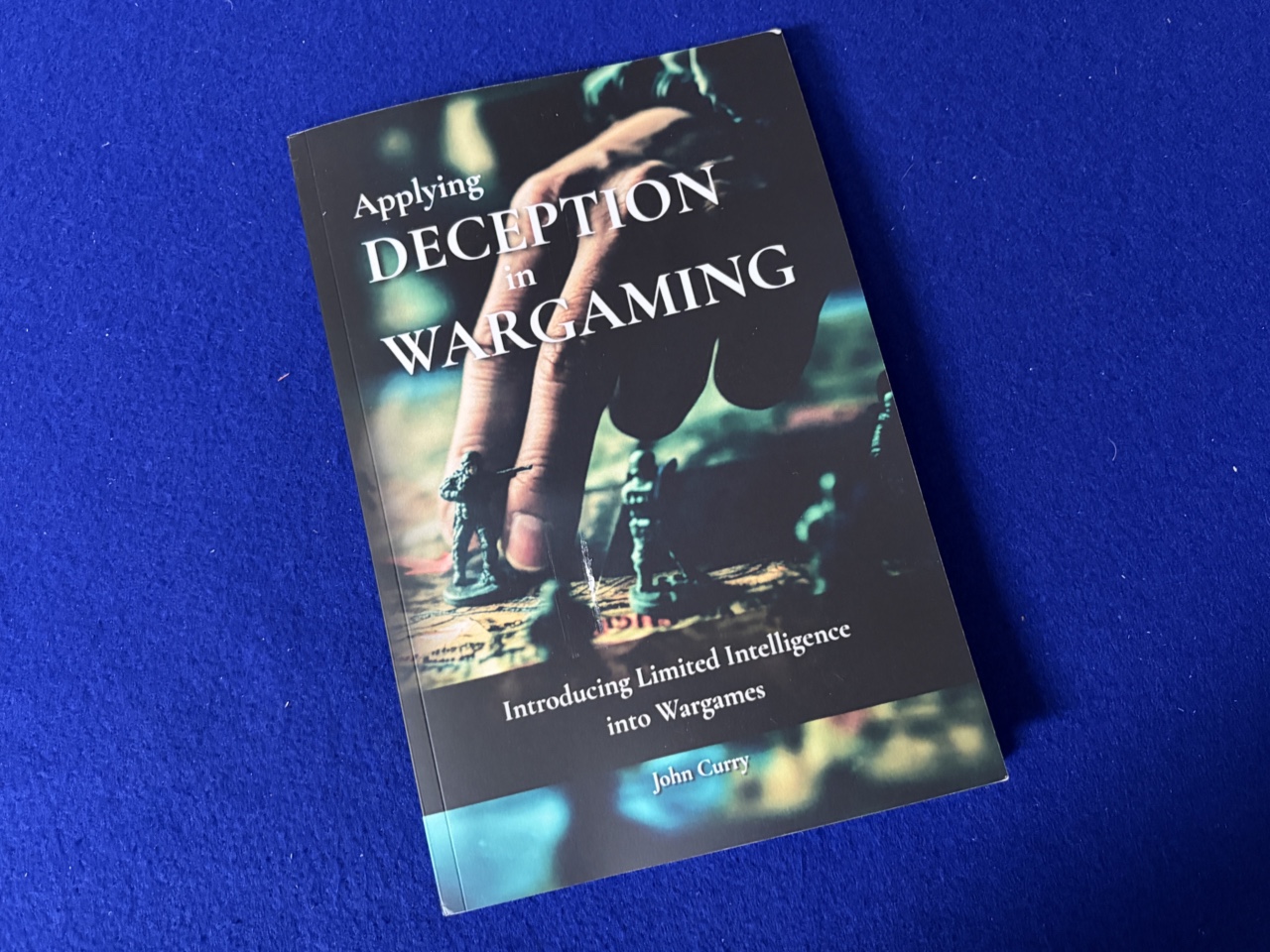
Applying Deception in Wargaming is a guide in wargame design options for wargame practitioners. The various chapters explain different design options for introducing limited intelligence into a wargame. Perusing the chapter titles gives one a taste of the different options explored in the book:
- Asymmetrical Warfare
- Hidden Scenarios: Overcoming Historical Hindsight
- Order of Battle
- Scouting
- The Commander’s Perspective
- Hidden Terrain
- Hidden Movement
- Combat Strength and Combat Outcomes
- Strategic Surprise
Found within each chapter of Applying Deception in Wargaming are many examples taken from wargames—often commercially available—to illustrate or otherwise explain the design option. Helpfully, Appendix 2 is a selection of wargames that include deception. Chapter 11 is a complete sample game that integrates many of the options offered.
Lest one think Dr. Curry is off on a rogue crusade, Appendix 1 in Applying Deception in Wargaming is a extract of Dr. Stephen Downes-Martin’s report, “Wargaming Deception” that is the product of a CONNECTIONS USA workshop from 2024 and follow-on work. This report serves as the intellectual foundation for Curry’s book. While aimed at wargame practitioners, hobbyist wargame designers likely will find this appendix useful.
In that same vein, both wargame practitioners and hobbyist wargame designers reading Applying Deception in Wargaming very likely will find Appendix 3 – Design Checklist: Introducing Deception into Wargames of value when iterating their own wargame design.
Applying Deception in Wargaming, while published for wargame practitioners, has much to offer to both practitioners and hobbyist wargame designers alike.
Feature image courtesy RMN
The opinions and views expressed in this blog are those of the author alone and are presented in a personal capacity. They do not necessarily represent the views of U.S. Navy or any other U.S. government Department, Service, Agency, Office, or employer.
RockyMountainNavy.com © 2007-2026 by Ian B is licensed under CC BY-SA 4.0

