
Earlier this year, I played the wargame Sinking Yamato by Greg Smith from Compass Games (2026). Previous to even that play, I ordered the book Battleship Yamato: The Ship, the Myth, the Legend by Alexander Wooley from Naval Institute Press. Alas, the book delivered in August 2026, a few months too late for my wargame review. Now that the book is in hand I can discuss it with you.
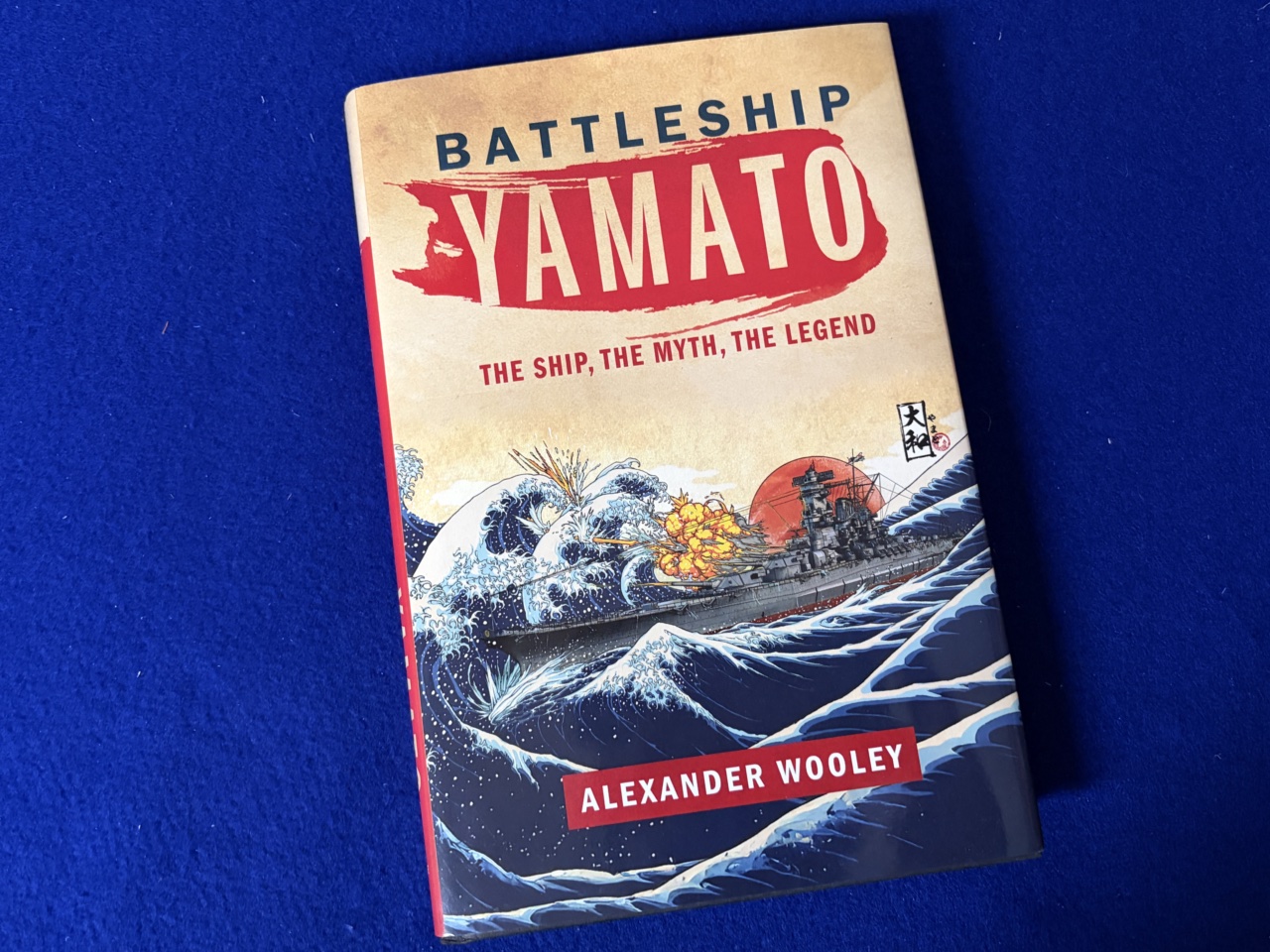
Battleship Yamato is—and is not—what I expected. On the expected side, Wooley covers the construction and operational history of Yamato in about 103 pages (Chapters 1-6) of the book.
But that is only 103 pages of a 278 page book. What is so important about Yamato outside of its operations that it needs over 100 pages of additional text to cover?
The first hint to the reader as to what the rest Battleship Yamato covers is to perhaps look at the table of contents beyond Chapter 6:
- Chapter 7: Yamato in the Immediate Post-War Period
- Chapter 8: The Wreck
- Chapter 9: Models, Museums, Meaning
- Chapter 10: Yamato in Film, Literature, Art, and Myth
- Chapter 11: Yamatos Go to Space, Go Rogue
- Chapter 12: War Games
- Chapter 13: Yamato as a Women, or Sex and the Single Battleship
- Chapter 14: What Use Yamato and the IJN Today?
Now the subtitle of Battleship Yamato, the line, “The Ship, The Myth, The Legend”, is better understood. Chapters 1-6 focus on the ship and the foundations of the myths and legends. The later chapters—particularly Chapters 7-11—dig deeply into those myths and legends around Yamato.
Being a wargamer, “Chapter 12: War Games of Battleship Yamato” immediately caught my attention. Having some knowledge of wargames with Yamato in them I looked forward to this chapter…
…only to come away less-than-impressed.
The “War Games” chapter of Battleship Yamato focuses first on video games with absolutely no mention of any tabletop games—wargame or other.
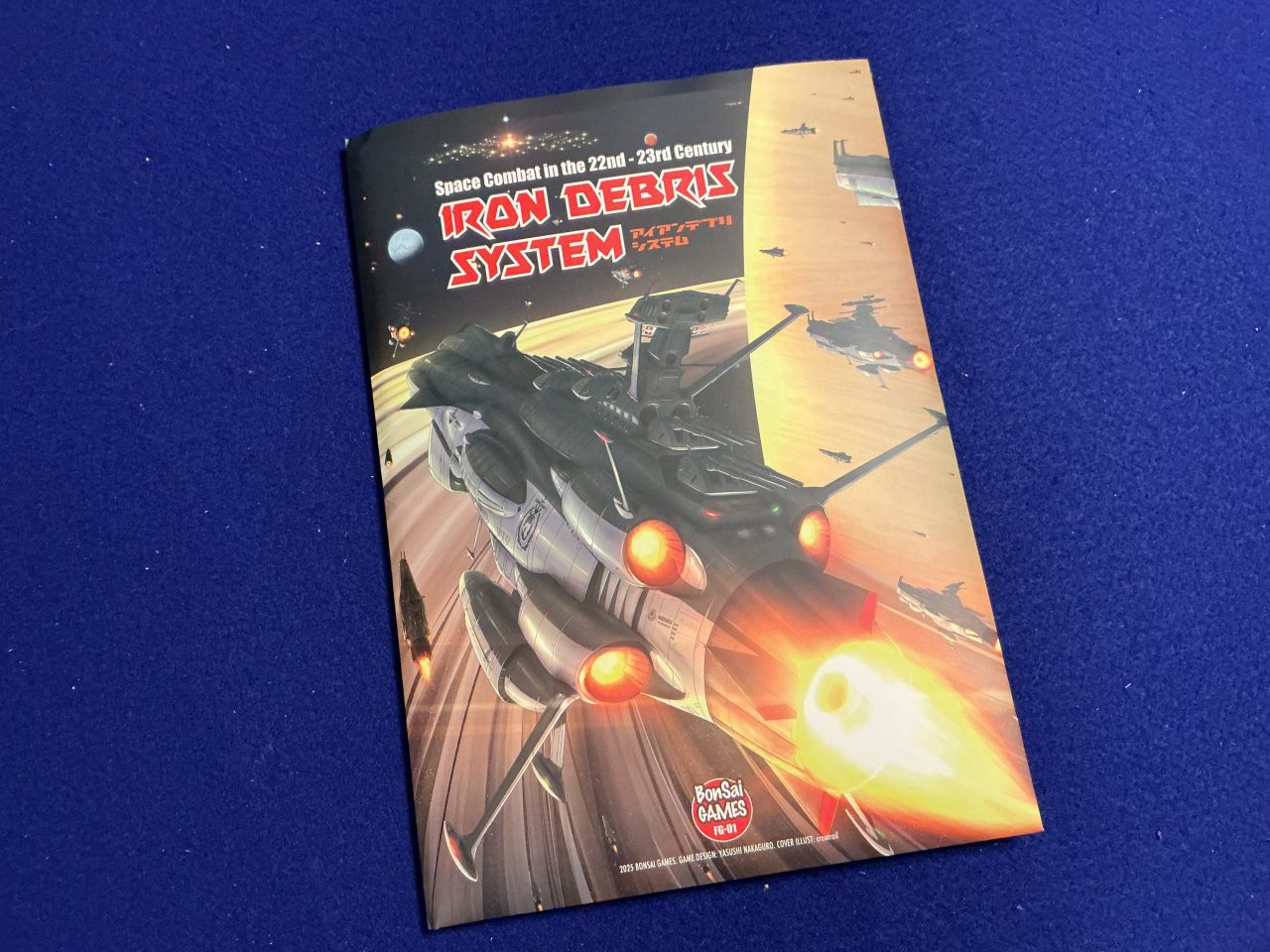
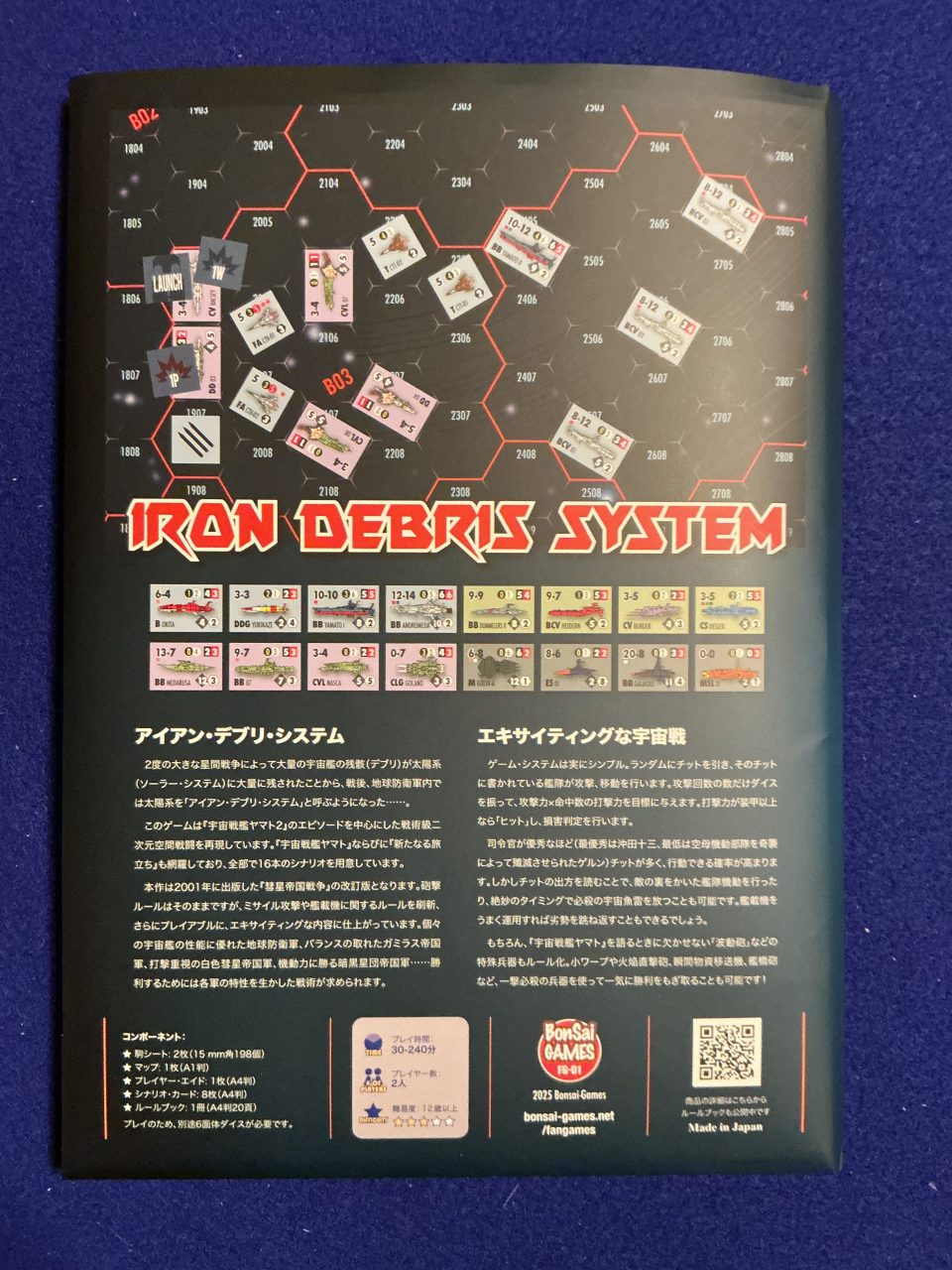
[Sorry, Yas. Even after the many mentions of the mid-1970’s anime Space Battleship Yamoto there is no talk of the second edition of your Iron Debris System – Space Battles in the 22nd-23rd Century, the Bonsai Games doujin wargame that I reviewed earlier this year.]
Amongst the many video game-related topics covered in Battleship Yamato, Wooley hits on an issue almost certainly near-and-dear to wargamers: learning history through play. After a long discussion of Yamato in the video game World of Warships, Wooley asserts:
Academic research suggests online gamer do, in fact, learn about naval history through playing war-related games. They improve their understanding of the subject while still being cognizant that nonfiction books and documentaries are more historically authoritative than the games they engage in. But learning naval history is secondary—as intended—to an experience that is meant to be entertaining, a way to spend one’s leisure time.
Wooley, pp. 183-184
Wooley goes on to discuss an ethical issue that tabletop wargames might find very familiar:
There is a lurking ethical question of whether building an intricate, foot-long plastic model of Yamato or playing a digital reproduction of Yamato in a game like WoW implies support for Imperial Japan of 1931-45. Is it being willfully blind to the past and context of the ship, its use as a tool of a militaristic, xenophobic, colonizing mission? Can representation be enjoyed without promoting the underlying ideology that led to the ship being built in the first place?
Wooley, p. 184
Wooley touches on the future of video games. Does this not sound familiar to tabletop wargamers, too?
It is a point of speculation as to whether the platforms and weaponry of World War II will continue to have a hold on future generations of gamers. As militaries the world over move to the widespread use of drones and unmanned vehicles, including at sea, they are meeting up with young people experienced operating drones in either gamified or real0world use, where the boundaries between the two—in terms of the realism of controls, visuals, and so on—have blurred.
Wooley, p. 184
Speaking of blurred, I am sure that many of you are very interested in reading “Chapter 13: Yamato as a Woman, or Sex and the Single Battleship.” If you are not familiar with Kantai allow me to introduce you.
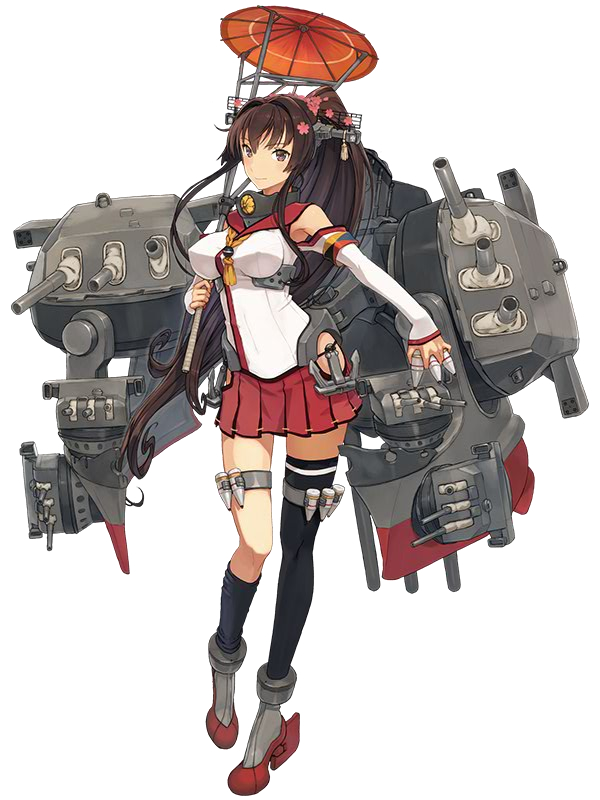
Do you want to know more? READ. THE. BOOK.
Feature image courtesy RMN
The opinions and views expressed in this blog are those of the author alone and are presented in a personal capacity. They do not necessarily represent the views of U.S. Navy or any other U.S. government Department, Service, Agency, Office, or employer.
RockyMountainNavy.com © 2007-2026 by Ian B is licensed under CC BY-SA 4.0


A chapter of weeb thirst is a sure fire way to make sure my money stays in my wallet.
Do you want to know more?
I was reading a discussion of various Chinese TV shows. One person had no interest in anything set prior to contemporary times, because “things aren’t like that anymore.”
Such sad people…