
BonSai Games from Japan keeps delivering great wargames in 2026. Thanks (again) to the generosity of Yasushi Nakaguro, I received The Battle of Midway 2nd Edition published just this year. While some of you might say, “Oh, another Battle of Midway wargame? BORRRRING!” and pass on this latest title, well, all I can say is, “your loss.” Battle of Midway 2nd Ed. is a worthy entry in the pantheon of Battle of Midway wargames as it is one-part innovative and two-parts familiar; the innovative Aerial Search rules being the interesting twist that pairs with other streamlined rules—and a true campaign focus—to make this more than “just another” Battle of Midway wargame.

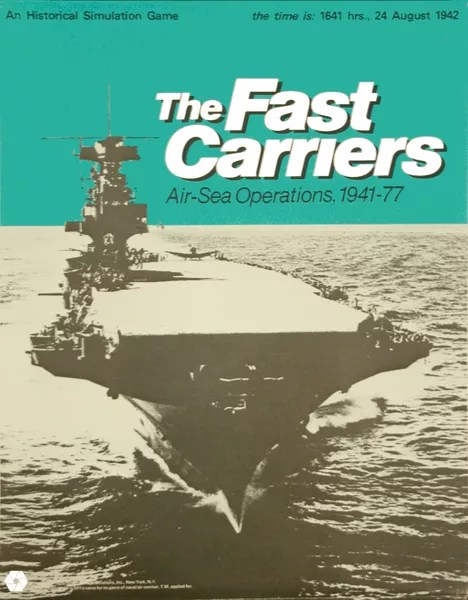
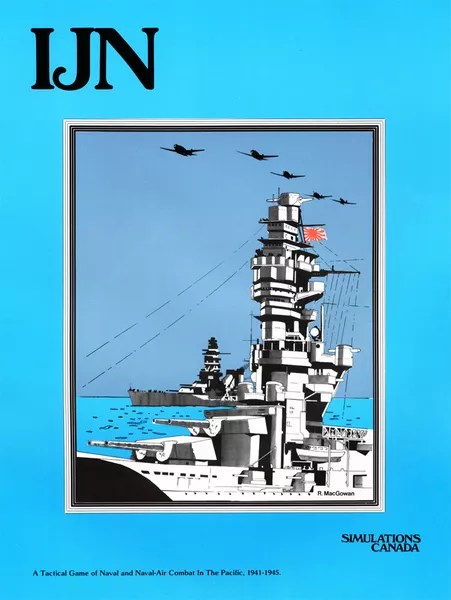
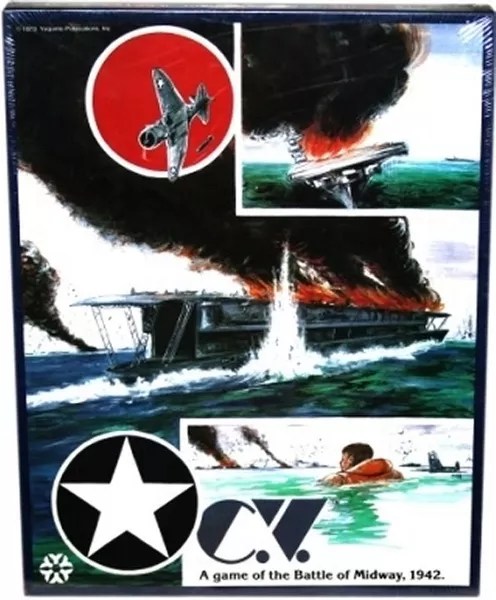
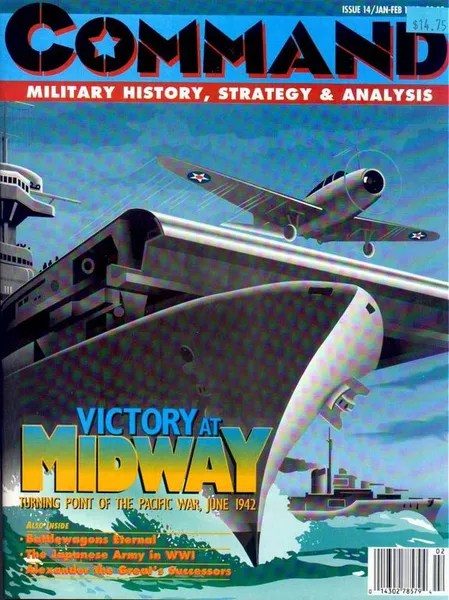
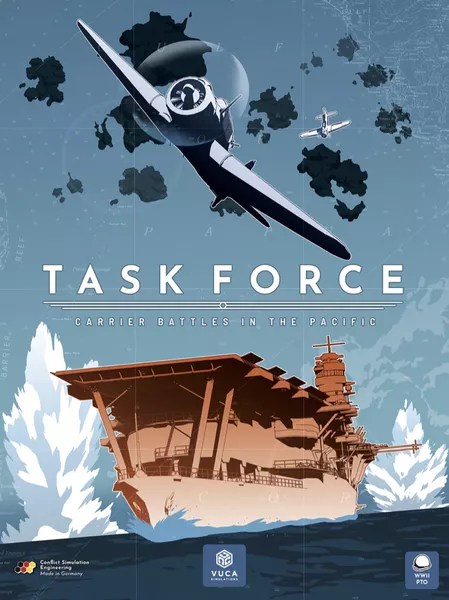
Many Battle of Midway wargames, be they The Fast Carriers: Air-Sea Operations, 1941-77 (1975) or IJN (1978) or C.V.: A Game of the Battle of Midway (1979) or Victory at Midway: Turning Point of the Pacific War, June 1942 (1992) or Midway: Turning Point – Naval and Air Combat in the Pacific: 1942 (2002) or The Fires of Midway: The Carrier Battles of 1942 (2010) or Kido Butai: Japan’s Carriers at Midway (2016) or Fury at Midway (2020) or Task Force: Carrier Battles in the Pacific (2023)—all of which are in my collection—use a broadly similar design formula:
- Players hide their fleets
- Players search for enemy fleets
- Fleets include aircraft carriers
- Players manage the air wing on carriers to launch strikes against found enemy aircraft carriers (and Midway Island) by processing aircraft through some sort of arming, launch, search/attack, and landing sequence.
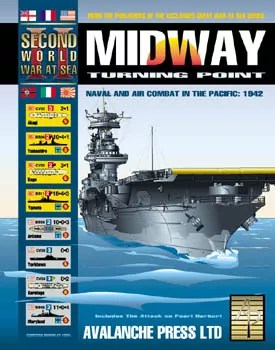
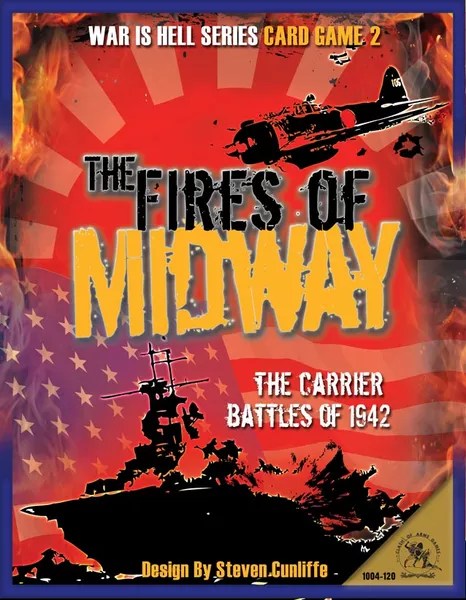
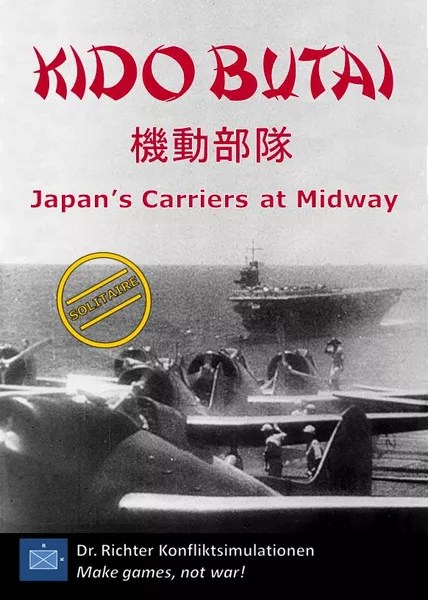
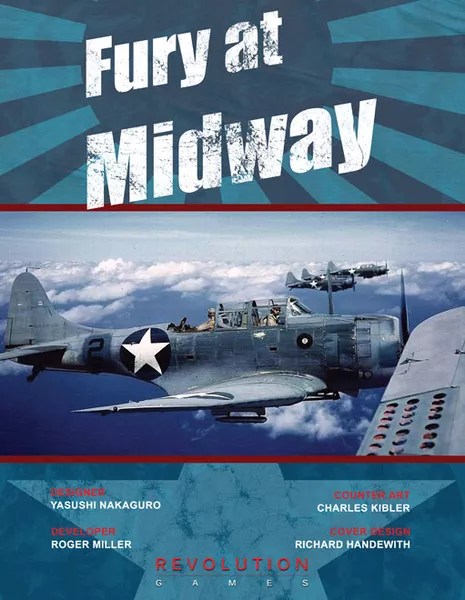
Looking at the ad copy for Battle of Midway 2nd Ed. what sounds “different” about the game is a focus on both the immediate carrier battle and the larger campaign:
The Battle of Midway including the Northern Campaign
This work is the second edition of Midway Carrier Battle, which was originally released in 1990 as part of Sho Kikaku’s “SS Series”. The original game functioned essentially as a “random carrier battle game generator” set in the Central Pacific in June 1942; the strength of the Japanese forces was determined randomly, and it was even possible that the capture of Midway Island was not the primary objective (U.S. forces were also determined randomly, though within a narrower range compared to the Japanese).
In this second edition, instead of utilizing randomized forces, the strength of both sides is fixed according to historical fact. Additionally, the map has been expanded to include the North Pacific, allowing the game to cover the Northern Operations (Operation AL) as well. Players can now choose to conduct air raids on Dutch Harbor as occurred historically, move the Northern Force south early while accepting potential penalties, or have the U.S. forces strike only at the Northern Force. Optional rules are also provided for those who wish to enjoy a game closer to the first edition, where the Northern Operation is omitted and Japanese forces are determined randomly.
Significant changes have also been implemented in the search and combat rules compared to the original edition.
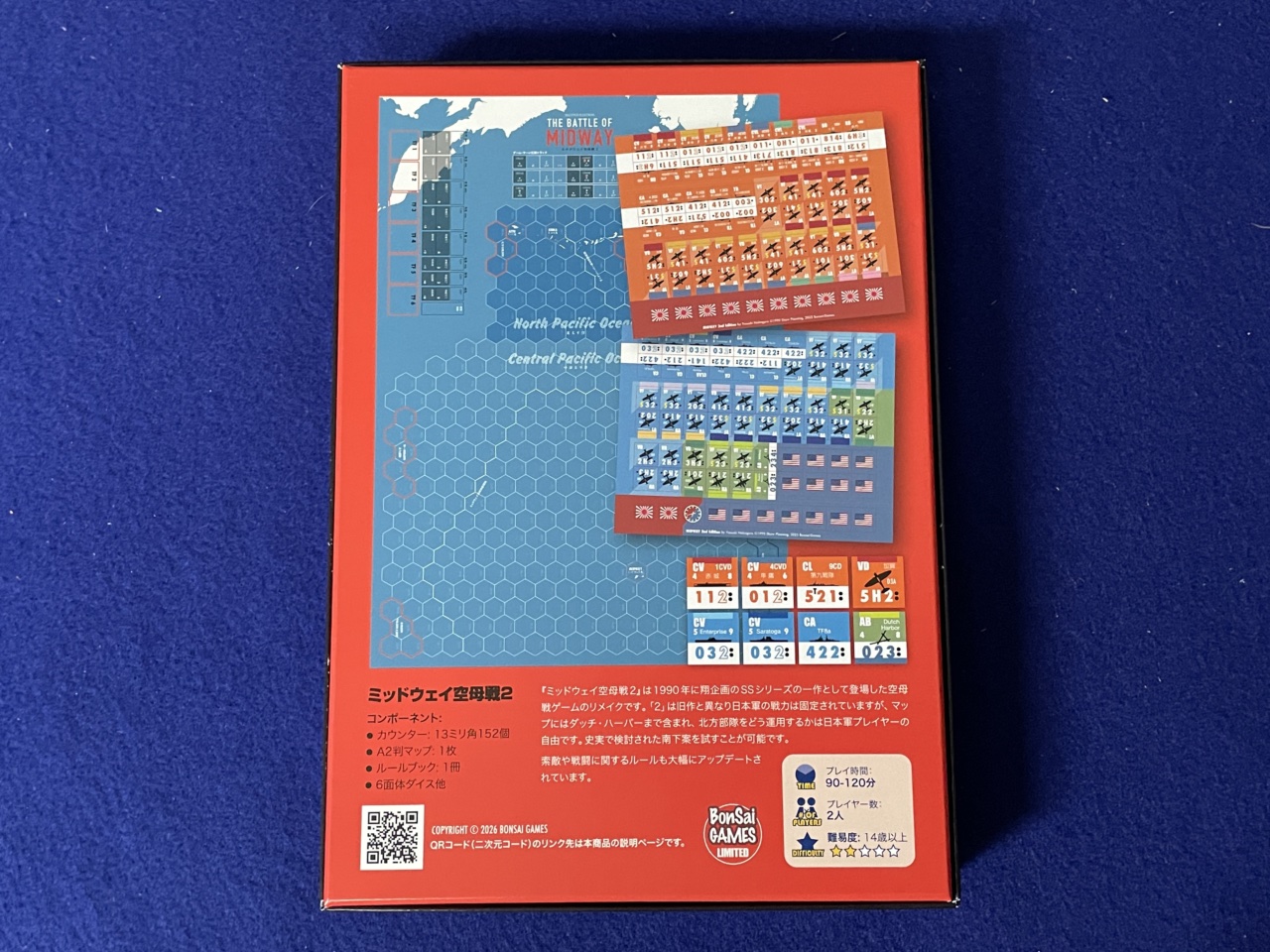
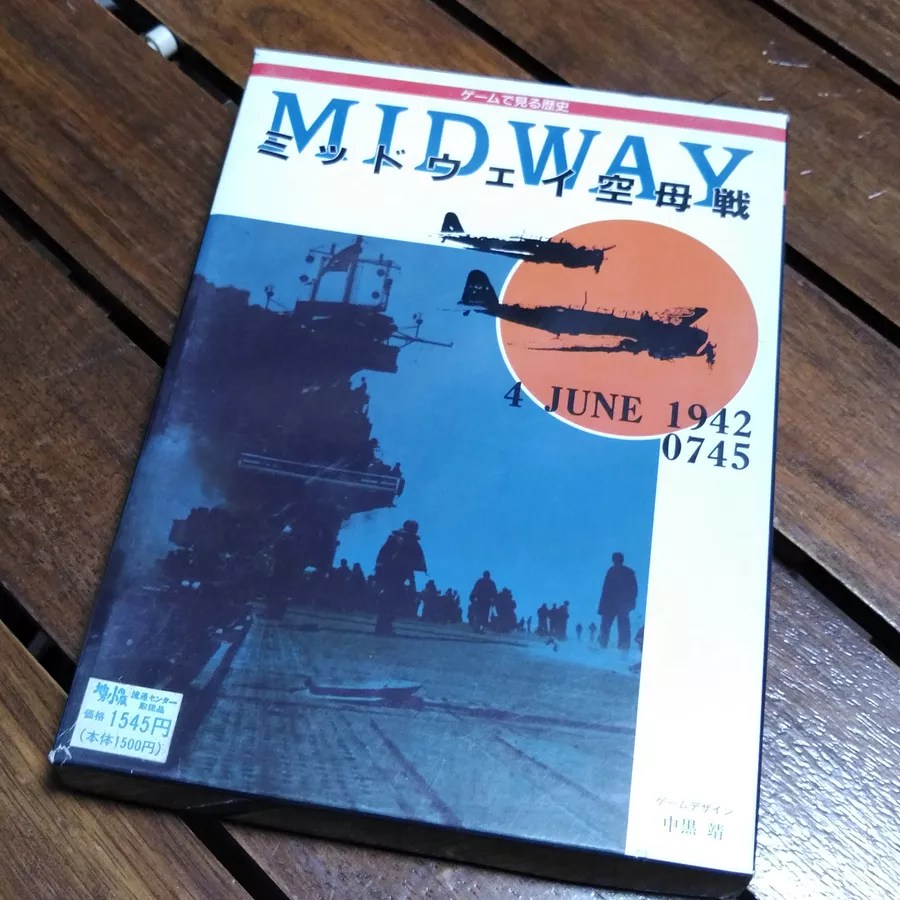
Battle of Midway, 2nd Edition (title also translates as Midway Carrier Battle 2) is a revised version of Midway Carrier Battle that was published by Sho-Kikaku in Japan back in 1990. As a designer’s note in the new edition states, “The original ‘Midway Carrier Battle’ was more of a ‘carrier battle random generator around June 1942’ than a simulation of the Battle of Midway” (1.0 Introduction). Now, that sounds like many familiar Battle of Midway wargames.
Not so for the new version.
Big battle – Little box
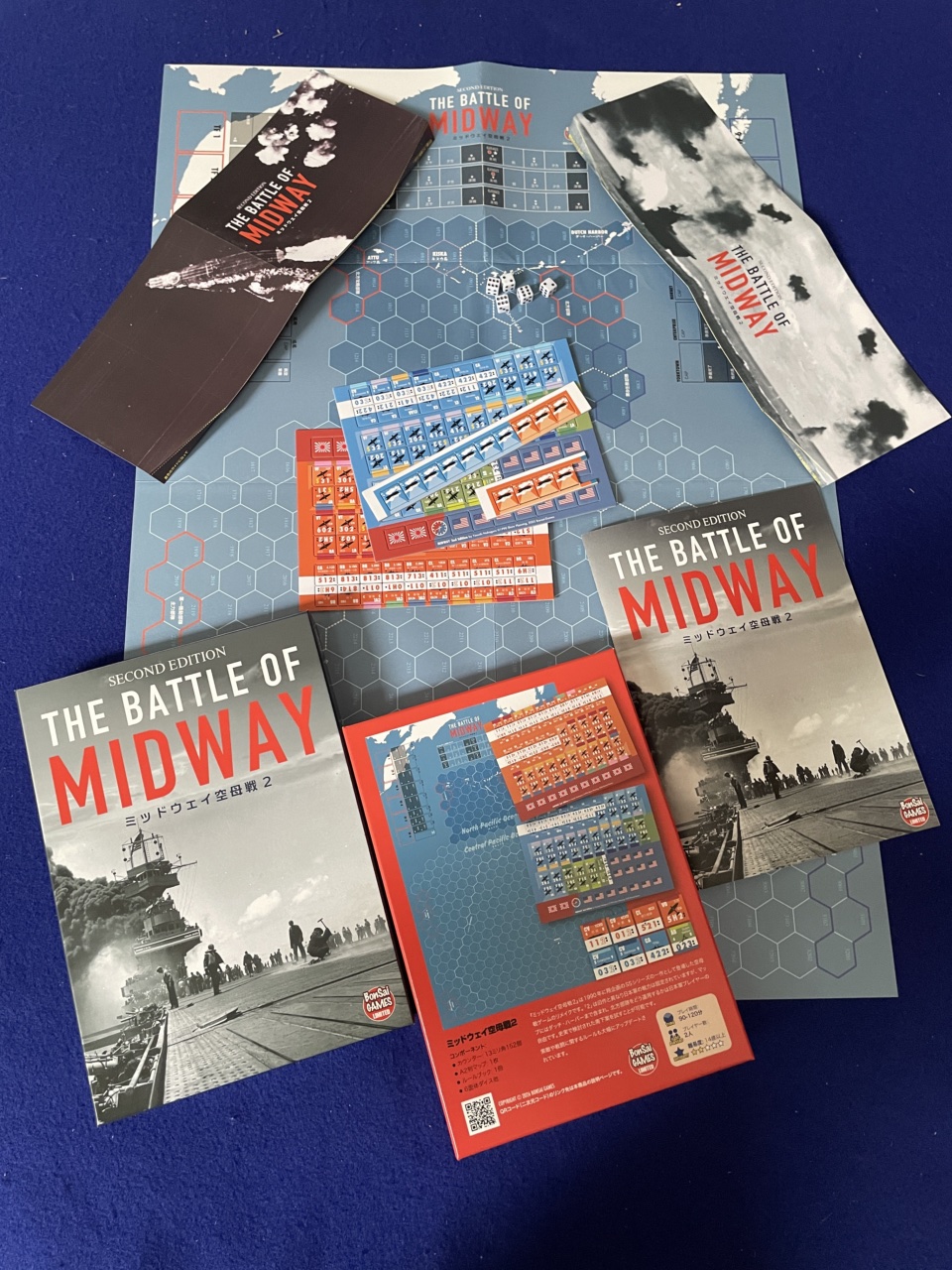
The Battle of Midway 2nd Ed. comes in a small, digest-sized, 6” x 8.5” x 1”box. For such a huge battle the contents of this small box are seemingly sparse yet they include:
- Map: 1 sheet (A2 format) [A bit disappointed that this map did not get the deluxe mounted treatment like Battle of Leyte Gulf.]
- Counters: 152 pieces (13mm square) [Aircraft color-coding helps but the counters are a bit small which makes reading the ship names difficult…but certainly NOT a showstopper.]
- Rulebook: 1 book (A5 format, 20 pages)
- Screens: 1 cardstock page players must cut to form two privacy screens
- Dice: 5x 7mm d6
The scale of Battle of Midway 2nd Ed. is not that different from many other Battle of Midway wargames. One hex is approximately 90 km (the North Pacific is approximately 180 km). Aircraft carriers are single ship counters; battleships and heavy or light cruisers are one or two ships. Smaller ships are not represented by counters but factored into the capital ships they are escorting. One step (combat strength level) of aircraft is 10 aircraft. Each turn is 4 hours during the day and 6 hours at night. (1.1 Game Scale)
Victory in Battle of Midway 2nd Ed. is very straightforward:
The Japanese side has launched Operation AL (Aleutian Invasion) and Operation MI (Midway Invasion), and the Japanese player earns VP [Victory Points] by achieving the objectives of each operation. The US player earns VP by preventing these. Additionally, VP are earned by sinking or damaging enemy aircraft carriers and battleships. No VP are earned for damaging or removing enemy units other than carriers and battleships.
4.0 Game End and Victory Conditions
The awarding of Victory Points (VP) in The Battle of Midway 2nd Ed. drives a different wargame—with a campaign focus—than those so familiar with other Battle of Midway games might expect. The Japanese player earns VP for invading Attu Island (+1VP), Kiska Island (+1 VP), and Midway Island (+6 VP). If the Japanese player does NOT invade those islands then the American player gains those VP (4.1 Victory Points for Successful/Failed Invasions). Further, the Japanese player earns +1 VP per Air step removed from Dutch Harbor (max +2 VP) but if they do not conduct a single air raid against that base the Americans gain +3 VP (4.2 Victory Points for Air Raids). Other earned VP is like expected: Carriers (CV) are +2 VP for sinking or +1 VP for damaged. Light Carriers (CVL) earn +1 VP if sunk and Battleships (BB) earn +1 VP PER STEP removed (4.3 Victory Points for Sinking/Damaging Enemy Ships).
Designer’s Note: Historically, the Japanese forces invaded Attu and Kiska islands, dealt 1 step of damage to the Dutch Harbor base unit, and sank the carrier Yorktown (totaling 5 VP). The US forces prevented the invasion of Midway and sank 4 carriers (totaling 14 VP). Since the US player earned more than twice (but less than three times) the VP of the Japanese side, the historical result is a US Strategic Victory.
4.4 Victory Levels
One part innovative, two parts familiar
While Battle of Midway 2nd Ed. adheres to the “standard” Battle of Midway design formula, it does so using a combination of innovative and streamlined game mechanisms. Specifically, the wargame uses an innovative Aerial Search game mechanism, a familiar-yet-simplified Carrier Operations Display, and a relatively familiar-yet-direct combat resolution game mechanism; i.e. one-part innovative and two-parts familiar game design.
It is important at this juncture to note that The Battle of Midway 2nd Ed. is a game with hidden movement—the game is not really playable in a solo manner. The Japanese player has 12 Fleet Markers whereas the US player has 15. Of these, six for each side are real, the balance are Dummies. These Dummy/Real Fleet markers are very important as they are foundational to the Aerial Search rules.
Each day in Battle of Midway 2nd Ed. consists of five turns: Dawn, Morning, Noon, Evening, and Midnight. Dawn and Midnight are “Night Turns.” Each turn has five phases:
- Aerial Search Planning Phase (Day Turns only)
- Fleet Movement Phase
- Aerial Search Phase (Day Turns only)
- Aircraft Movement Phase
- Air Attack Phase (Day Turns only)
- Surface Combat Phase
- Turn End Phase (5.0 Sequence of Play)
Speaking of which, it seems that, “You cannot have a real Battle of Midway wargame without search rules” (seriously, I just made that up). This is why the Aerial Search Planning Phase that begins every Day Turn is perhaps the most important—and innovative—rule in The Battle of Midway 2nd Ed.. In the Aerial Search Planning Phase, each player receives Aerial Search Points (ASP) and assigns them a search sector. This requires players to physically place a number of Search Markers equal to the number of ASP in hexes facing a hex corner. Later, in the Aerial Search Phase—which comes after Fleet Movement—each Search Marker is resolved using a 60 or 120 degree cone of hexes out to the range of the aircraft used. (5 hexes for carrier-based aircraft and 10 hexes for American bases).
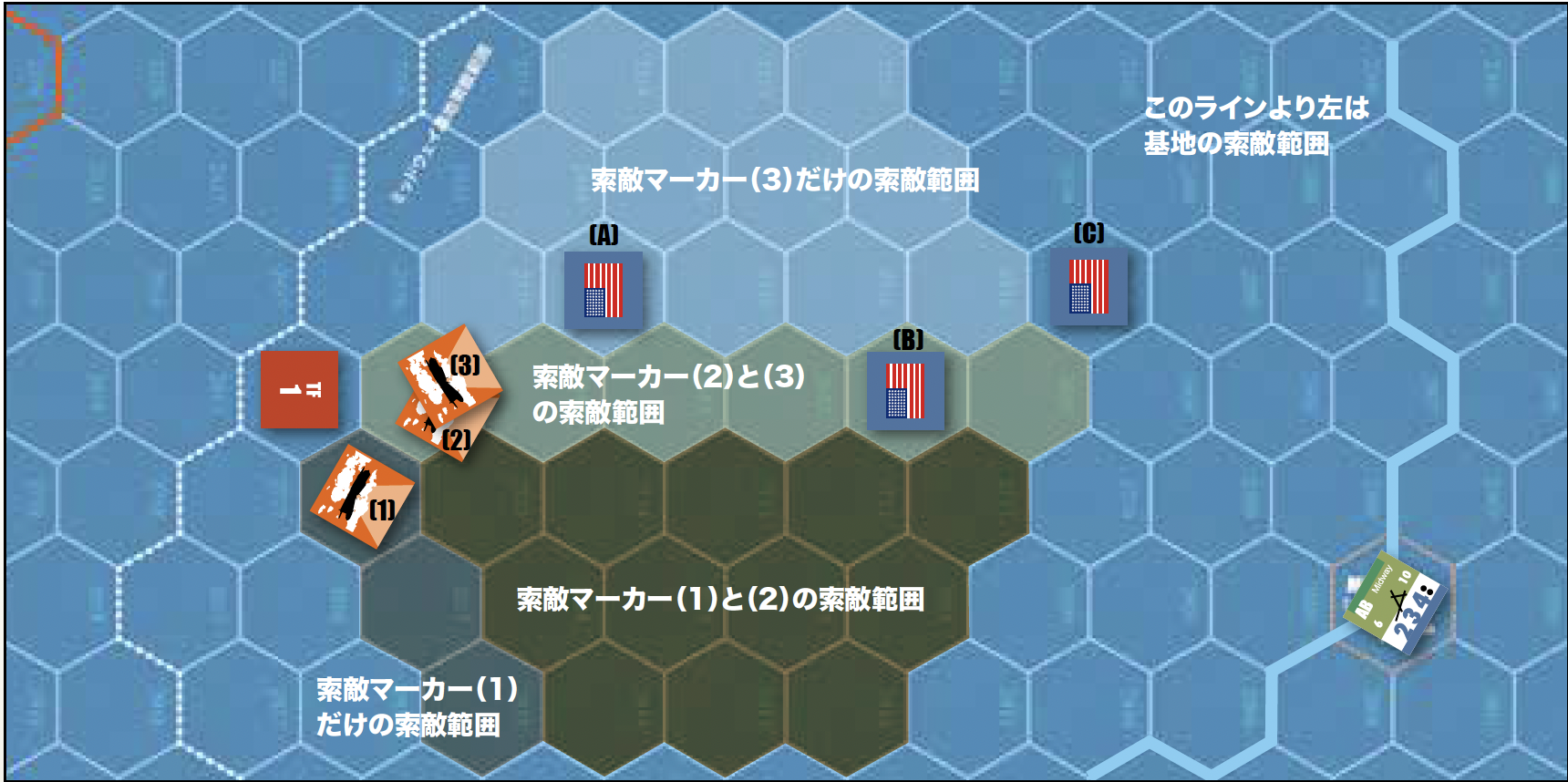
The number of Aerial Search Points for each side in The Battle of Midway 2nd Ed. also captures the different search doctrines of the Japanese and Americans in an easy to visualize (and play) manner. For the Japanese, they get one ASP for:
- Each Light Carrier (CVL) awards 1 ASP (i.e. 1 ASP per CVL)
- 8th Cruiser Division (1 ASP per step, max 2 ASP)
- Each Aircraft Carrier (CV) awards 1 ASP (i.e. 1 ASP per CV).
The Americans get 1 ASP for each two-step CV. American bases (Midway and Dutch Harbor) have a 120 degree search arc when at full strength (2 Steps) and a 60 degree search arc when reduced to 1 Step.
The Search markers use a die roll to “search” Fleet Markers the result of which is either Search Failure or Sighted. If a Dummy Marker is Sighted, it is removed; if a real Fleet Marker is discovered, the Fleet Marker is flipped to it’s real side with the number of aircraft carriers (CV or CVL) revealed.
Some (many?) of you might be saying, “Hey Rocky, that is a very familiar search mechanism.” While in some ways “familiar” I consider it innovative in that there two important-yet-simple steps: first, the placement (planning) of the Search Markers pointing to a hex corner that creates a “search cone” and, second, the simplified search resolution. In this simplified search resolution the players do not move search aircraft across the board but instead search from the Search Marker to a Fleet Marker with the result resolved in a single die roll.
A familiar carrier/base display is used to track Aircraft Operations in The Battle of Midway 2nd Ed.. Familiar, yet simplified for there are only three boxes: Ready, Hanger, and CAP [Combat Air Patrol]. Even in this simplified Aircraft Operations sequencing there are simple, yet highly thematic rules. One particular of rule of note is (9.2.8) Induced Explosions where aircraft in the Hanger do not cause a +1 die roll modifier (DRM) to a Defense Check unlike aircraft in the Ready box. A second notable rule is the reduction in strike range when aircraft carriers in the same hex combine their attacks using Airborne Assembly. Both rules are simple but highly thematic.
Resolving attacks in The Battle of Midway 2nd Ed. is, again, a mostly familiar set of game mechanisms that is ruthlessly streamlined. Like Search, aircraft on the attack do not move hex-to-hex across the board but are placed directly on the Fleet Marker they are attacking. A familiar combat sequence of CAP, Anit-Air Fire, Anti-Ship Attack, and Return is played out. Firing/Attacking is a modified Yahtzee-dice approach; if Fire Power <5 then roll 1d6 for each point with Hits scored on a roll of [6]. If Fire Power >5 then every 5 full points is an automatic Hit. For each Hit a Defense Check is made where the defending player must roll 1d6 less than or equal to the unit’s Defense Power to negate the Hit. This is where simple chrome rules like Induced Explosions are used for great dramatic—yet historical effect.
More than just a battle
The Battle of Midway 2nd Ed. is also more than just the carrier battles in Operation MI as it also includes Operation AL. As explained by Jonathan Parshall in 1942: Crux of War (Oxford University Press, 2026): the two campaigns were intimately related:
Having won the bureaucratic battle back in early April to launch an offensive in the Central Pacific, Admiral Yamamoto set his staff to work creating the plan for Operation MI: the assault on Midway. As the political price for Yamamoto being allowed to undertake his operation, though, Naval GHQ had demanded that points in the Aleutian Islands be captured as well, resulting in an interrelated plan called Operation AL. Given the tight timetable, huge geographic extent of the battle area, and array of assets assigned—more than a dozen formations comprising 186 warships, submarines, and transports—planning had been hurried. Nevertheless, by the end of April, orders had been cut to various operational commands. A few days later, on 1 May, Combined Fleet’s commanders were summoned to battleship Yamato’s cavernous wardroom to wargame the upcoming operation.
Parshall, p. 505
The victory conditions in The Battle of Midway 2nd Ed. emphasize that these two campaigns were really more than just a carrier battle. The vast campaign is apparent simply by looking at the two maps with two island invasion forces. Locations matter; Victory Points for invasions are just as valuable (more valuable?) as sinking ships. The expanded campaign alone makes The Battle of Midway 2nd Ed. more than just a, “carrier battle random generator around June 1942” and sets this latest title apart from many of it’s Battle of Midway predecessors.
As a grognard, the wargames Parshall mentions aboard Yamato also intrigued me. Going into the wargame, Parshall comments that, “Yamamoto’s plan was notable for its optimism, dispersion of forces, and undue complexity” (Parshall, p. 505). With regards to the wargame outcome, Parshall writes:
The wargames aboard Yamato revealed only a few of these flaws. The exercises were so tightly choreographed by Yamamoto and his staff that they negated any real learning. To many of the officers, the planning felt slapdash and arrogant, and not a few left uneasy about the upcoming operation. But no one was willing to brook Yamamoto’s displeasure by saying so. All in all, as one Japanese officer wrote after the war, “It could not be said of them, ‘Everything was done that was humanly possible.’
Parshall, p. 507
The Battle of Midway 2nd Ed. allows YOU, the players, to see if YOU can do, “Everything…that was humanly possible” to win in an innovative yet streamlined wargame covering both Operation MI and Operation AL. Imagine how history might be different if Yamamoto and the Combined Fleet staff in May 1942 had The Battle of Midway 2nd Ed to wargame with….
Feature image courtesy RMN
The opinions and views expressed in this blog are those of the author alone and are presented in a personal capacity. They do not necessarily represent the views of U.S. Navy or any other U.S. government Department, Service, Agency, Office, or employer.
RockyMountainNavy.com © 2007-2026 by Ian B is licensed under CC BY-SA 4.0

