
Jonathan Parshall does not write many books but when he does…watch out for your bedside stand to break!
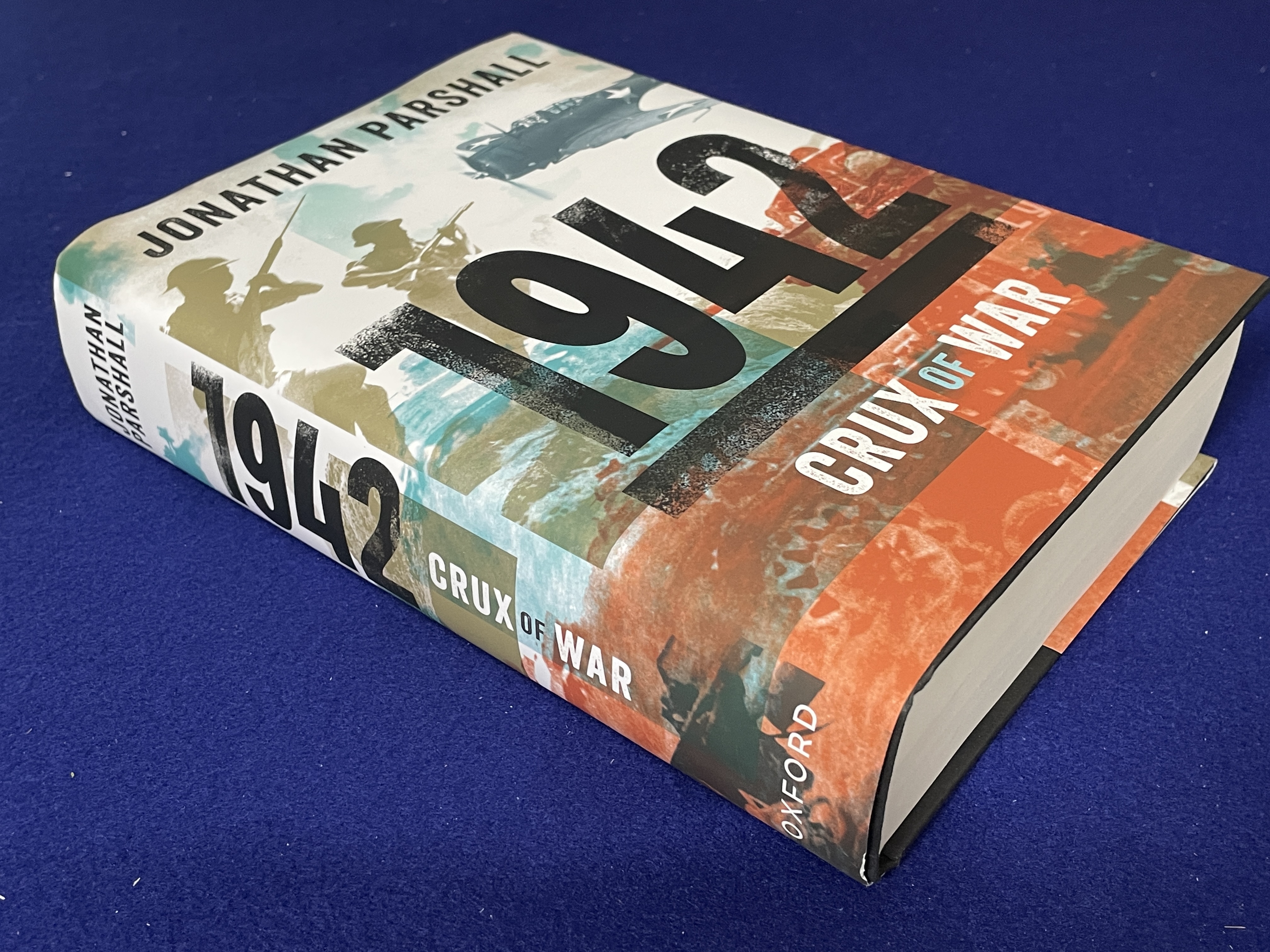
Last week Parshall’s new book, 1942: Crux of War, arrived at RockyMountainNavy Gamer headquarters. All 1,248 pages and 4.9 pounds of it.
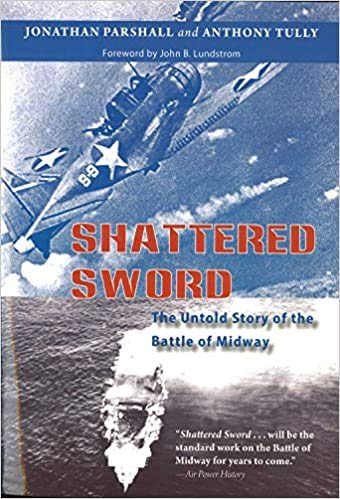
For readers of military history—especially World War II in the Pacific—Jonathan Parshall should be a well-known name. As the co-author of Shattered Sword: The Untold Story of the Battle of Midway from Potomac Books in 2005 he (dual-handedly with his co-author Anthony Tully) rewrote the story of the Battle of Midway. Whether you believe their analysis or not (I am a believer) one cannot argue the work is impressive.
This weekend I started reading 1942. Although I have only started the book I really like what I am reading.
In 1942 Parshall takes on…1942. The entire year. By month. By six broad areas (Grand Strategy/Economics, Battle of the Atlantic, Air War Europe, Mediterranean Theater, Eastern Front, and Pacific Theater).
Reading the Acknowledgments in 1942 is a literary who’s-who of military historians. Many I recognize; others I surely will be looking up.
In the Introduction to 1942, Parshall lays out his primary argument; it was not what I expected. In 1942, Parshall explains, “There was no single turning point” (Pashall, p. xxvii) Parshall wrote 1942 in many ways as a counterpoint to the scholarly historical position of “Eastern Front Determinism”; that is, “the failure of Germany’s Operation BARBAROSSA (variously fixed in either the summer or fall of 1941, depending on the scholar) as the point past which Hitler could no longer win the war, and Axis defeat was assured—making it perhaps the biggest ‘turning point’ of all” (Parshall, p. xxvii). Parshall’s motto for 1942 is can be summed up in seven words he writes, “It sure wasn’t obvious at the time” (Parshall, p. xxx). In 1942 Parshall promises to try and make it more obvious to the reader.
Finally, I must disclose to you that I really like how Parshall writes. To my reading ear his voice is smooth and easy to follow. I also appreciate his wit that is self-deprecating. At the beginning of Chapter 1: Shape of War, Parshall warns the reader:
No author ever wants to admit the possibility of their narrative being anything less than riveting, but I confess that the first three chapters of this book are pretty tough sledding, because so many pre-1942 topics have to be covered to make the rest of the year comprehensible. This is further complicated by the simultaneous initiation in December 1941 of the Red Army’s expansive winter counteroffensive, and Japan’s Pacific onslaught, both of which require careful treatment. Those familiar with my Midway book may recall my counseling at the start of the its third chapter to pour themselves a rather tall glass of spirits before wading in. For this book, I’d advise not waiting but locating a comfy chair and deploying your refreshment of choice now. The year 1942 is a marathon, not a sprint, and to get it up and running, I have to put the previous year through its paces. Once we make it to March, things will get easier. I promise.
Parshall, p. 1
Off to the beer fridge….
Feature image courtesy RMN
The opinions and views expressed in this blog are those of the author alone and are presented in a personal capacity. They do not necessarily represent the views of U.S. Navy or any other U.S. government Department, Service, Agency, Office, or employer.
RockyMountainNavy.com © 2007-2026 by Ian B is licensed under CC BY-SA 4.0

