
This fall, I lost much gaming time due to graduate school. Thus, my Shelf of Shame is quickly growing from a small neat pile near the gaming table to tall stacks taking up the entirety of the underneath area. Buried within those stacks are three strategy boardgames. While I wish this post was deep thoughts on at least one of those games, the sad reality is that they are unplayed—and likely to remain unplayed—until the holiday break. Today, however, I want to share some thoughts on why these boardgames are in my collection and what I hope to gain by (eventually) playing them.
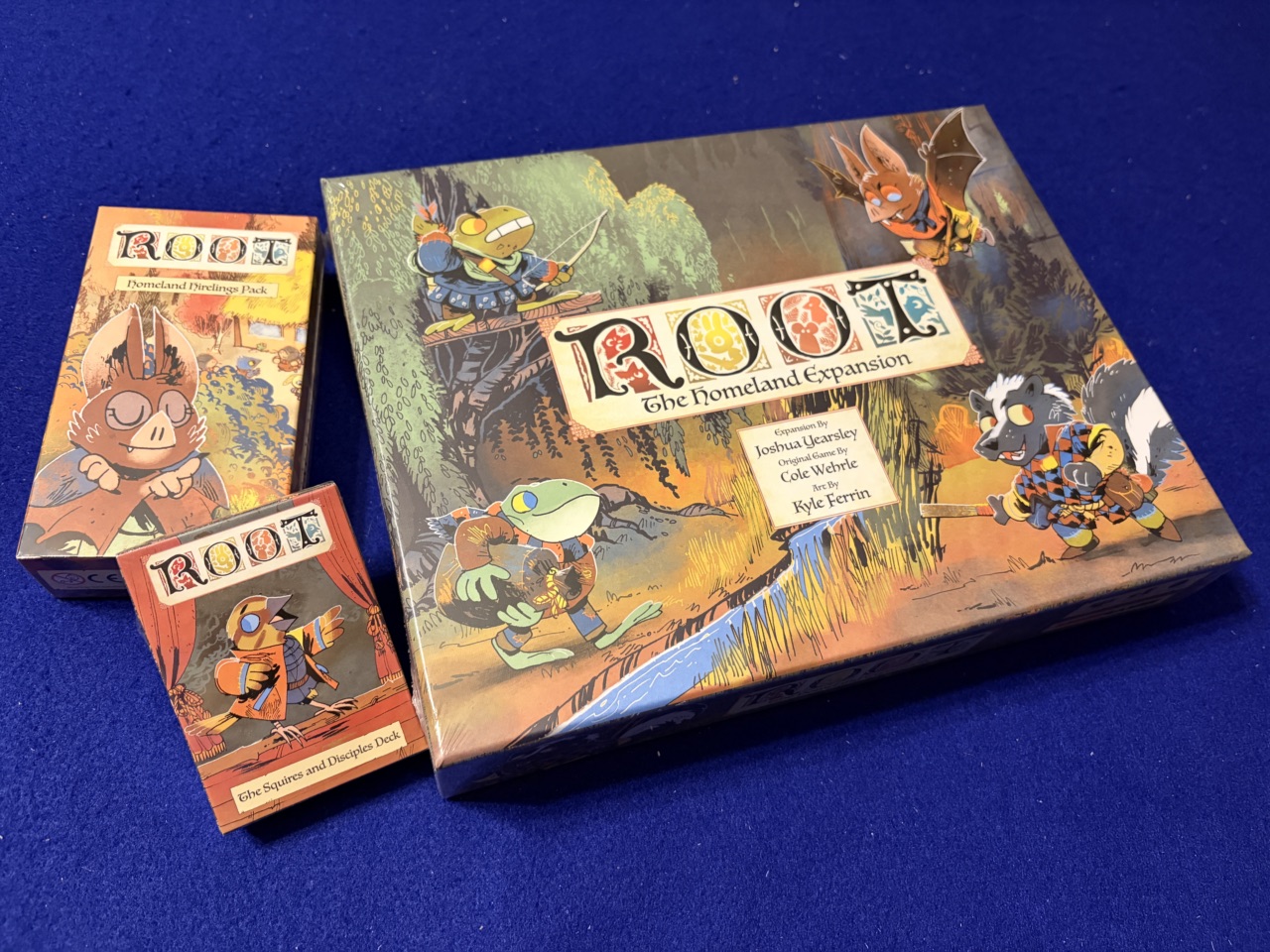
Root: The Homeland Expansion (Leder Games, 2026)
I absolutely love the Root-series of boardgames for the very reason that so many also find learning the game to be aggravating; every faction uses a different core game mechanism. In many ways Root violates a core principle of game design—simplicity—because every player needs to learn a unique set of rules to play. In other words, to play Root, each player must learn a player-unique set of rules to manipulate their faction; they cannot learn the game by simply watching other players and taking cues from their strategy or actions.
I am always blown away by how well the asymmetrical rules of Root remain playable even after several expansions. Granted, as more expansions roll out play is some cases is less elegant than the core game but the reality is that there are few—if any—other boardgames out there that mix so many different core game mechanisms in one game. So Root remains in my collection and continues to get played if for no other reason than to teach me about game design both from a player perspective (playing a game with a particular mechanism) or as a wannabe-designer showing how to design a game using multiple game mechanisms.
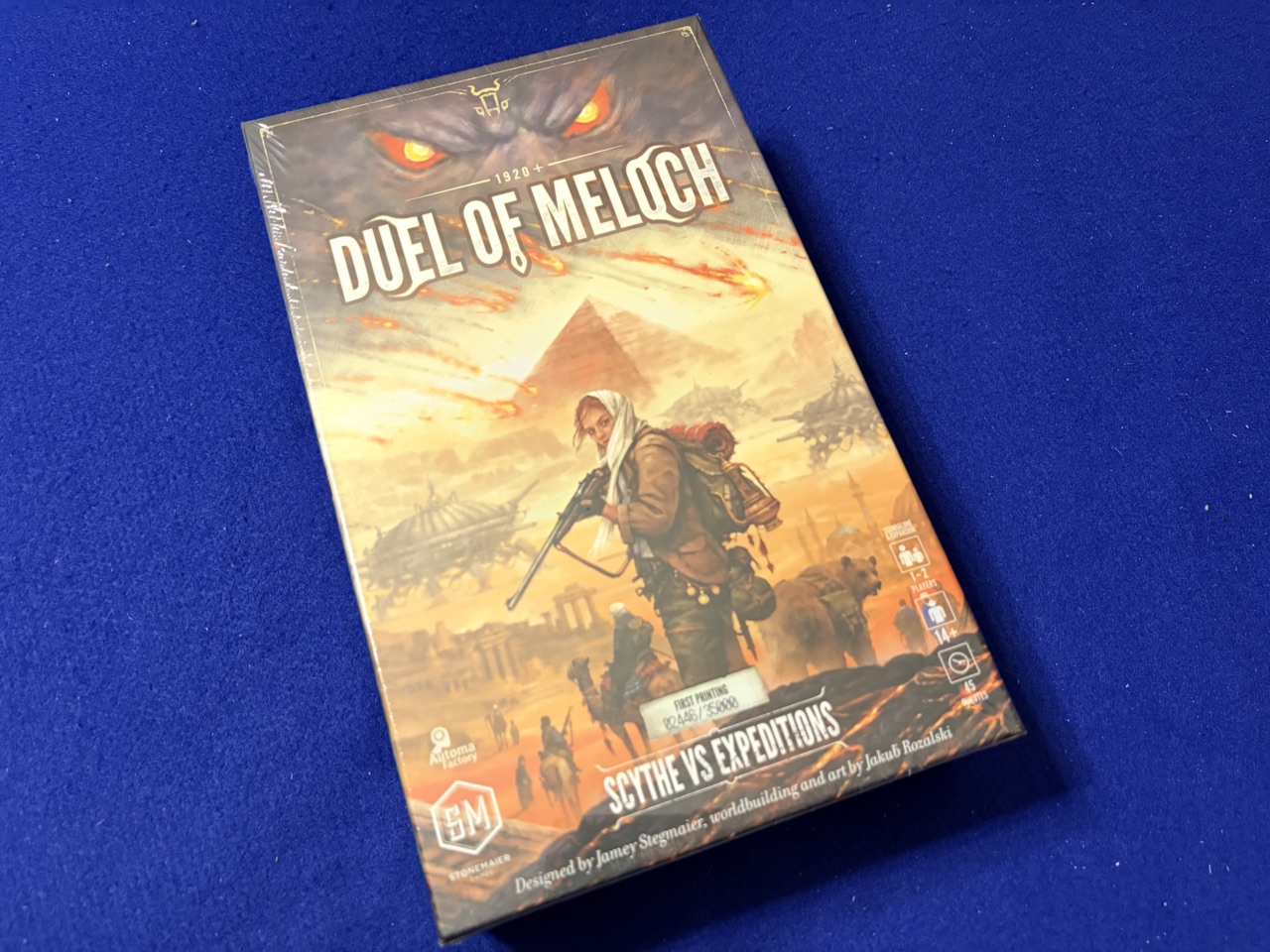
Duel of Meloch (Stonemaier Games, 2026)
Scythe (Stonemaier Games, 2016) was one of the first “new” boardgames I acquired in my renaissance of gaming in the mid-20-teens. I love the game for both the gameplay and the art. When Expeditions (Stonemaier Games, 2023) released I acquired it but—admittedly—it has not proven as popular within Casa d’RockyMountainNavy. Still, when Duel of Meloch dropped I had to acquire the game, if for no other reason than, to so see how Scythe and Expeditions can be played against each other. In this way Duel of Meloch is much like Root: Each player has a unique set of game mechanisms (in this case entire rule sets) to play against the other.
Like Root before it, Duel of Meloch is as much a “game-to-play” as it is a “game-to-learn” about game design.
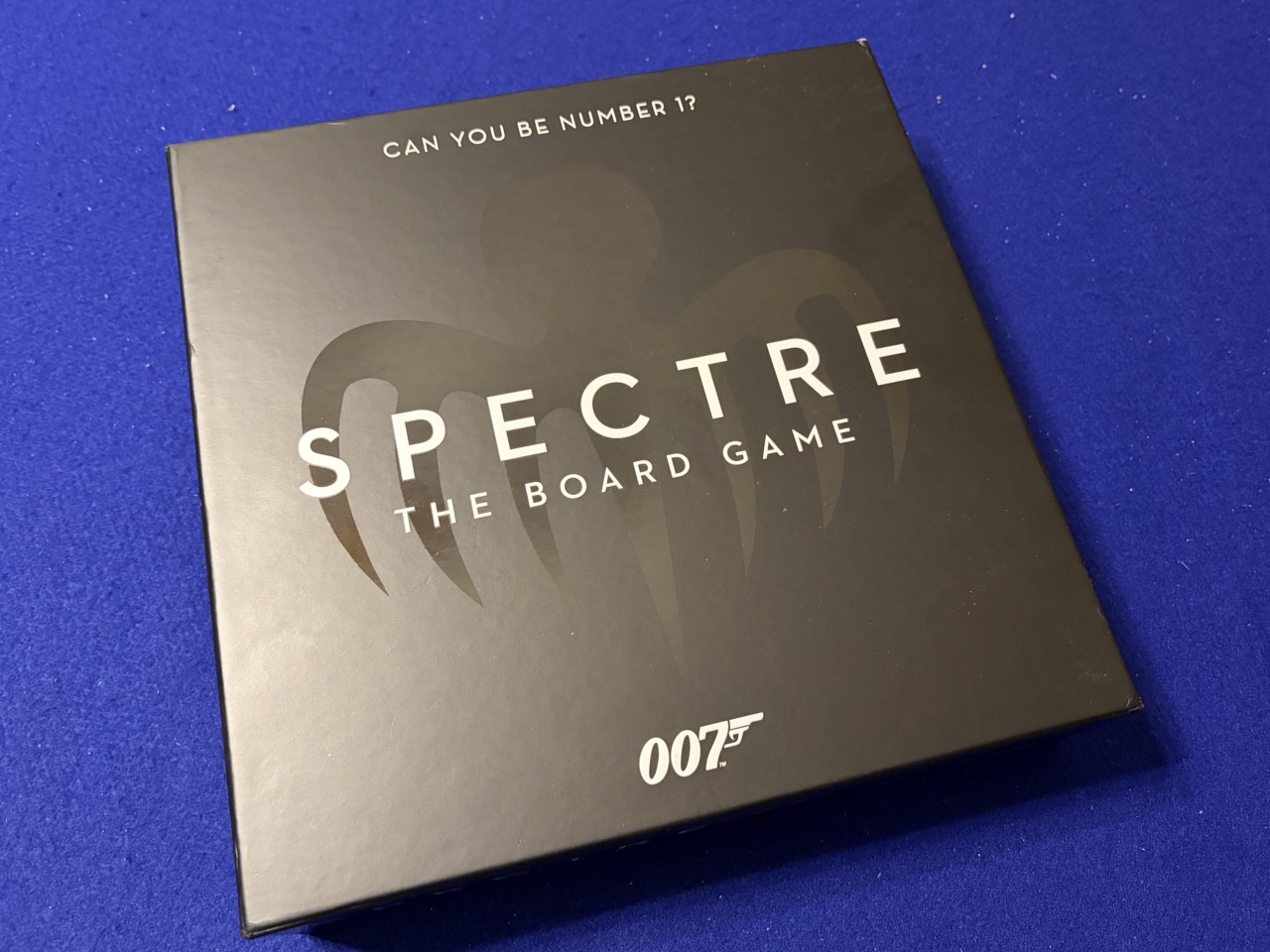
SPECTRE: The Board Game (Mōdiphiüs Entertainment, 2022)
I am, unashamedly, a fan of James Bond movies. I rank my Bonds in tiers with Sean Connery at the first-tier, Daniel Craig at second-tier, Roger Moore/Timothy Dalton/Pierce Bronsan at third-tier, and George Lazenby as an unrated extra. Thus, the five villains in SPECTRE do not bother me as three are from Connery films (Rosa Klebb, Ernst Stavro Blofeld, and Emilio Largo), one from a Moore film (Aristotle Kristatos), and one from a Craig film (Raoul Silva). Thematically, I am also excited to play SPECTRE because the players are the villains, not unlike the player roles in Villainous (Ravensburg, 2018) though without that Di$ney ruinous touch (I admit, however, the graphics are superb).
From the forums on BoardGameGeek for SPECTRE I am aware of “issues” with the rulebook but, hopefully, those same warnings will enable me to learn where the pitfalls in the rules are before actual play. Too bad this game is out of print as I would love to see expansions with different villains (or Agents/Henchmen?).
Feature image courtesy jamesbondfandom.com
The opinions and views expressed in this blog are those of the author alone and are presented in a personal capacity. They do not necessarily represent the views of U.S. Navy or any other U.S. government Department, Service, Agency, Office, or employer.
RockyMountainNavy.com © 2007-2026 by Ian B is licensed under CC BY-SA 4.0

