
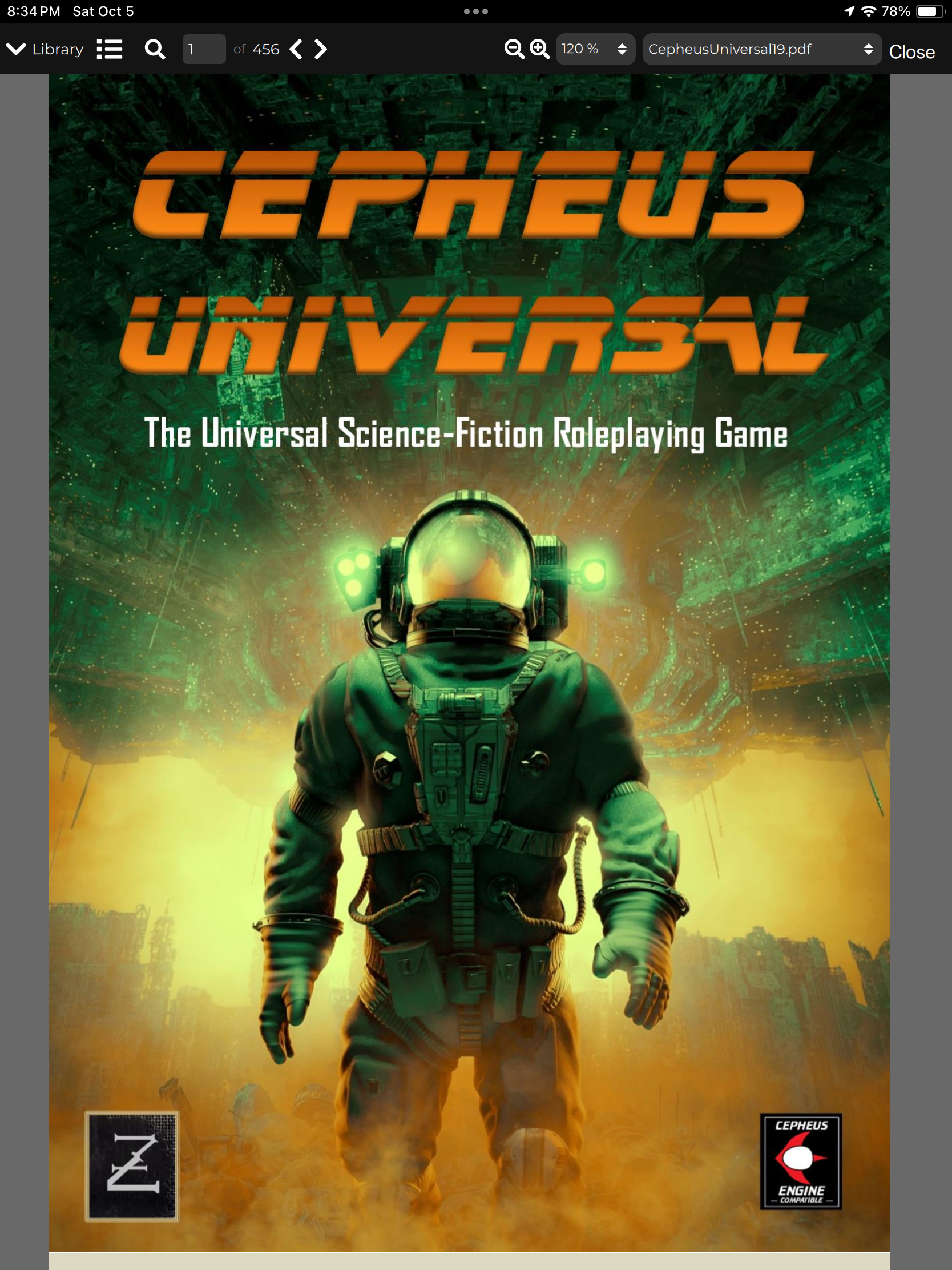
With news that Marc Miler passed his ownership of the Traveller science-fiction roleplaying game (RPG), in its entirety, over to Mongoose Publishing it is time for me to reconsider where Traveller and its close cousin the Cepheus Engine, sit in my pantheon of RPGs. My recent acquisition of Cepheus Universal: The Universal Science-Fiction Roleplaying Game written by Paul Elliott for Zozer Games in 2024 gives me the opportunity to look, along with you readers, at what the latest Cepheus Engine game delivers. More importantly, it helps enlighten some legal issues that have been at the back of my mind for years.
Traveller to Cepheus
What is your preferred game system for playing science-fiction roleplaying games? If you are like me you probably have many, many different game systems to choose from. One of the latest to arrive on the market is Cepheus Universal: The Universal Science-Fiction Roleplaying Game written by Paul Elliott for Zozer Games in 2024. Like the name claims, Cepheus Universal attempts to be a “complete” roleplaying game (RPG) system that a Game Master or players can use to create adventurous play in most any science-fiction universe of their own creation. Cepheus Universal is successful in doing so in great part because it quite literally is the evolution of the best parts of nearly 50 years of science-fiction roleplaying game design.
Retro roots
It seems like just yesterday that I picked up my very first roleplaying game in what is today called Classic Traveller (Game Designers’ Workshop, 1977). These three digest-sized “Little Black Books” were 48 pages each making the entire game a modest 144 pages in sum total. The core game mechanism was a simple “2d6 = 8+” or roll two six-sided die and, after applying modifiers, achieving success if the roll was [8] or higher. Though other versions of Traveller followed, the system gradually strayed away from using 2d6. In 2008, Mongoose Traveller 1st Edition (MgT1e) returned to the 2d6 roots of Classic Traveller and published a new game system that really was in many ways an evolution of Classic Traveller but laid out in a single book of 192 pages and published under the Open Game License v1.0a. In 2016, in a backlash against what I consider legal overreach by Mongoose, a system reference document (SRD) using the Open Game License (OGL) version 1.0a laid out the Cepheus Engine game system—in effect MgT1e with proprietary setting materials removed—in a 208-page document.
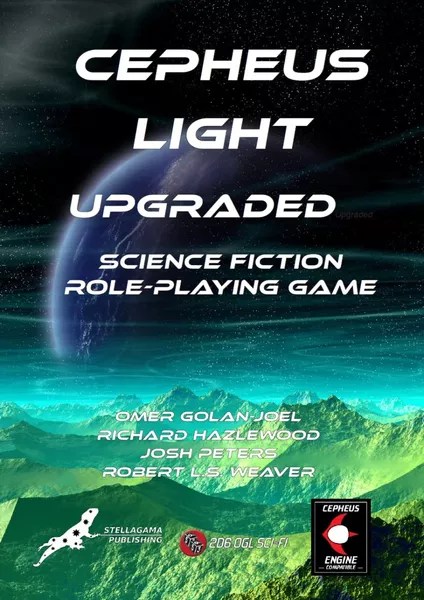
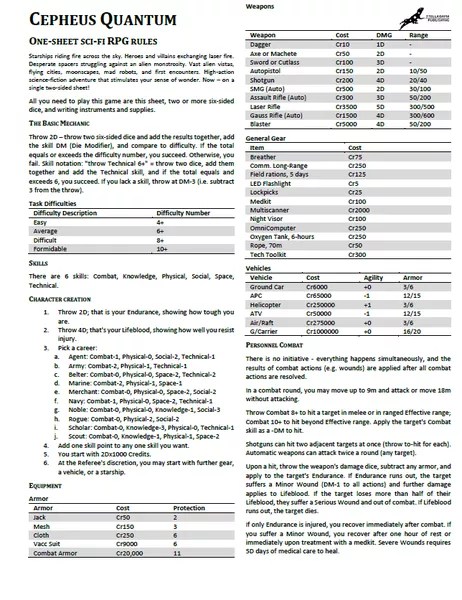
Following the publication of the Cepheus Engine SRD, many rules sets using that game system became available. These range from the minimalist Cepheus Quantum (2 pages) up to alternate Traveller universes in The Clement Sector from Independence Games or Hostile from Zozer Games which may run from tens to multiple-hundreds of pages.

Opening a new universe
Now comes along Cepheus Universal: The Universal Science-Fiction Roleplaying Game. Written by Paul Elliott and published by Zozer Games in 2024, Cepheus Universal is a 456-page tome of rules. While a bit heavier in page count than some other sci-fi roleplaying games—ALIEN: The Roleplaying Game from Free League Publishing (2019) is 395 pages—it is important to note that Cepheus Universal is near-settingless; that is, there is no default setting for Cepheus Universal unlike other RPGs based on licenses such as the above-mentioned ALIEN: The Roleplaying Game or The Expanse Roleplaying Game (Green Ronin, 2019). Cepheus Universal instead leans heavily into tools (sometimes referred to as sub-systems or even sub-games) that give the Game Master and players game mechanisms to use to build their own adventure settings. The broadest categories of the sub-games are characters, equipment, vehicles, and locations. The key to the success of Cepheus Universal is that all those sub-games work together because they all are describes using a common lexicon or terms of reference that work together with the core game mechanism.
2d6 = 8+
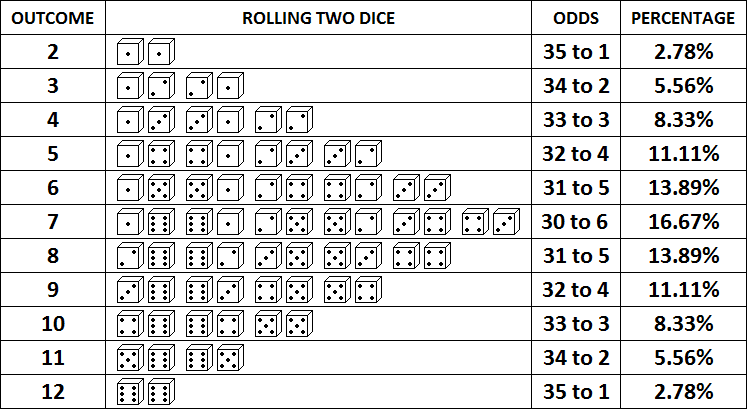
The core game mechanism for Cepheus Universal harkens all the way back to the basics of Classic Traveller. To play Cepheus Universal you do not need any fancy polyhedral dice but just a set of plain ole six-sided dice. While Classic Traveller was basically roll 2d6, add skill, successful if roll is [8] or higher, Cepheus Universal is a bit more detailed (but not much more so). Given the range of outcomes from a 2d6 die roll, the die roll can be sensitive to too many (or overscaled) die roll modifiers which can create “swingy” results. Cepheus Universal attempts to avoid this swinginess by limited the number of die roll modifiers applicable to any single roll.
Dying in character generation
As contemporary science-fiction roleplaying gamers what they know about character generation (chargen) in Traveller and they will very likely mention dying in chargen. While many versions of Traveller retain that feature of character generation, the truth is that the “death in chargen” rule was driven to existence as an alternate rule for character generation early on. In Cepheus Universal, death in character generation is possible but certainly is not part of the default chargen system.

In most every version of Traveller and even many evolutions of Cepheus Engine characters are generated using a term-by-term lifepath system. In Classic Traveller characters joined a career at age 18 and progressed through four-year terms before either dying or mustering out to start adventures. Later Traveller games and many Cepheus Engine-based versions retained yearly or four-year terms. Cepheus Universal, however, offers four different character generation systems with the “standard” Traveller-like term-by-term lifepath system relegated to an alternative offering placed in the Appendix at the back of the book.
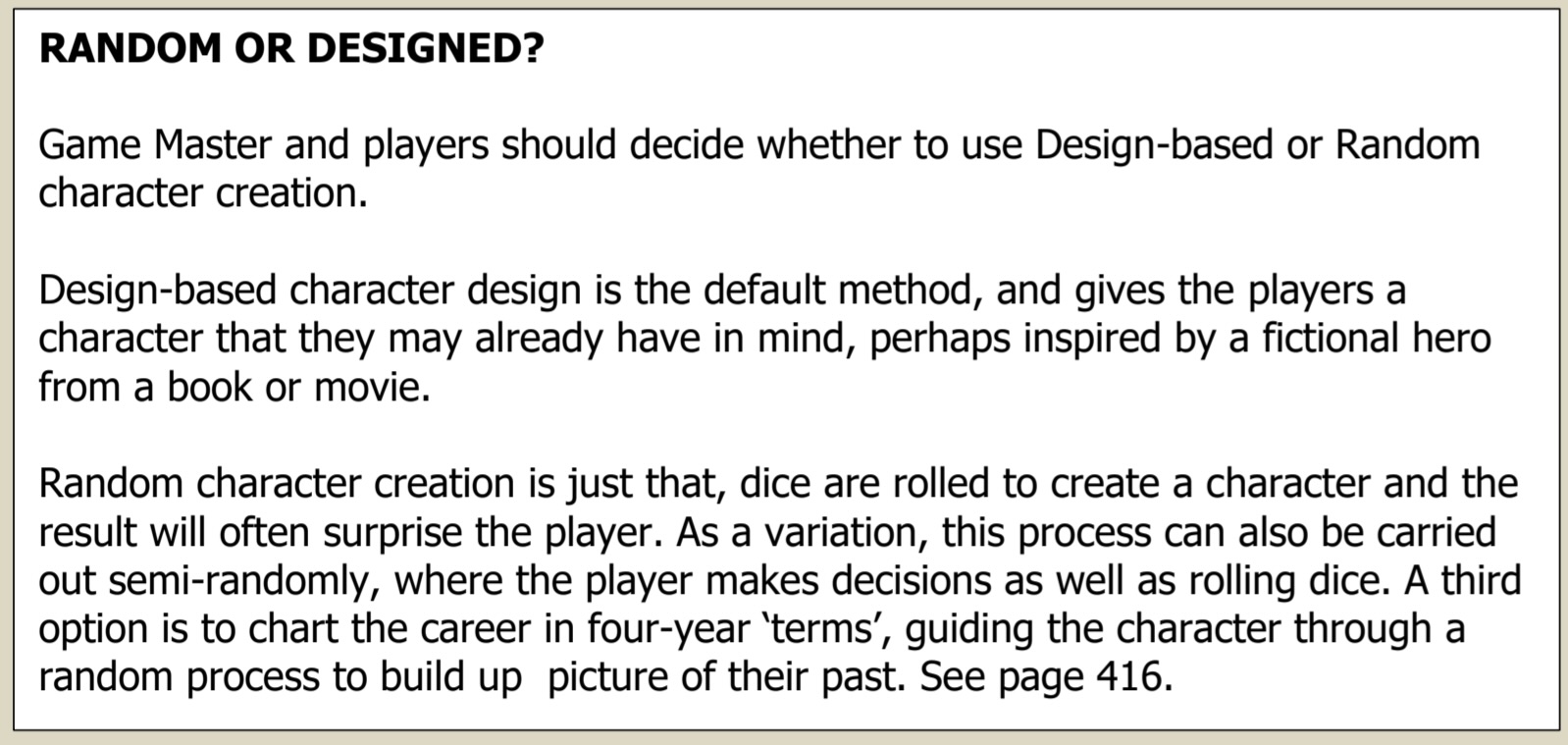
The first character generation system offered in Cepheus Universal is called Design-based creation. In Design-based creation players start with a concept and build from there. There are a few randomized creation possibilities but, for the most part, players get the character they want.
Cepheus Universal also offers Random creation rules which, perhaps, is better describes as “semi-random” (CU, p. 35). As the rule book states, “we provide an optional randomized system, with two approaches: 1) Roll everything randomly and explain what or who the resultant character is; or 2) Decide on a profession or role, then select the Skill Category tables to roll on” (CU, p. 35).
The third character generation system offered in Cepheus Universal is Character Lifepath. This lifepath system is not to be confused with the term-by-term system. As the Cepheus Universal rule book states, Character Lifepath is, “inspired by a classic cyberpunk roleplaying game” and is “random, even if you are designing your character” (CU, p. 35).
As previously mentioned, the rules for creating characters using a term-by-term lifepath system is presented as an appendix in Cepheus Universal. Truth be told, I almost missed the rules for term-by-term character creation because the table of contents in my digital version of Cepheus Universal does not have a link to the appendix.
It’s the same, but different
While the rules for character generation in Cepheus Universal are a marked departure from many Traveller or previous Cepheus Engine instantiations, much of the rest of the rules are similar to, but in many ways evolved, from those first seen in Classic Traveller, Mongoose Traveller 1st Edition, or the original Cepheus Engine SRD. Here are a few examples.
‘Hokey Religions And Ancient Weapons Are No Match For A Good Blaster At Your Side, Kid.’ – Han Solo
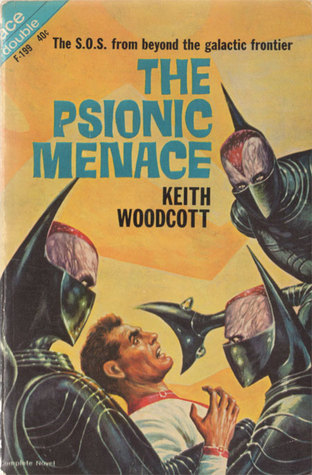
Though published the same year as the movie Star Wars released, Classic Traveller had its own version of “The Force” in rules for psionics.1 Rules for psionics continued through the Traveller and Cepheus Engine lines, though Cepheus Universal places the rules in a chapter titled “Mind Powers” (CU, p. 53). Unlike many other versions of Traveller, in Cepheus Universal the rules for psionics mind powers are placed following the rules for character generation which strongly implies that mind powers are truly part of a character and not a bolted-on set of magic-like rules.
Have spacesuit; willing to travel
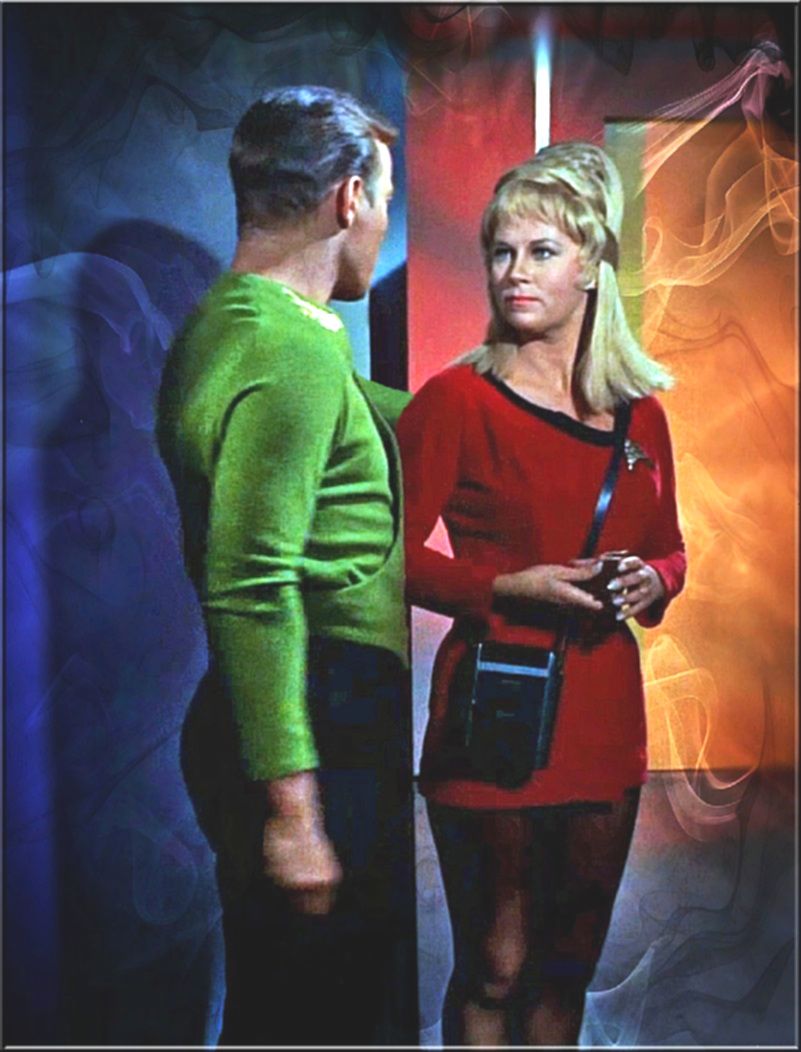
Whereas most Traveller or Cepheus Engine rules simply treat a spacesuit as another piece of equipment, in Cepheus Universal this essential piece of gear gets its own chapter. There are also rules included for customizing your spacesuit which is more than just a personalized paint scheme. These rules are certainly useful in a more gritty, hard sci-fi setting…as long as you use them properly.
The six million credit being
The concept of cybernetics pre-date Classic Traveller; indeed, one of my favorite childhood television series, The Six Million Dollar Man, ran from 1974 to 1978. So one should not be surprised to see cybernetics in Cepheus Universal. I am not sure which version of Traveller first introduced cybernetics but by 2008 they were listed under equipment in Mongoose Traveller 1st Edition.
Narrator: Steve Austin, astronaut. A man barely alive.
The Six Million Dollar Man, opening narration
Oscar Goldman: We can rebuild him. We have the technology. We can make him better than he was. Better, stronger, faster.
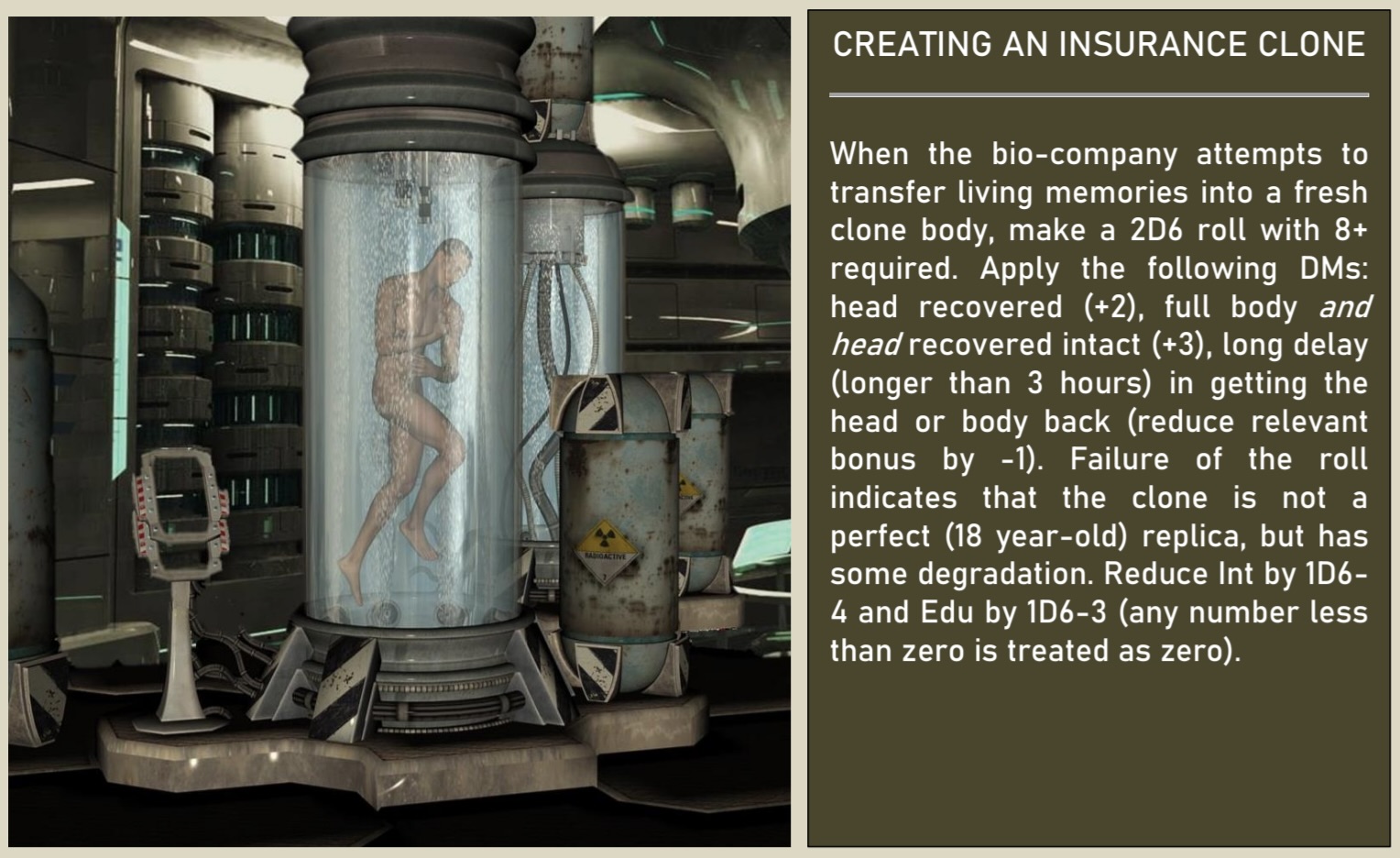
Genetic modifications, called Retrogenics, also appear in Cepheus Universal. Interestingly, this also leads to rules for clones. Though clones appeared in earlier versions of Traveller and Cepheus Engine, I cannot recall seeing rules for Insurance Clones before (CU, p. 175).
A universe without Moore’s Law
In Classic Traveller, starships used computers which were, in effect, representative of the giant mainframes of the 1960s and 1970s. One of the criticisms of Traveller from nearly the beginning is that computers tech in Traveller is has little comparison to the computer technology of today. In Classic Traveller a Model/2 computer, available at Tech Level 9 (TL9, slightly advanced technology compared to today) occupies 28 CUBIC METERS of space (or a approximately a 3m x 3m x 3m volume). Worse yet, it can only run three “spaces” of programs. This usually meant that when your trusty Type-A Free Trader met that pirate ship you better hope you had a Maneuver program (1 space) loaded so you could use the maneuver drive, have the Jump-1 program (1 space) running to calculate the jump to hyperspace, and maybe have the Target program (1 space) running to be able to use your weapons.

Cepheus Universal attempts to get past this large mainframe issue by instead offering Portable computers. Think “smartphone-like hand computers (‘coms’), military or civilian laptops, or the data station on board a vehicle or in a starport terminal” (CU, p. 179). These portable computers are defined not by program size but by how many “useful” programs they can run. Even so, using the rules as written there is no in-game way to replicate the full power of my iPad but, for the purposes of game plot, there are enough rules to move adventures along. The computer rules are extended in a fashion with rules for Artificial Intelligence (AI) that, fittingly for sci-fi adventures, are a step beyond where AI is today.
“I’ve outrun Imperial starships. Not the local bulk cruisers, mind you. I’m talking about the big Corellian ships now.” – Han Solo
One of the joys of Traveller, and Cepheus Engine, roleplaying games has always been the ability to design your own ships. For those familiar with the rules, ship design is broadly divided into two categories: adventure-class and capital ships. In some alternate Traveller universes, like The Clement Sector setting from Independence Games, ship designs are capped at lower displacements to make the setting a “small-ship universe.” In many previous iterations of Traveller, the rules for adventure and capital-class ships were often divided into different rulebooks; ergo Classic Traveller Book: 2 Starships and Classic Traveller Book 5: High Guard. A further distinguishing characteristic is that the rules for combat using adventure-class ships were often different than those for fighting with capital-class ships.

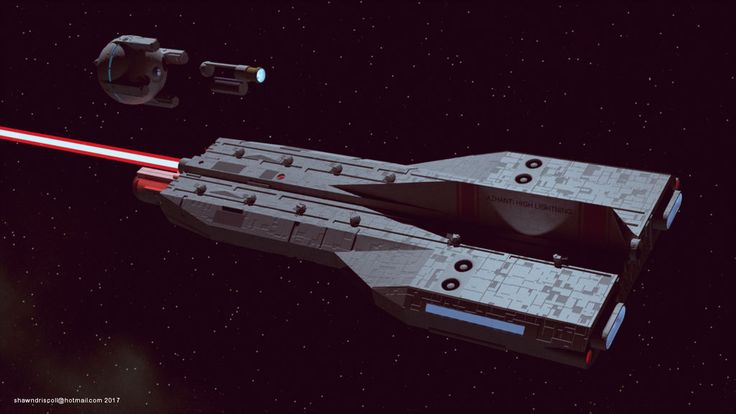
Cepheus Universal takes a slightly different approach to ship design and combat. In terms of ship design, they retain the adventure and capital-class division with the chapter “Spacecraft Design” following the well-proven sub-game of ship design evolved over the decades since Classic Traveller. Cepheus Universal also enables the creation of capital-class spacecraft using the rules in the “Capital Ships” chapter. The design methodology, however, used for capital ships is a streamlined, more abstract set of rules that use ship templates that are then customized.
In Cepheus Universal, adventure and capital-class ships both use the same set of combat rules found in the “Space Combat” chapter. If there are some rules in the Cepheus Universal that I have a hard time accepting after my initial reading it is almost certainly the rules in this chapter. It is possible that the scaling of weapons and armor between adventure and capital-class ships work but it is definitely going to take me working though combat examples and scenarios to make me comfortable in that thought.
Legal credits
The last Cepheus Universal discussion point I wish to talk about does not concern the game system or specific rules, but rather the legal status of the game.
Here are the relevant front matter notices in Cepheus Universal:
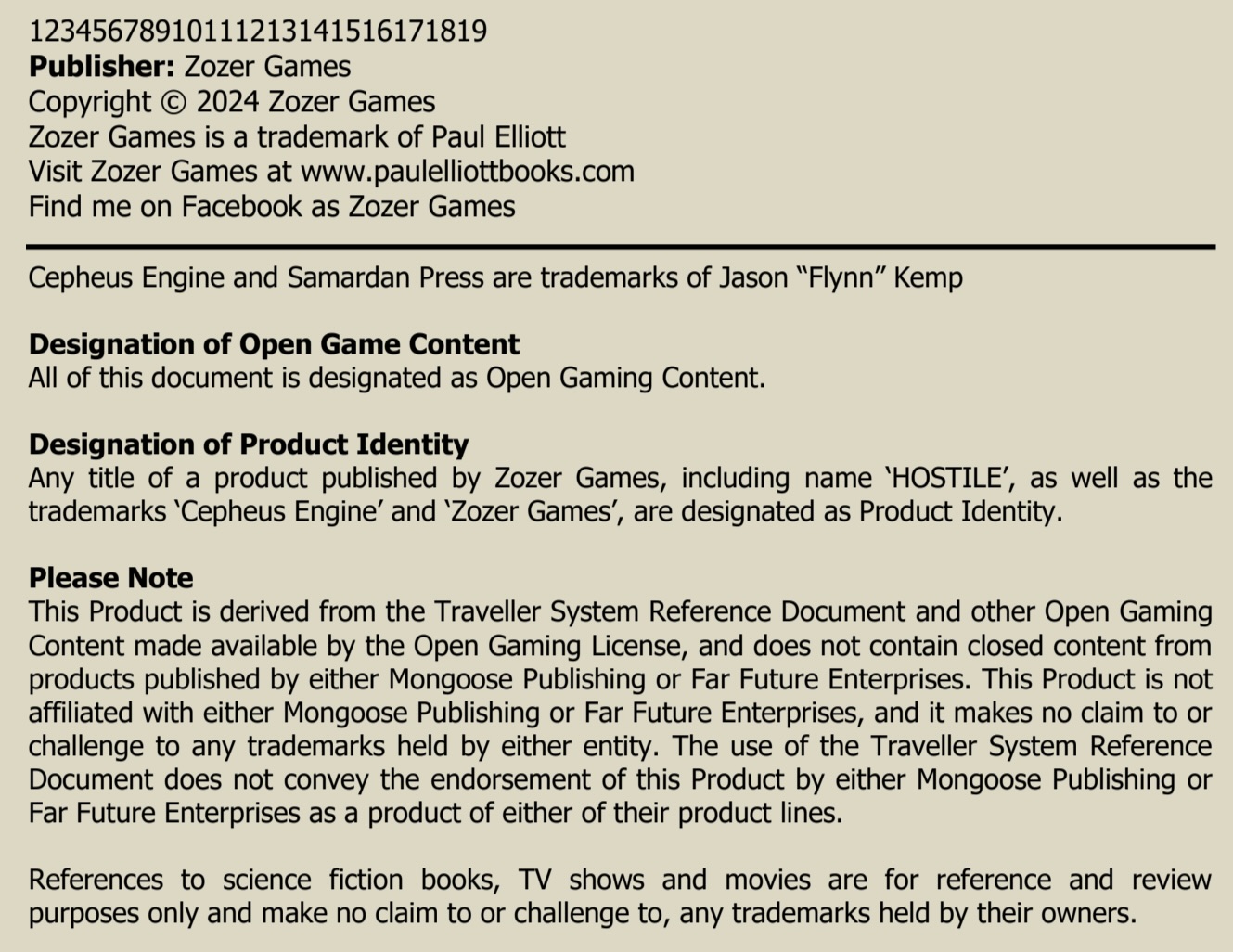
My concern is that, given the recent complete acquisition of Traveller intellectual property by Mongoose Games from Marc Miller, that the legal future of the Cepheus Engine SRD and any products derived from it are on shaky grounds. I worry because, as I alluded to above, I did not appreciate Mongoose Publishing’s actions during the “MgT2e Crisis.” I also anxiously watched the debacle when Wizards of the Coast (WotC) tried to cancel the Open Game License. More specifically, I watched Mongoose Publishing during the OGL Debacle and noted how Mongoose was not a defender of the OGL but, from what I could tell, was waiting in the wings to swoop in on Cepheus Engine publishers and pick over their carcasses after WotC had eviserated the OGL.

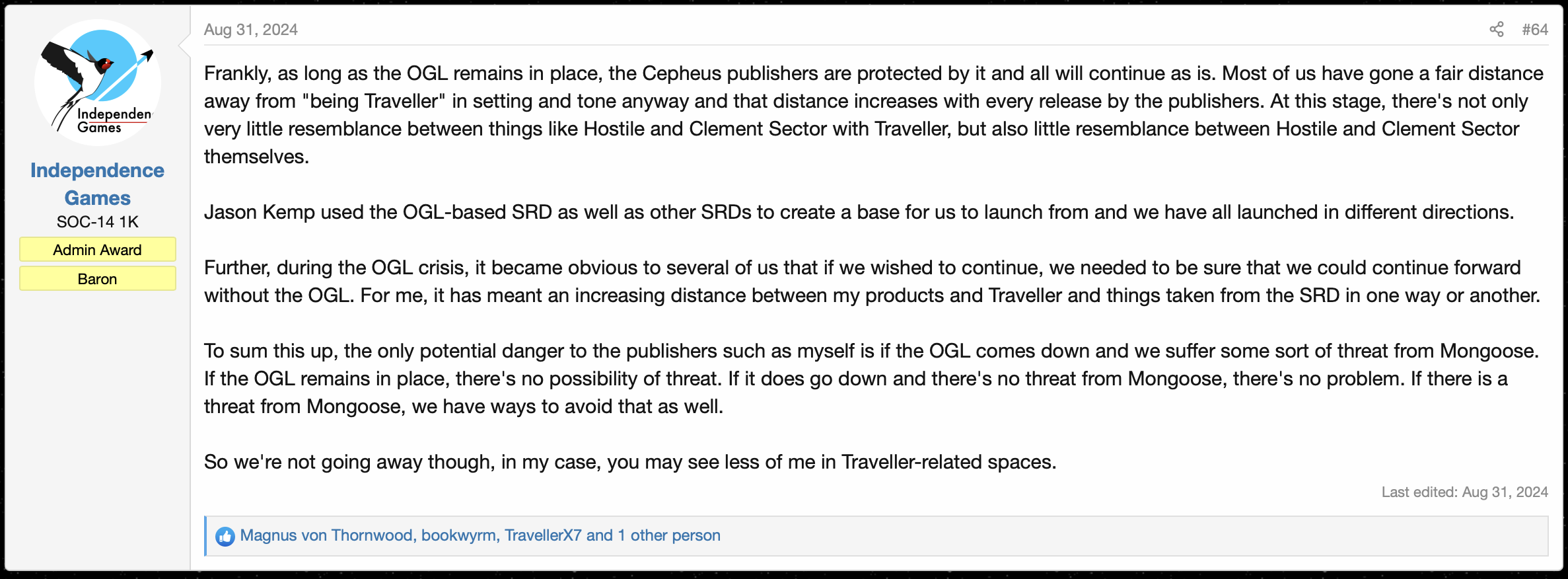
Then again, maybe I do not have to worry too much. I take comfort in the words of John Watts of Independence Games who made the following comments at the Citizens of the Imperium (COTI) forums after Mongoose acquired the Traveller IP:
A true alternate Traveller universe
Taking a cue from John Watts, I need to stop conflating Traveller with Cepheus Engine. Yes, both trace a common heritage back to the days of Classic Traveller but both have very different legal foundations. They are NOT the same game system.
It is high time that I stop viewing Traveller and Cepheus Engine as two sides of the same coin. More correctly, I need to view them both as one might consider different currencies. The most important consideration is for me to remember that Traveller (less Mongoose Traveller 2nd Edition) and Cepheus Engine credits can equally be used to “purchase” sci-fi roleplaying adventures. We are all very fortunate that Cepheus Universal is the latest evolution of the 2d6 sci-fi adventure roleplaying game system and a worthy successor properly building upon decades of great work.
- Psionics was a term first coined in pulp sci-fi writings of the early 1950s. ↩︎
Feature image generated using WordPress feature image Generate with AI.
The opinions and views expressed in this blog are those of the author alone and are presented in a personal capacity. They do not necessarily represent the views of U.S. Navy or any other U.S. government Department, Agency, Office, or employer.
RockyMountainNavy.com © 2007-2024 by Ian B is licensed under CC BY-SA 4.0 
 Rocky Mountain Navy Gamer
Seems like mongoose is starting to contract a case of Games Workshopitis. Must be something in the air there in the UK.
As you know, I play “Classic Traveller.” I’ll use “Cepheus” products in my CT gaming if it’s easy enough to do. If it’s not, then I won’t.
But I won’t actually be playing Cepheus games or Mongoose games. They’re not the game I play.
Really encourage you to look at Cepheus Engine, in particular The Clement Sector or HOSTILE rule sets for great Traveller-like adventure inspiration.
I have some of their stuff. For the vibe or other ideas. I’ve been talking about mashing Zaibatsu, Hostile and Kosmos 68 into a setting I’ll run with Classic Traveller. I also like the look of Grunt, which I may combine with the original Recon. I don’t think I’ll be using CT rules for that.