
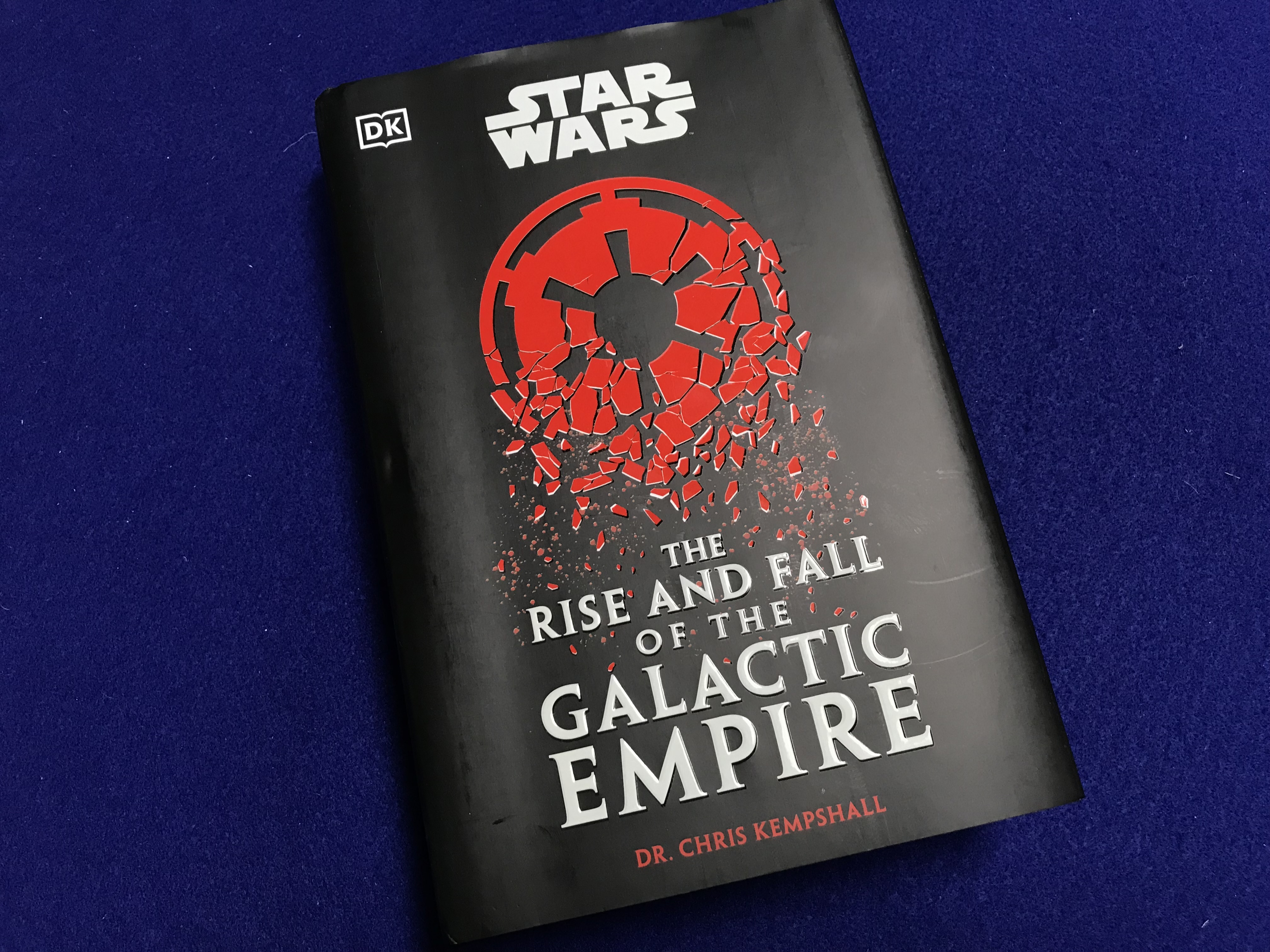
“StarWars.com is excited to reveal Star Wars: The Rise and Fall of the Galactic Empire, a new book from DK Publishing that promises to examine the intricacies of Imperial rule. Written by Dr. Chris Kempshall, a historian and co-author of Star Wars: Battles that Changed the Galaxy, it will explore the dark times from stories across mediums, including movies, games, series, books, and comics, with chapters covering every aspect of the Emperor’s regime. The Rise and Fall of the Galactic Empire arrives July 9.…“
BLUF: Better than I expected, and that is high praise from me given this is a book solidly of the Di$ney Star Wars empire.
I still vividly remember seeing Star Wars in a movie theater not long after its premier in 1977. The iconic opening scene with the Star Destroyer flyover is forever etched in my memory.
I absolutely love the Star Wars movie (not “Episode IV: A New Hope” but Star Wars) and The Empire Strikes Back (1980). I appreciate Return of the Jedi (1983) but have always felt the Ewoks were a bit too cute for my taste. In the long interregnum between the original trilogy and the prequels, I was all-in on Timothy Zahn’s Thrawn Trilogy series of books. Surprisingly, though it was out there I did not play the West End Games Star Wars: The Roleplaying Game (1987) though I did somehow acquire the Star Wars: Star Warriors starfighter combat game also from West End Games (1987).

Which is to say that, for the most part, my interpretation of the Star Wars universe was set early in the life of the franchise. I did not totally ignore Star Wars after the 1980s; I read (a few) of the post-Thrawn (now Legacy) Extended Universe books, and I actually have a complete set of the Star Wars Roleplaying Game: Saga Edition from Wizards of the Coast that released from 2007 through 2010. I absolutely enjoy Fantasy Flight Games’ Star Wars Roleplaying Game: Edge of the Empire (2013) and the boardgame Star Wars: Rebellion (FFG, 2016).


Of the later movies I enjoyed Rogue One (2016) and appreciate the TV-series Andor (2022+). These days I watch for amusement—more than any real interest—the culture wars fought online between Star Wars fans and Di$ney over the creative direction of the franchise. I also recognize the franchise as not focused on me pursuing instead a much more juvenile/young adult audience.
So, what could possibly drive this olden Star Wars fan-from-afar to immediately rush out and buy a new “history” book of the Star Wars universe? I admit there were three major reasons I hesitated at first: fanfic history writing, culture, and canon. The fact I was able to overcome each of those hesitations and embrace the book is much more than I expected.
Palpatine’s story
First though, a few comments on the book. The Rise and Fall of the Galactic Empire covers one sliver of the greater Star Wars universe, that being the era of the Galactic Empire starting roughly at the time of the events in depicted in the Prequel movies through the Sequels. It references other eras, but apparently does not include any of the most recent TV-series The Acolyte (or if it does, I didn’t find the lesbian space witches between the covers). Rather than being yet another Skywalker-saga story, the focus instead is on Chancellor-turned-Emperor Palpatine. The Rise and Fall of the Galactic Empire could easily have been called The Rise and Fall of Palpatine but then something would likely have been lost in the selling points. By focusing on the Galactic Empire and Palpatine the book naturally looks at the political, cultural, as well as the military history of that time period. The book is even laid out like many history books are with footnotes and separate sections of images (“plates”) and even an index(!). The presentation of the book suits the tone of the writing.
Serious fanfic
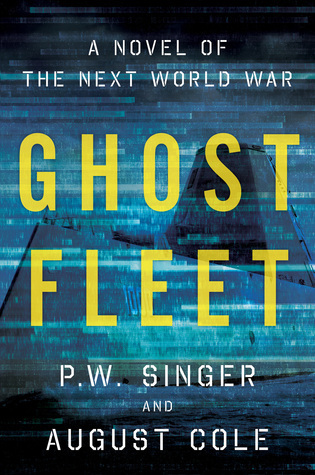
The fact that The Rise and Fall of the Galactic Empire is written by a historian using a non-fiction approach immediately sets this book apart from other Di$ney Star Wars books. In the same way international or military affairs wonks write FICINT (fictional intelligence, such as Ghost Fleet: A Novel of the Next World War by P.W Singer and August Cole, Houghton Mifflin Harcourt, 2015) so did Kempshall write a “history” of the Star Wars universe as a historian would. A previous book I own that tried to treat Star Wars as a “serious” study, Star Wars: The Essential Guide to Warfare by Jason Fry with Paul R. Urquhart (New York: Ballantine Del Rey, 2012) always felt more like a propaganda puff-piece than a “study” to me; likely because it seems to have been written with a juvenile or young adult reader in mind.

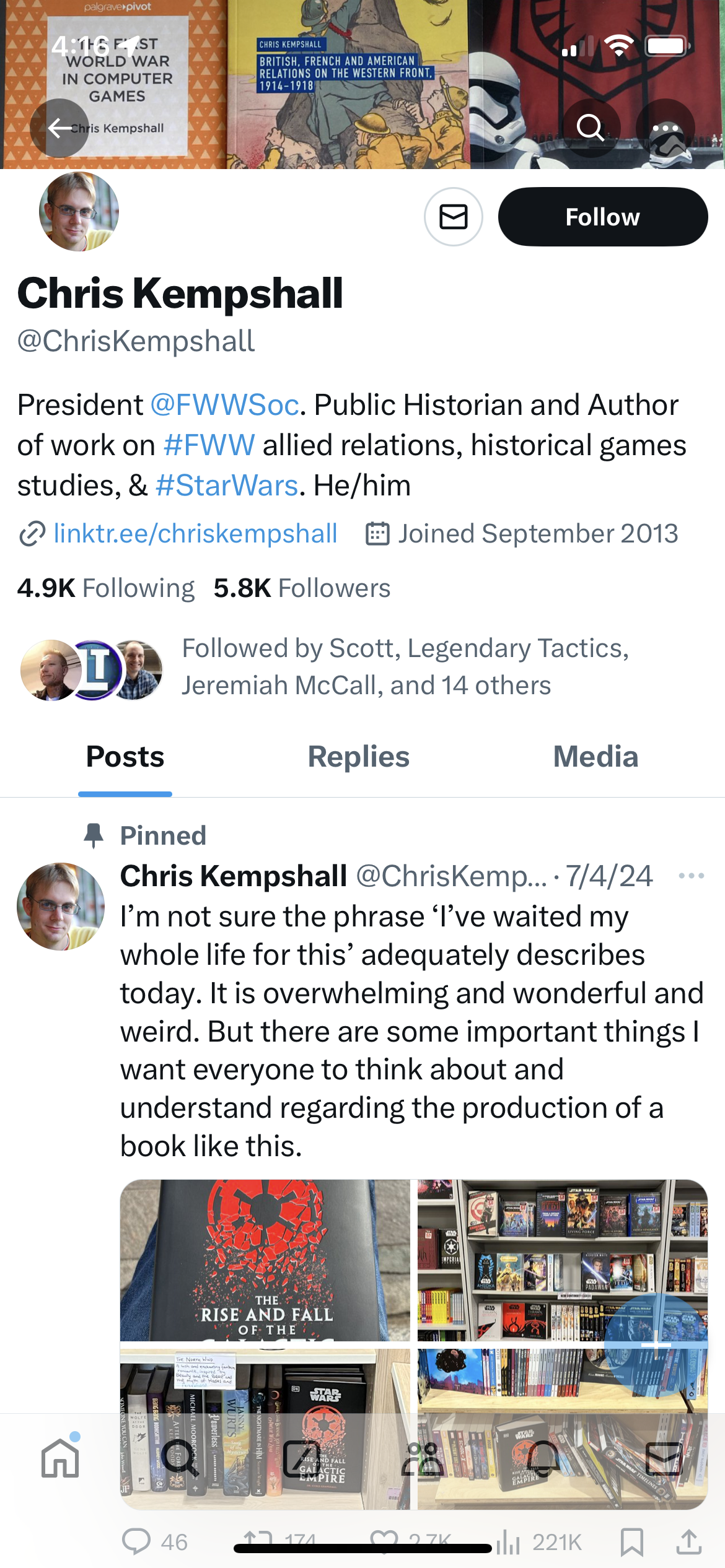
Given the credentials of the author for The Rise and Fall of the Galactic Empire, and the fact their vision for a more adult-focused book was embraced by the IP holders, gave me some assurance that this was not going to simply be another fanfic pile of excrement. At the same time, however, the association with Di$ney Star Wars gave me pause for cultural and canon reasons.
Kinder, gentler space witches
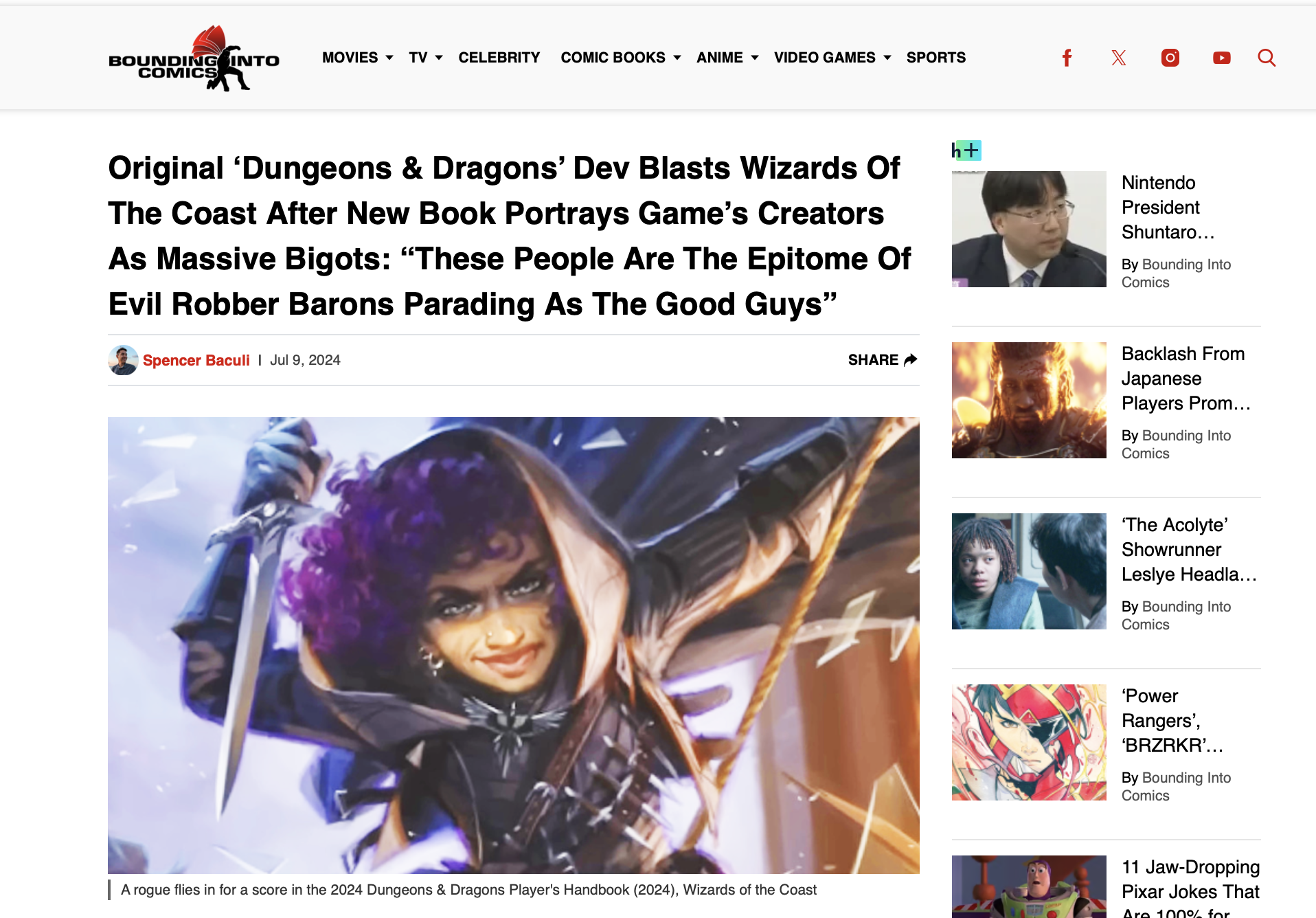
There was concern on my part that The Rise and Fall of the Galactic Empire, hailing from Di$ney, would take the worst of today’s culture wars and weave them into the book, much like Wizards of the Coast has rewritten—if not outright ignored or manipulated)—the history of Dungeons & Dragons to fit their politico-cultural imperatives. While Di$ney cultural perspectives are present in the book, they are not as “in my face” as I expected.
Franchise canon
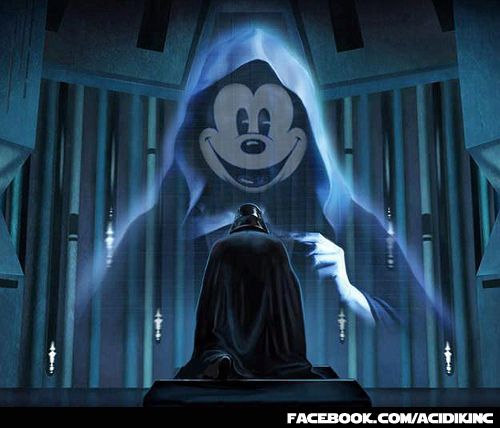
The Rise and Fall of the Galactic Empire is considered canon in the Di$ney Star Wars universe. Given The Rise and Fall of the Galactic Empire attempts to be a “serious” history book, I treat it like I do any other history book, with both suspicion and acknowledgement of the biases of the author. When it comes right down to it, The Rise and Fall of the Galactic Empire is just another view (albeit sanctioned by Di$ney) of the Star Wars story. I read it—there is a bit better than even chance some of the book could make it into one of my Star Wars role-playing game (RPG) sessions or campaign—but whatever is incorporated into my games will be because I deem it worthy of play in my gaming universe and not because it is a canonical work deemed “The Gospel According to Mickey.”
Luke the Younger
The average Star Wars fan, or at least one who is familiar with the franchise but maybe not steeped in the story, will likely find The Rise and Fall of the Galactic Empire an enjoyable book. At the same time, I believe that die-hard Star Wars fanatics, especially those who grew up up on Star Wars post turn-of-the-century and are thoroughly of the Di$ney Star Wars generation, will very likely see The Rise and Fall of the Galactic Empire as insufficient fan service with the relegation of Luke and Rey to a secondary, behind the scenes role instead of up front like Palpatine. To those critics I say, “Get over it. It’s just another science-FICTION story.”
Feature image courtesy RMN
The opinions and views expressed in this blog are those of the author alone and are presented in a personal capacity. They do not necessarily represent the views of U.S. Navy or any other U.S. government Department, Agency, Office, or employer.
RockyMountainNavy.com © 2007-2024 by Ian B is licensed under CC BY-SA 4.0 
 Rocky Mountain Navy Gamer
Modern Disney has far more disturbing traits than wrecking its acquired franchises that insure that it will never see another dime of my money.
I simply have had no interest in Mickey-Wars. Part of the reason why I think people gravitate (even more) to the culture-war element is because the mainline movies have been so timid and risk-adverse that there’s really little to critique them on in that regard.
The new book is in some ways a paradox. On one hand, the book shows the rich “history” of the setting with many potential story hooks. On the other hand, the powers-that-be at Di$ney seem intent on harvesting (more accurately, creating and validating) only the parts of that “history” that fit their desired narrative. In many ways I think that is what irritates fandom (and especially distant Star Wars fans like myself) because we can see great potential but end up shaking our heads at what the House of Mouse chooses to pursue both in story and tone.