
In the past few years, Free League Publishing has been my go-to non-Traveller roleplaying game (RPG) publisher of choice. Starting with Twilight: 2000 – Roleplaying in the World War III That Never Was, then ALIEN: The Roleplaying Game, and most recently Blade Runner: The Roleplaying Game, I have come to really enjoy the Year Zero Engine. So when I had an opportunity to experience Free League’s newest game, Pirate Borg, I jumped at the chance…
…and found something totally different.
Pirate Borg advertises itself as:
A scurvy ridden, rules light, art heavy RPG based on Mörk Borg. Inspired by history, fantasy, horror, and rum. Your cutlass & flintlock won’t save you from hordes of skeletons and ghost ships…PIRATE BORG is a self-contained rules-light RPG for running swashbuckling campaigns.
https://www.limithron.com/pirateborg
Pirate Borg is clearly not a Year Zero Engine game. I don’t have Mörk Borg (“a pitch-black apocalyptic fantasy RPG about lost souls and fools seeking redemption, forgiveness or the last remaining riches in a bleak and dying world”) and honestly I probably never will as it is not the genre of roleplaying game that interests me. So I didn’t go into Pirate Borg with any real preconceptions other than it was a pirate game. So what did I discover?

Work for Free
It took me a bit but I eventually realized that Pirate Borg is NOT from Free League Publishing proper but produced through Free League Workshop. This looks to be a sort of indie label of Free League providing a pathway to publishing non-Year Zero Engine designs.
A (heavy) work of art
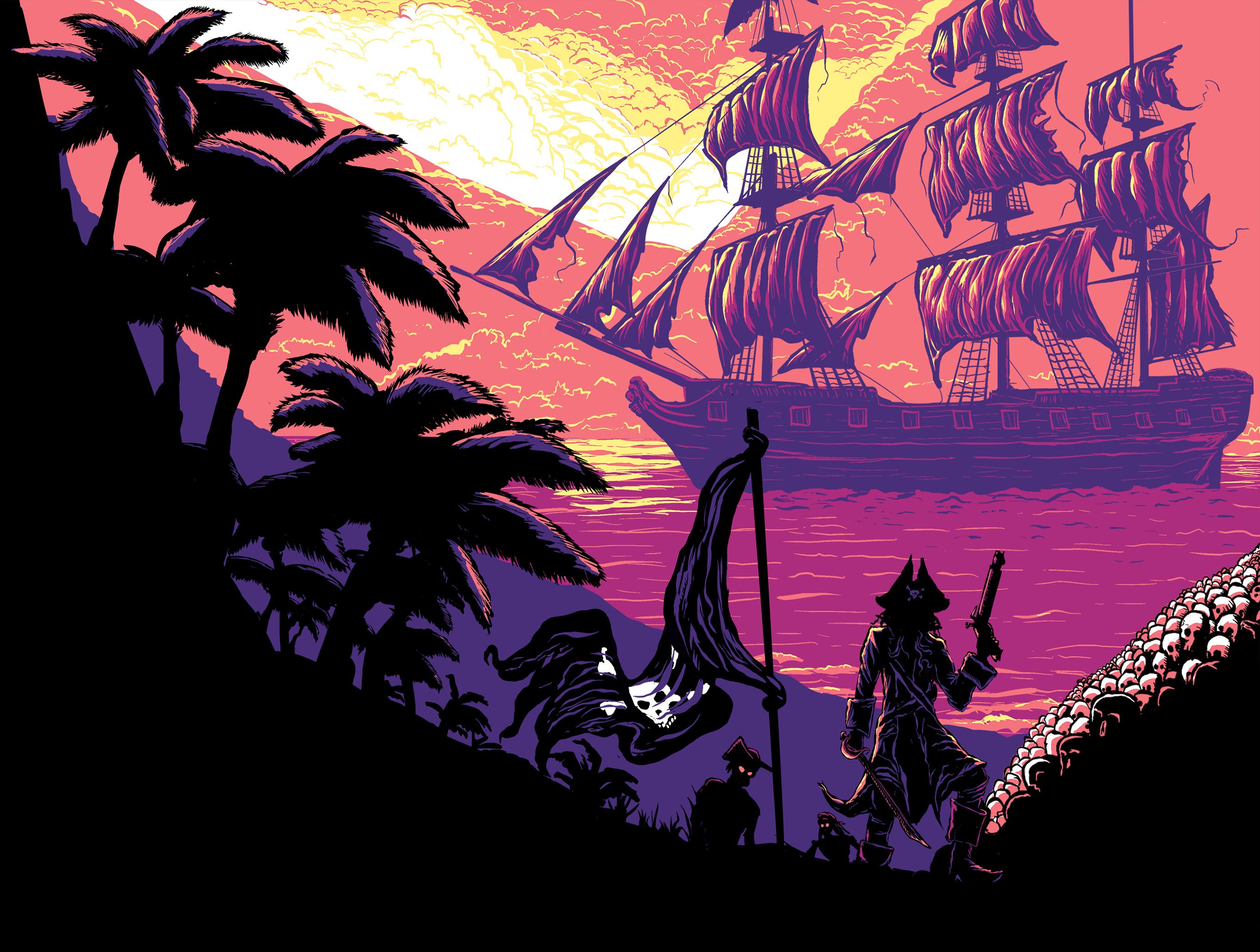
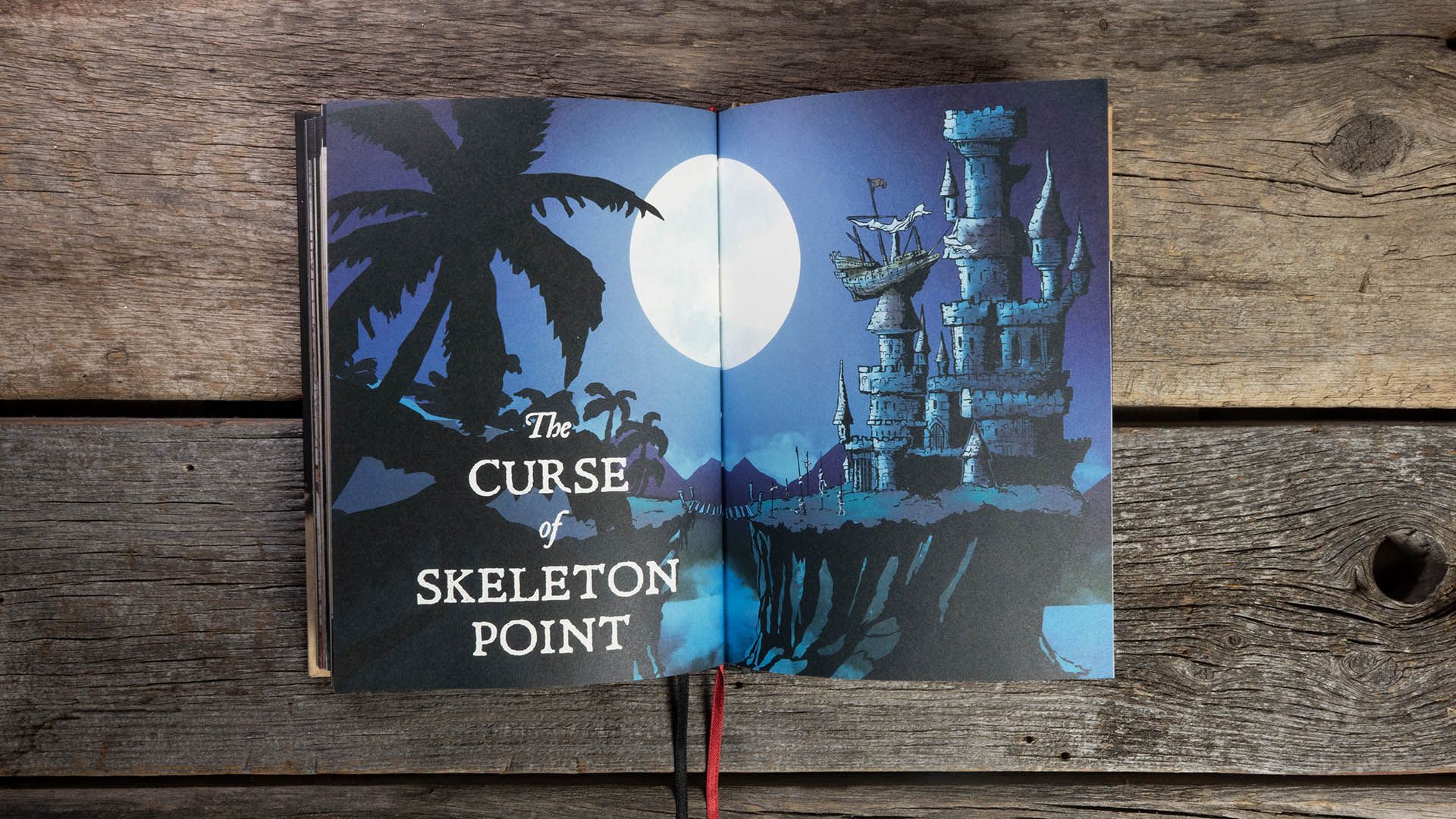
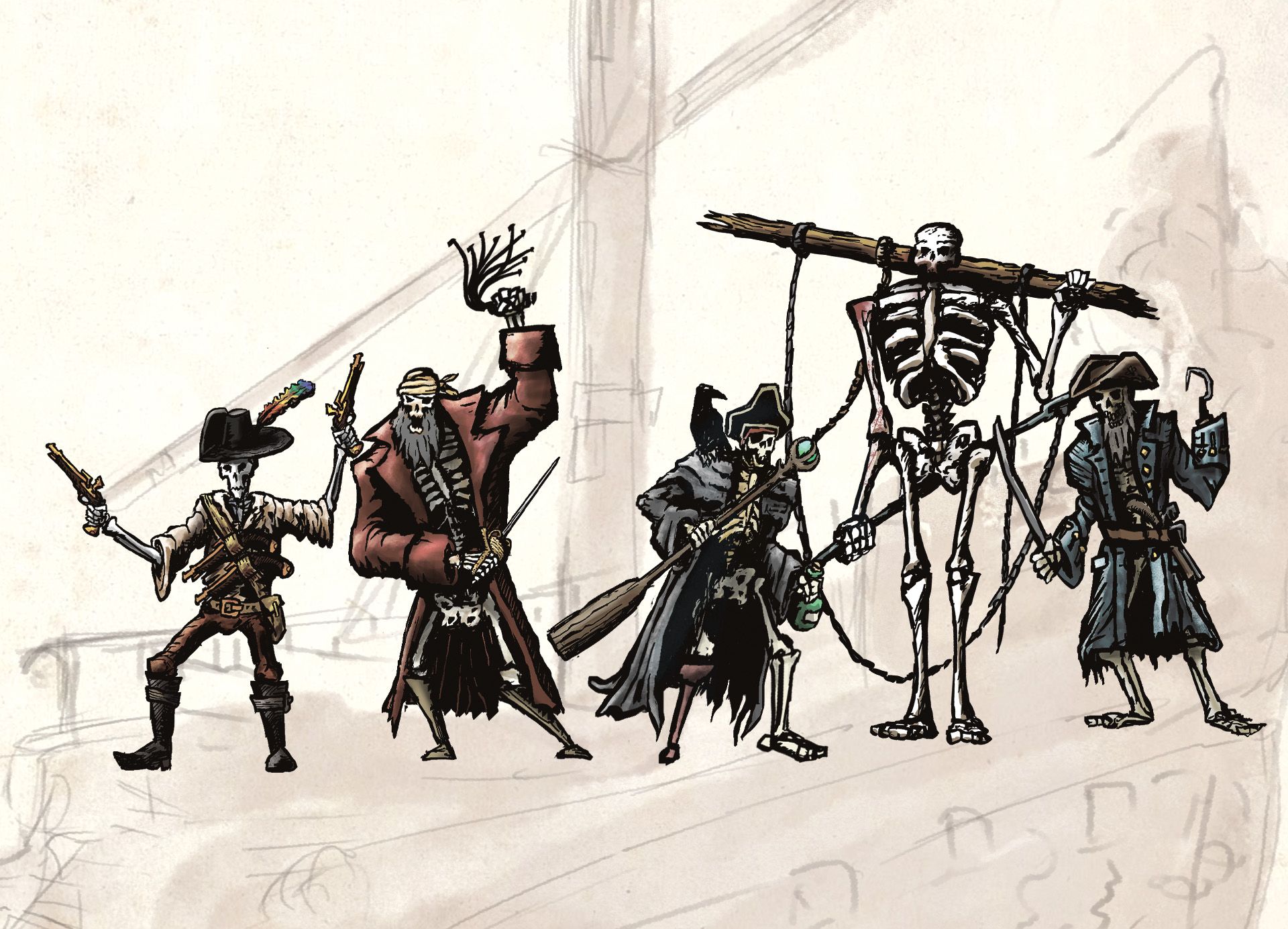
The first aspect of Pirate Borg that jumped out at me is the artwork. The game is written and illustrated by Luke Stratton, also known as Limithron, who is known for his pirate-themed battle maps. The illustrations—all of them from page one to the end—are incredible and highly evocative of the theme. It is a real shame that all I have in hand right now is the pdf version of the book (and some review material from Free League thanks to Brant at Armchair Dragoons) because the two-page spreads are B-EAU-TI-FUL. The artwork does the heavy lifting here; you don’t read the theme as much as you visually immerse yourself in it. Pirate Borg is so graphically beautiful I am very, very tempted to order a physical copy just so I can gaze upon it!
Lite on rules
The second aspect of Pirate Borg that struck me is the lack of rules. Yes, the game advertises itself as rules-lite but the 166-page rulebook reads more like a play aid than a rules set. There is no “What is a roleplaying game?” section. There is no GM section. There are no examples of play. Even the ad copy comments on the formatting, “They’re more like guidelines anyway…”

That’s not to say Pirate Borg is not a complete game. The ad material and cover state the game is “Compatible with Mörk Borg” but one doesn’t need it to play. In Pirate Borg there is a setting (“Dark Caribbean”), character generation with six classes and backgrounds, rules for combat (“Violence”), plenty of ironmongery, a bestiary, special rules for naval combat, and even a complete location module for play (“The Curse of Skelton Point”). Pirate Borg is a complete, standalone game under a single cover.
The rules for Pirate Borg, usually found on two-page spreads, are actually more a collection of tables or notes than strictly defined rules. For example, the combat rules are found on a two-page spread called “Violence” (pp. 30-31). What is presented is a series of tables and a few other listed items. There is no distinctive “rule” presented, just the information used to adjudicate combat. Indeed, there is not even a “Sequence of Play” to be found. Pirate Borg also takes a very different approach to battles; “during combat all rolls are made by the players: enemies don’t roll to attack, instead PCs roll to defend.” As a veteran RPG player of over 40 years and multiple game systems, I “think” I can figure the rules out…but should I?


Sandy setting
Stepping back a bit and looking more fully at the rule book, the setting of Pirate Borg is a mix of pirates and the undead. It is also a very deep setting; the presentation in the book is in many ways a skeleton sandbox toolkit for the GM to play with.

Grown up pirates
Be warned that Pirate Borg is an “adult” game. This is perhaps best exemplified by the first “rule” one encounters in the book; the price of the “Ash” market and a table listing the physiological and psychedelic “Effects of Consuming Ash” (p. 10). Indeed, the back cover of the book states, “Generally suitable for ages 16 and up.”

“Now you’re a lowlife. A scoundrel. A Pyrate.”
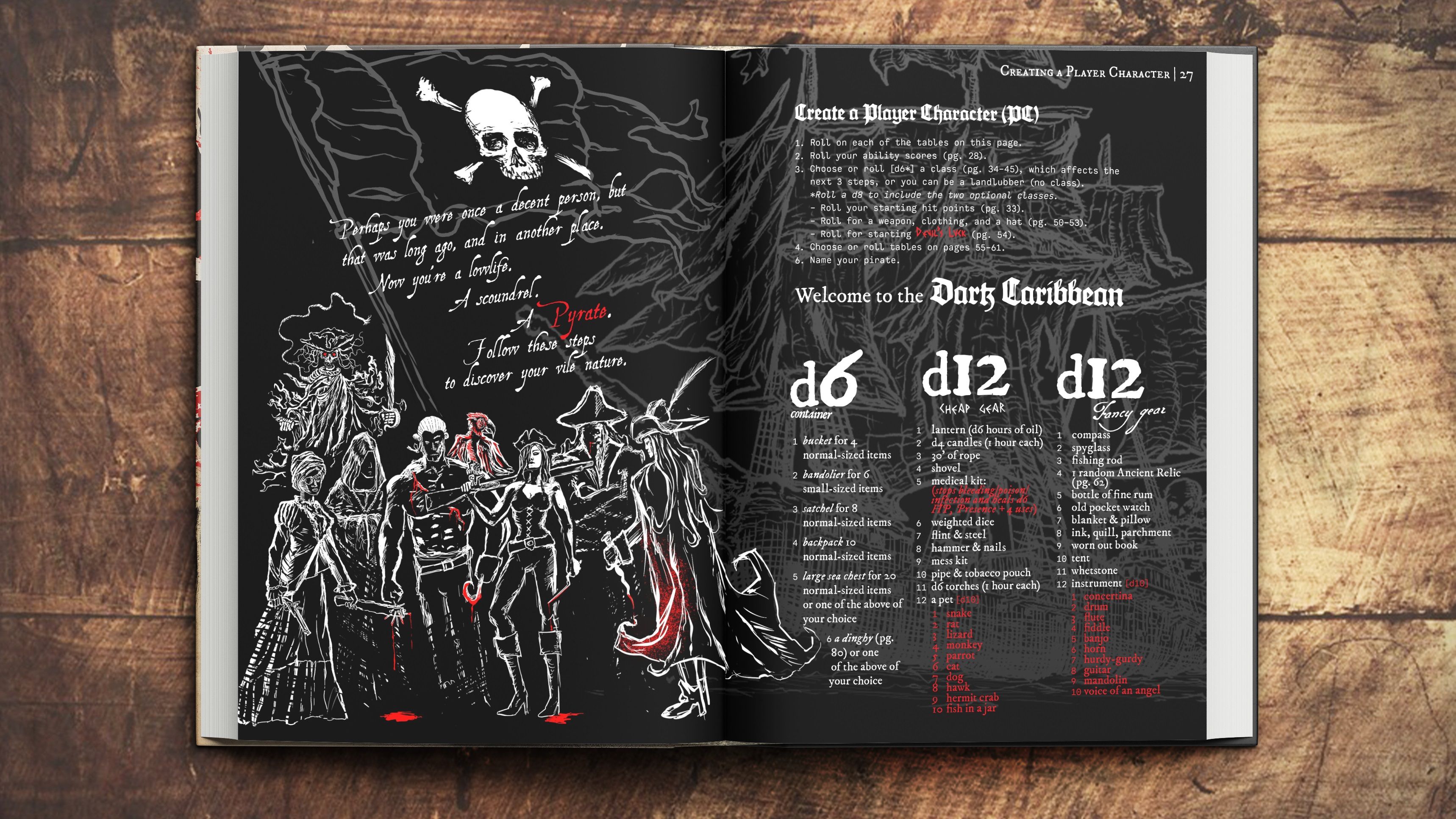
Character creation in Pirate Borg is, as the ad copy says, “optimized for random generation (though not required).” Creating your pirate character in Pirate Borg is a very easy five-step process:
- Roll on three tables for your Container, Cheap Gear, and Fancy Gear.
- Roll ability scores using 3d6; the result determines a modifier which is what is needed to play. (Abilities are Strength / Agility / Presence / Toughness / Spirit)
- Choose or roll using one of the six Classes; this includes determining starting Hit Points, a Weapon, Clothing, and Hat as well as your “Devil’s Luck.”
- Further rolls to determine Backgrounds, a Distinctive Flaw, a Physical Trademark, Idiosyncrasies, Unfortunate Incidents & Conditions, and Something of Importance.
- Pick your Pirate name.
There are six character classes in Pirate Borg:
- “Brute – A tough melee combatant prone to fits of rage.”
- “Rapscallion – A sneaky, cutthroat scallywag good at backstabbing, breaking & entering, stealing, cheating, and escaping.”
- “Buccaneer – Skilled trackers and survivalists. Expert sharpshooters, especially with muskets and rifles.”
- “Swashbuckler – A brash fighter with bravado and swagger.”
- “Zealot – A clergy member, cultist, shaman, or beleiver.”
- “Sorcerer – A eldritch occultist, frail and enigmatic.”

There are three optional classes in Pirate Borg and if you already think the setting is weird, well, wait until you get to Haunted Soul (“A possessed, infected, cursed, troubled, or undead individual”) or Tall Tale which covers Merfolk or Sentient Animals. Want to be a “Foul Fowl” with a Beak Peck attack or Clever Monkey?
Can you imagine? One player is the pirate captain and another player is the parrot perched on the shoulder. That’s…different.
Player characters in Pirate Borg are lite on stats and long on textual descriptors. This alone drives play in Pirate Borg towards a more narrative bent. Min/Max’rs need to look elsewhere.
Pirate dice
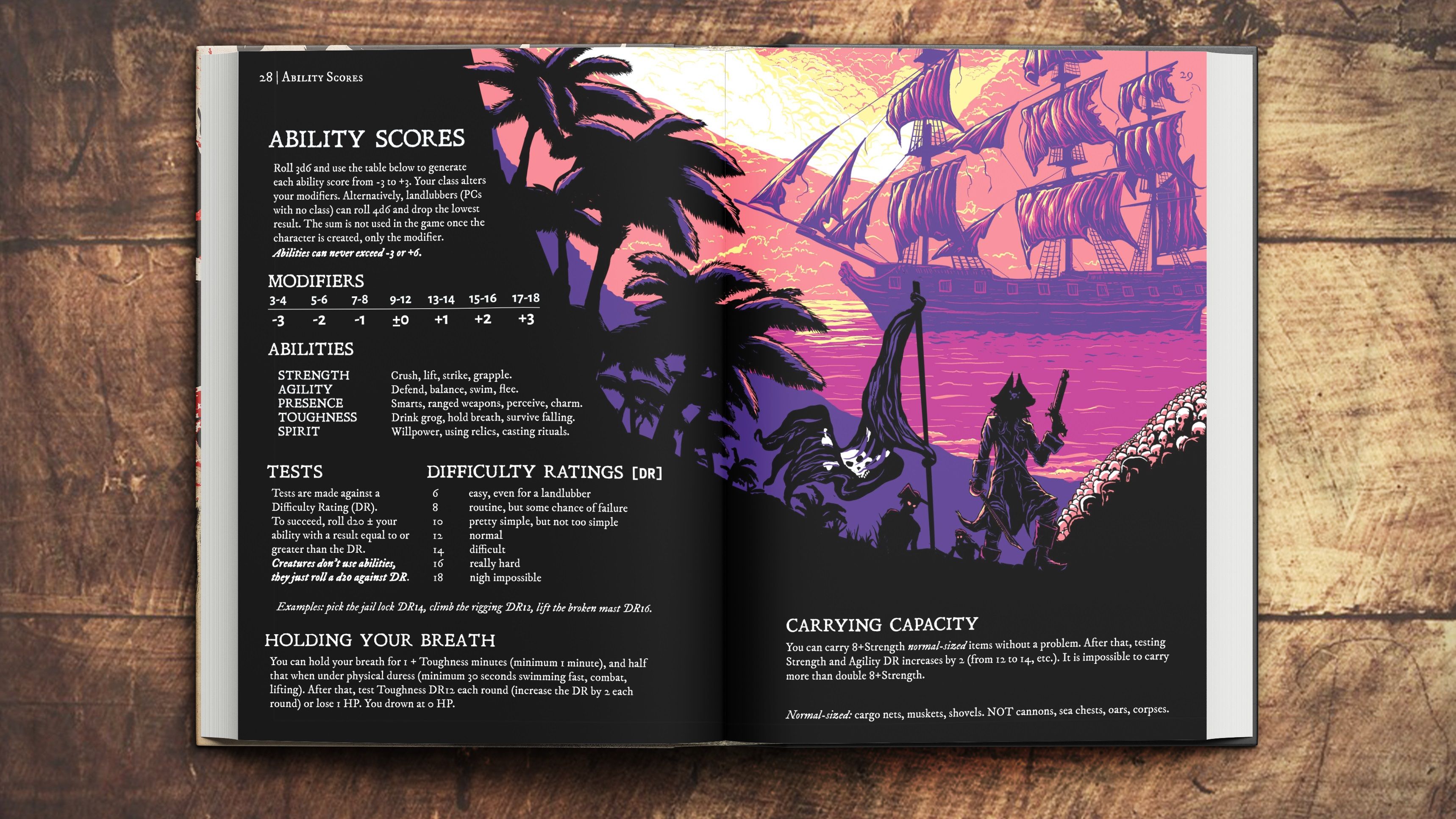
The core game mechanism in Pirate Borg is a test against a Difficulty Rating (DR). The player character rolls a d20 +/- ability score and tries to roll equal to or greater than the DR to succeed. That’s it. I can’t find a rule (or a table) with degrees of success or failure or the like, just a success/fail statement. Oh wait, buried in the Violence rules is a defintion of a Critical (natural 20) and Fumble (natural 1) but those are described in terms of combat, not other tests.
Devil’s Luck
Devil’s Luck points are the gaming metacurrency of Pirate Borg. You can use Devil’s Luck to reroll a test or deal/reduce damage or change the result of a test. Player characters can also sing (roll on a table) Sea Shanties which changes some condition for the day or has other game effects.
Fire as she bears…
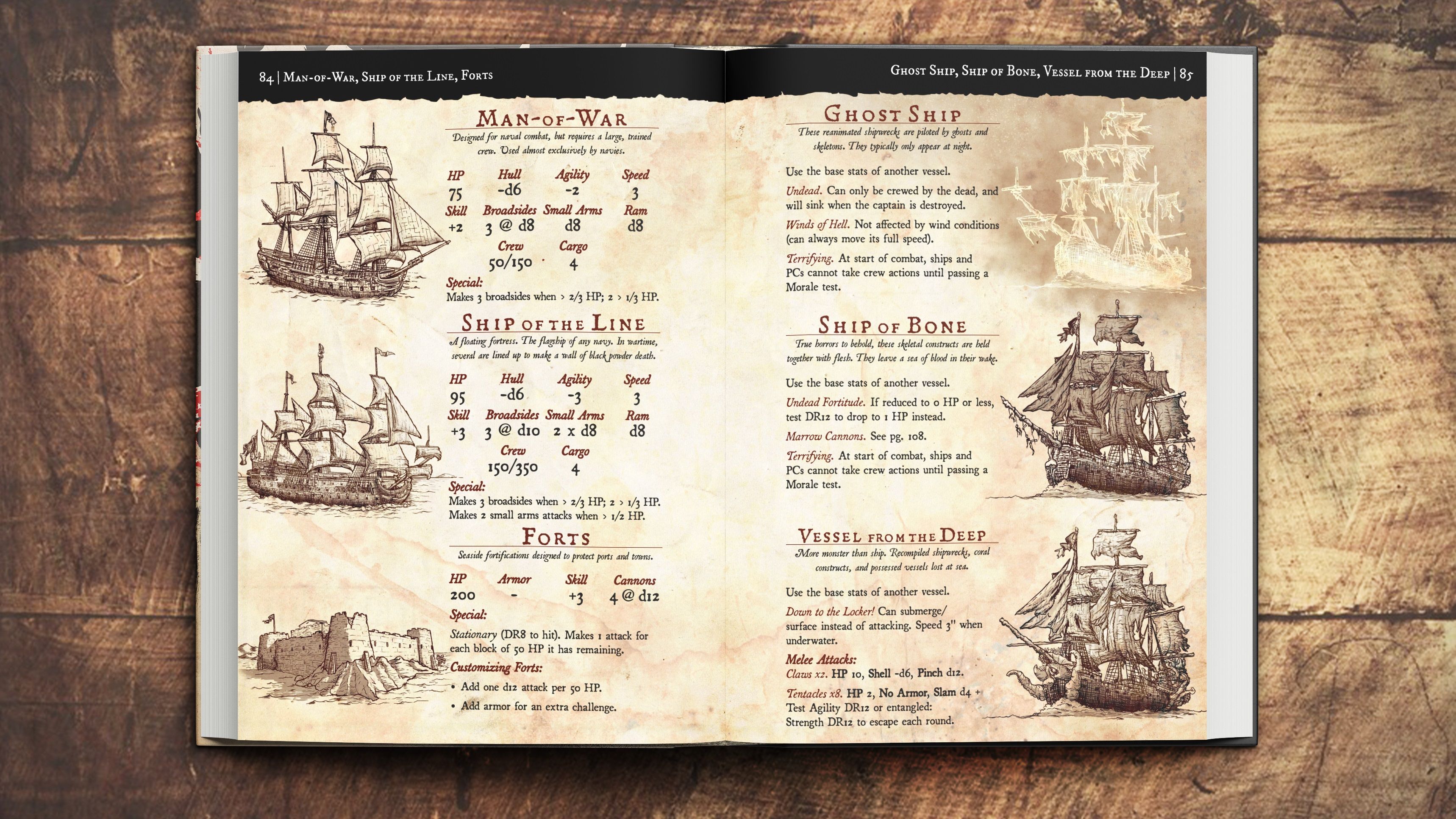
If there is one place in Pirate Borg where there is something like formally written rules it’s in the Naval Combat chapter. In a way the chapter for naval combat is dissonant from the rest of the book because it is presented so differently. Fortunately, the rules remain lite and easy to play with.
Alive with the undead
A major portion of the Pirate Borg rule book is taken up by the bestiary or other undead things player characters can encounter. From zombies to skeletons to the Kraken, all the “Dark Caribbean” setting material needed to create an adventure is here.

Sandbox Island
“The Curse of Skeleton Point” is a sandbox adventure setting included in the book. Honestly, this sandbox alone is enough for tons of adventures. Between the Pirate Borg book and the free material on Limithron’s website you don’t need much more, but if you really want more you can always support the Limithron Patreon.
One shot veteran pirates
The ad material for Pirate Borg makes it clear that the focus of the game is on the players. “Pirate Borg is fun, easy to learn, potentially deadly, and perfect for OSR/NuSR style one-shots and for campaigns that focus more on player agency and smart decisions and less on character optimization and “what’s on my character sheet”.”
PIRATE BORG is a game about being a greedy, filthy scoundrel. No prey, no pay. Find a ship. Recruit some crew. Raid, pillage, plunder, and otherwise pilfer your weasley black guts out. Get a bigger ship. Kill some things. Upgrade your ship. Sneak into a fort. Raid a port. Acquire treasure. Bury said treasure. Become infamous. Search for someone else’s treasure. Flee in terror from unfathomable creatures from the deep. Drink all of the rum. Die on the high seas. Roll a new character and do it all again… For dead men tell no tales, better get a live one as fast as you can.
About Pirate Borg
If I have a criticism of Pirate Borg it may be that the game could be challenging for inexperienced RPG players to learn. I use the term “inexperienced” here to mean players that have not encountered a variety of RPG systems or narrative style roleplaying games. The rules-lite approach of Pirate Borg seemingly assumes the players will “fill in the gaps” and intuitively know what “conventions” to call upon for play. This is certainly a strength of the design, but also a potential stumbling block. I can see veteran groups picking up the game and quickly being able to engage in high-level play. If a novice group of players, even one maybe deeply experienced in a single game system, was to pick up Pirate Borg I am not sure they would “get it.” Yes, they would certainly “get” the setting (thanks to the heavy artwork) but I am less confident they would “get” how to play given the guideline approach to written rules.
That said, with my forty-plus years of RPG gaming I am very comfortable with Pirate Borg, even if it steps out a bit from my usual genre of gaming. In many ways the incredible artwork sells me on the game; it is so visually stunning I can’t help but be drawn to it. The rules lite approach and complete setting support in the book also means I can get a session to the table with little additional work needed. Perfect for a summer weekend game night with players who come together infrequently and want to roleplay more than roll-play, albeit with a healthy dose of rum!
Feature image courtesy Free League Publishing
The opinions and views expressed in this blog are those of the author alone and are presented in a personal capacity. They do not necessarily represent the views of U.S. Navy or any other U.S government Department, Agency, Office, or employer.
RockyMountainNavy.com © 2007-2023 by Ian B is licensed under CC BY-SA 4.0 
 Rocky Mountain Navy Gamer
1 thought on “TTRPG Roll 23-25 – Colorful, Bare-Bones Play in Pirate Borg (Free League Publishing, 2023)”