
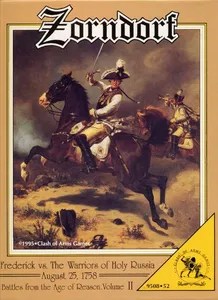
I am not usually a student of the wars of battles from the Age of Reason though I previously owned a few wargames depicting that era.
The Age of Reason, also known as the “Enlightenment”, refers to a cultural and intellectual movement that emerged in Europe during the late 17th century and continued into the 18th century. This period emphasized reason, individualism, and skepticism of traditional doctrines, particularly in the realms of politics, philosophy, and religion. (via duck.ai)

I must admit that I fell into what Dr. Alexander S. Burns calls the traditional—or old school—view of armies and warfare from that time:
A rigid system of discipline based on fear bound the armies of the eighteenth century. As obiedience was based on fear, desertion plagued Frederician armies. Consequently, every aspect of a Frederician army: tactics, marching, logistics was designed to prevent the individual from deserting. Tactially, the armies employed a linear system that emphasized thin, rigid, close-order lines to maximize firepower through a closely supervised, cohesive infantry attack… Besides possibly enabling desertion, woods and hills undermined the effectiveness of the volleys, broke linear cohesion, and limited the tactical control of the commanding general… generals preferred to move their units slowly and methodically over open terrain… The entire army advanced as a unitary organism toward the enemy in a completely uniform manner… Firefights featured long thin lines of three-deep infantry exchanging mass, unaimed volleys with the enemy.
Burns, pp. xi-xii
Frederickian armies refer to the military forces and tactics associated with Frederick the Great, the King of Prussia from 1740 to 1786. He is particularly recognized for reforming the Prussian army into a highly efficient and powerful military machine, which played a key role in several European conflicts, most notably the Seven Years’ War. Frederick’s military strategies and the organization of his army had a lasting influence on military tactics and are studied in military academies to this day. His methods were instrumental in the establishment of Prussia as a major European power and set the foundations for modern military organization and strategy. In summary, Frederickian armies represent a pivotal evolution in military practice during the 18th century, showcasing the importance of discipline, tactical innovation, and strong leadership. (via duck.ai)
Burns advocates a new school of analysis built around the concept of, “negotiated authority” and what that meant on the battlefield. As Burns explains in the introduction:
The fifth chapter defines the concept of negotiated authority, exploring how officers used inspirational acts to gain currency with their men, and how the religious and monarchical ideologies of the Prussian Army sustained it in contrast to the robotic imaginings of the Prussomaniacs. The sixth chapter explores how soldiers and their officers actually fought, examining the topics of aimed fire and skirmishing. The seventh chapter, in some ways the heart of the book, illuminates the ways in which soldiers frequently ignored their officers’ wishes when it came to the range, intensity, and duration of infantry firefights. The eighth chapter follows soldiers as they tried to survive battle, and sheds light on their use of cover, the ways that they would run – rather than march – on the battlefield, and their desire to avoid hand-to-hand combat.
Burns, p. xv
A close reading of Infantry in Battle raises interesting questions in my mind with regards to how wargames depict battles or campaigns in the Age of Reason. In Infantry in Battle, “…readers can clearly see the view of a battle from men in the ranks, rather than the abstracted writings of military theorists or even army commanders” (Burns, p. xv). Perhaps that viewpoint needs to be taken up by a wargame designer too. The wargame could even be titled, Negotiating with Authority Against Prussomaniacs…
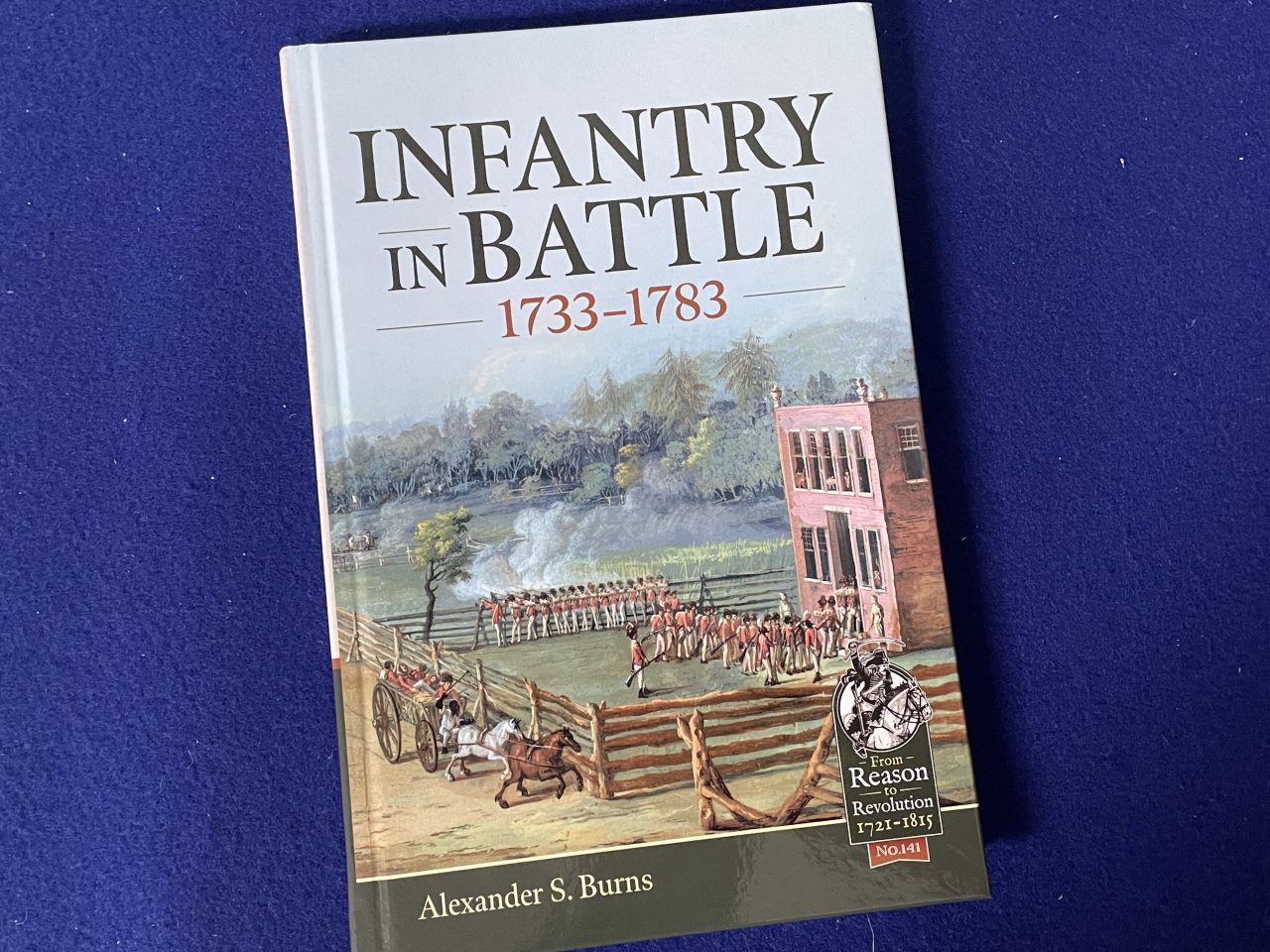
Feature image courtesy RMN
The opinions and views expressed in this blog are those of the author alone and are presented in a personal capacity. They do not necessarily represent the views of U.S. Navy or any other U.S. government Department, Service, Agency, Office, or employer.
RockyMountainNavy.com © 2007-2026 by Ian B is licensed under CC BY-SA 4.0
 Rocky Mountain Navy Gamer
System wise this is La Batt level complexity . But a bit more streamlined. It is a stunning work of art and very interesting if you care about the period. Enjoy.
The first time through the Battles of The Age of Reason System I bounced hard off the system. Many years later I am more comfortable facing that complexity. Though I realize they are different rules, the La Batt ME rules used in Kulm were not that hard to grok. Maybe I was too hasty to trade these away?