
The television show For All Mankind assumes that in 1969 the Soviet Union beats the United States to the Moon and the space race continues on for decades with grand challenges and goals. The roleplaying game (RPG) Orbital 2100 Third Edition is not based on For All Mankind but is a similar alternate future setting taking place about 100 years from our present:
Orbital 2100 (or just ‘Orbital‘) is a TL [Tech Level] 9 setting for the Cepheus Universal RPG and the 2d6-based science fiction game it is derived from. Although set in Earth’s near future, it is neither a cyberpunk dystopia nor a trans-human melting pot, it is the future of space colonisation envisioned by planners of the 1980s, albeit with a healthy dose of realism. … . Our future history is built on the foundations of a new cold war, fought between the Lunar colonists and the people of Earth. Fear and national competitiveness spur on the exploration and settlement of the solar system, for without this political imperative, humans would be content to sit in their own nest and wait for that life-killing asteroid to strike.
Orbital 2100, p. 6
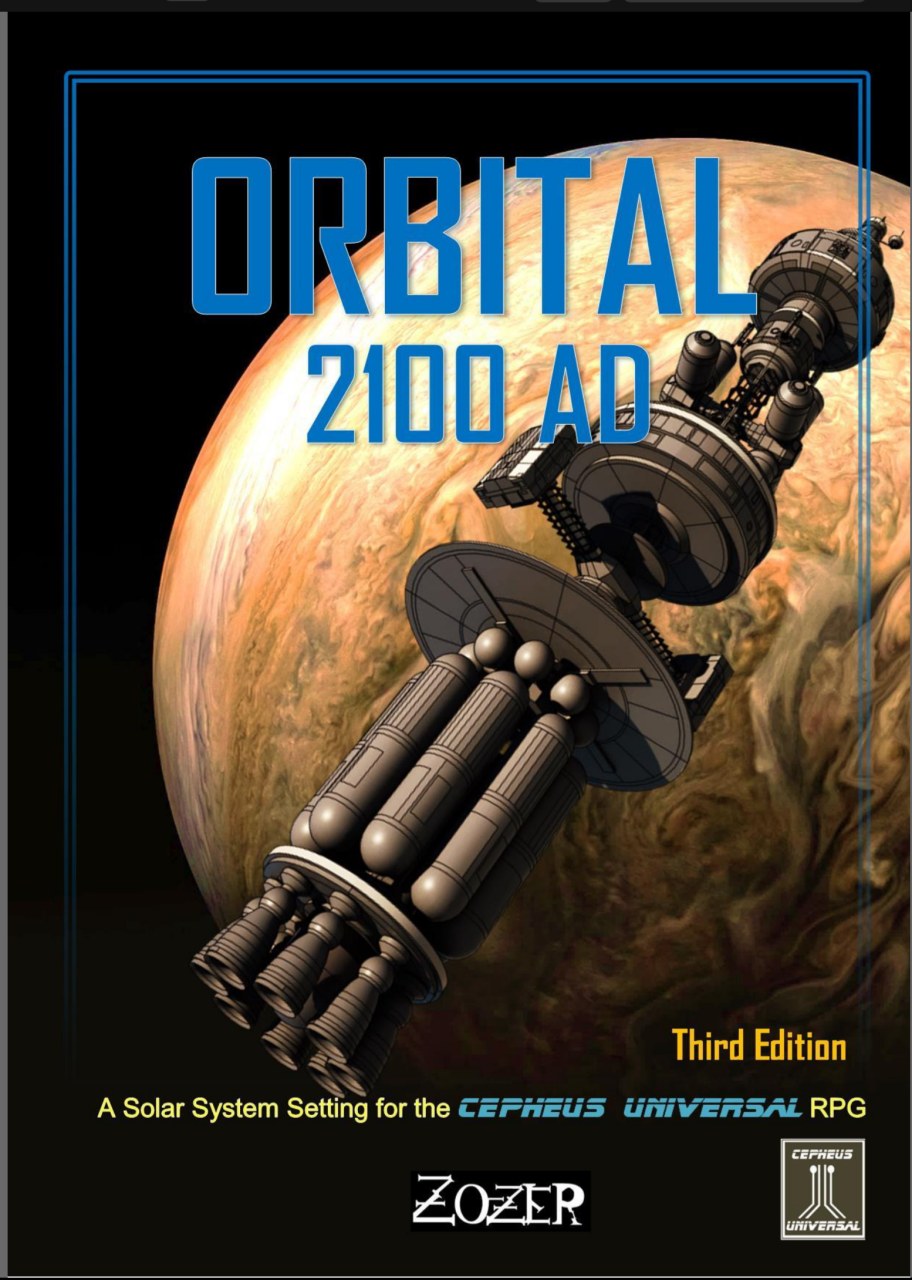
To be clear, Orbital 2100 is NOT a complete RPG but a SETTING for use with the Cepheus Universal RPG. The complete Cepheus Universal rulebook (in pdf) is available for $19.99 but a set of Fast-Play rules (included in Orbital 2100) is available for free. If you are comfortable playing using a System Reference Document (SRD) the Cepheus Universal SRD is $6.99.
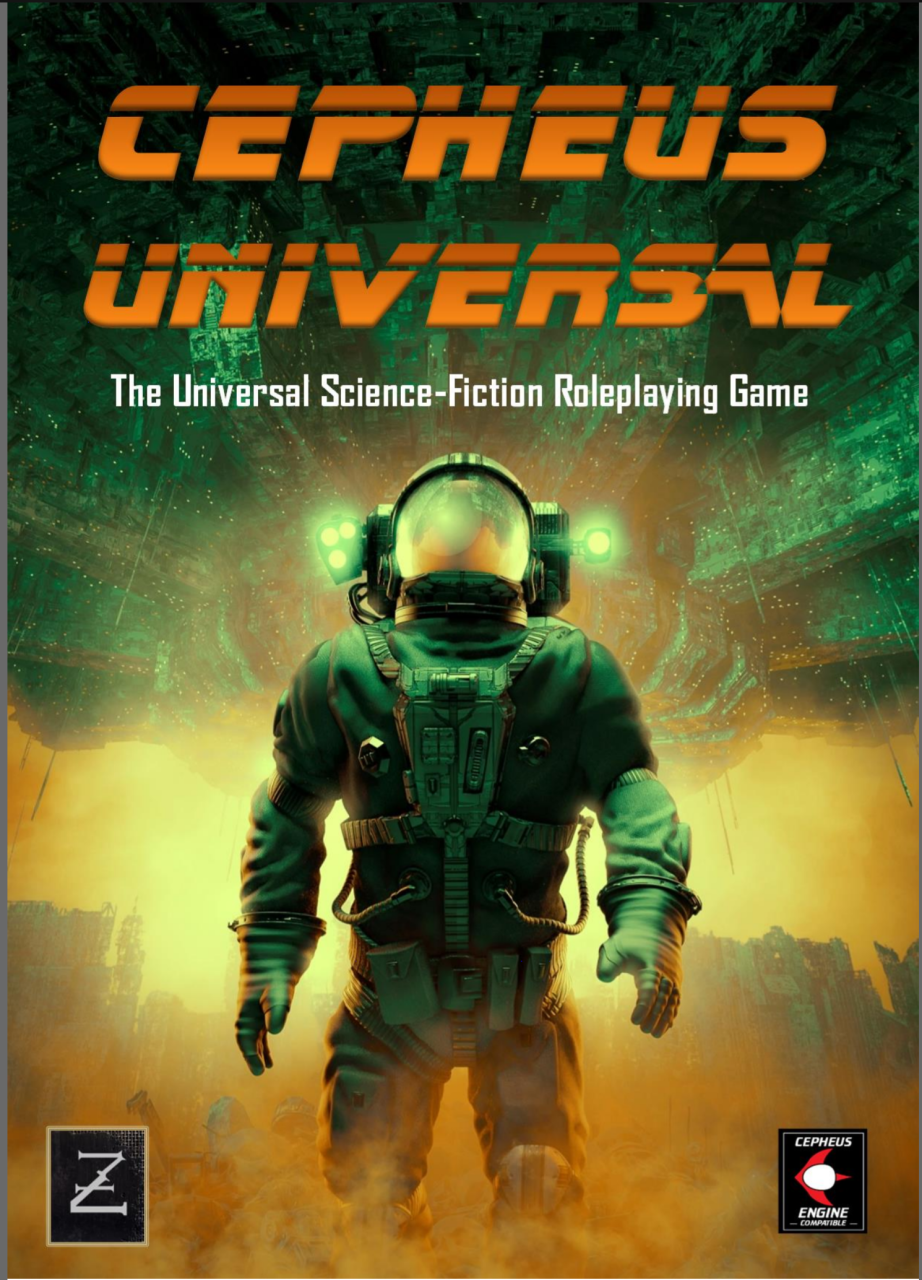
Orbital 2100 draws inspiration from media, specifically 2001: A Space Odyssey, Mission to Mars, Ghosts of Mars, Apollo 18, Red Planet, and The Expanse (p. 7). I would also throw The Martian in there too. Orbital 2100, however, is all yet none of those settings. Originally built on Classic Traveller (“the 2d6-based science fiction game”) the first edition released very shortly before Mongoo$e Publishing played shenanigans with the Traveller license. Instead of caving in to Mongoo$e, Zozer Games ported Orbital 2100 to a second edition using the Cepheus Engine SRD [System Reference Document]. Come now to 2025, the Third Edition uses the Cepheus Universal game engine. The use of Cepheus Universal makes Orbital 2100 feel both familiar and fresh—as in a familiar game design with some “modern” design adjustments to keep the system fresh.
Earth and Moon
Orbital 2100 begins by asking a simple question: “Whose side are you on?” Is your character from the Earth Union or the Luna Republic? That question—and the player’s answer—is the first step in creating a character in Orbital 2100. Whereas Traveller/Cepheus Engine have homeworld and education, in Oribital 2100 the player-characters start with a chosen background. This is the first in many like-but-different rules used in Orbital 2100.
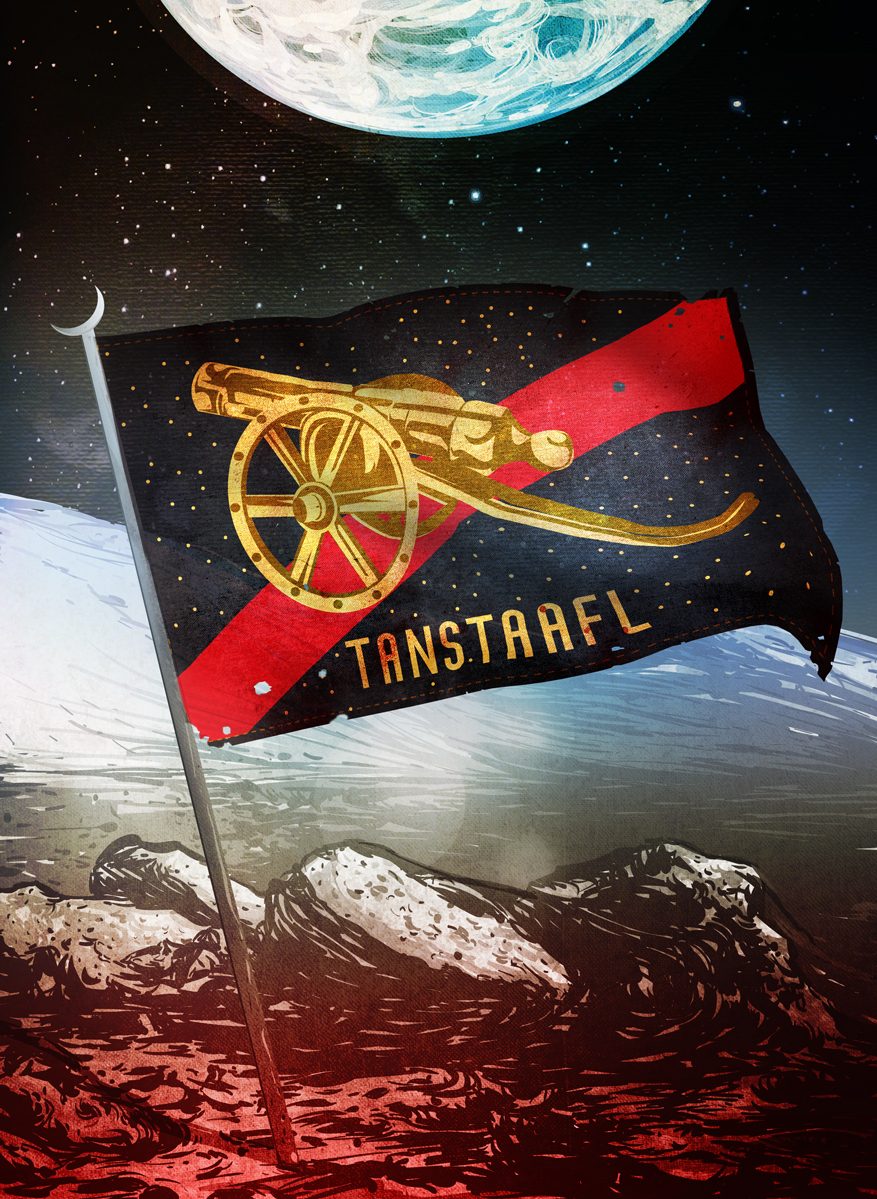
The second question Orbital 2100 asks is what sort of campaign the group wants to play. Is your crew Star Cops, or maybe just simple Spacers? The answer is important because the different careers get you different skills and having a crew with varied knowledge is invaluable. The question is yet another break from the original Traveller lifepath character generation system.
Character generation won’t kill you but your space suit might…
Orbital 2100 does away with the you-can-die-in-character-generation minigame of Classic Traveller and instead uses a series of random die rolls for age, appearance, and education. Player also do not roll for Attributes; instead they pick one of four “Strings” of pre-generated die rolls. Orbital 2100 also introduces a section for Personality Type; a definite nod towards the rules creating narrative hooks that the Referee or players can use for roleplaying a more nuanced character.
Instead of rolling dice in a chosen career, Orbital 2100 turns skill acquisition into a point-buy process. Pick your career and gain skills using your six skill level purchase limit. The Social Influence attribute, in Orbital 2100, is used to represent rank achieved in the career you are now leaving.
At the same time players build their characters in Orbital 2100, they also build their space suit because, “your space suit is more important to you than any mere piece of clothing” (p. 30). Space suits are, in effect, modular equipment with a base model that can be modified. Depending on the player’s background, some might start with a space suit while others buy theirs. The rules assure players that if they cannot afford a space suit with all the bells and whistles now to not worry; they can upgrade later.
Hard science
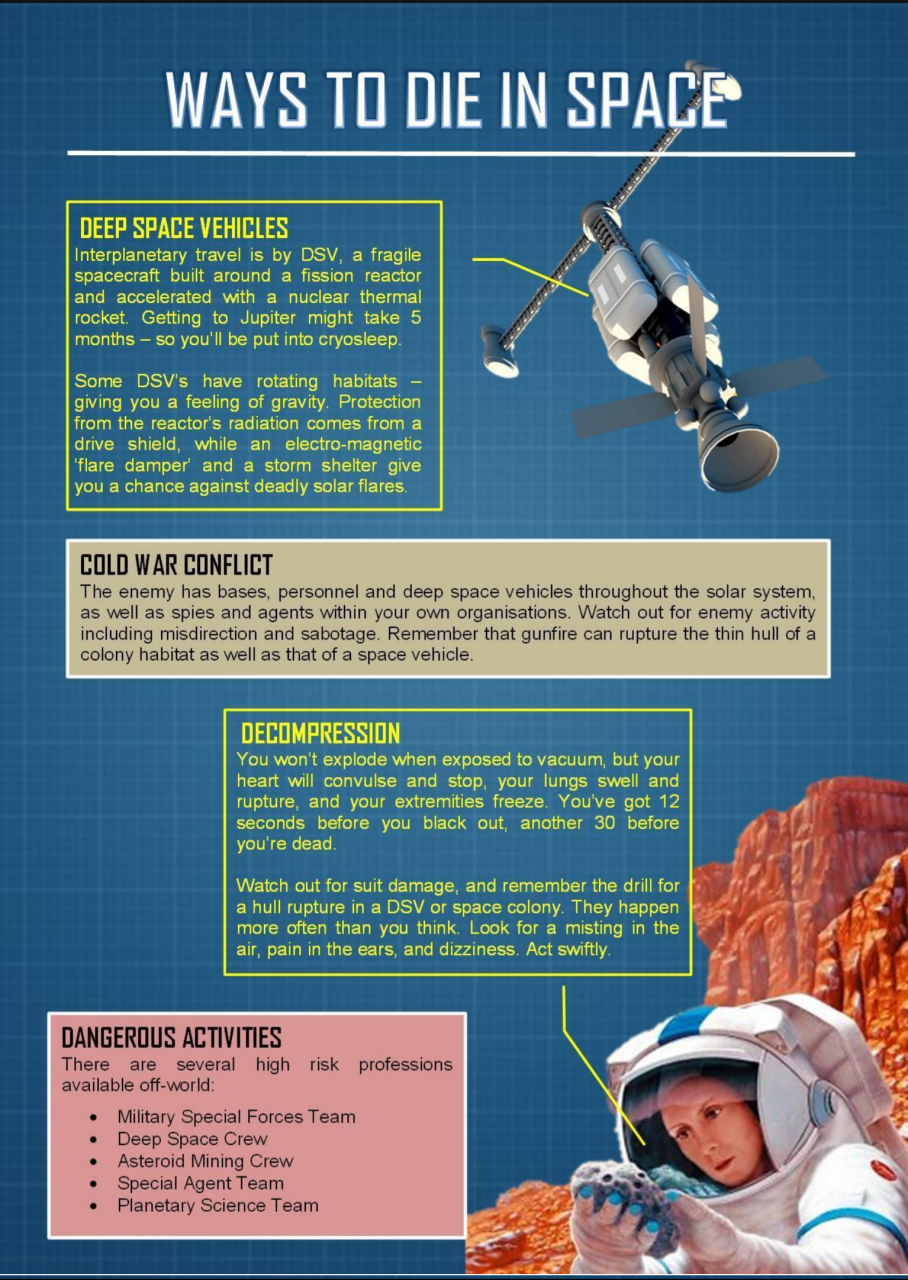
Technology in Orbital 2100 is not much more advanced than what we have today—or more correctly what we could have today (and tomorrow) assuming some of the technological developments of the 1960s and 1970s had come to fruition in the 1980s and beyond. Technology in Orbital 2100 exists in the presence of a few constants:
- Everybody has a space suit.
- Zero-G activity is the norm
- Computers are an extension of today’s internet (Orbital 2100 is silent on the topic of Artificial Intelligence which I take as meaning the Referee is given license to use AI…or not).
- Orbital Vehicles and Space Launchers are not too far removed from what we have today but Deep Space Vehicles using Nuclear Thermal Reactors (NTR) are the norm.
Cold space war
The default setting for Orbital 2100 assumes that the solar system is gripped in a new Cold War between the Earth and Luna. While designer Paul Elliott has reason to be proud of the story arc written, he also points out that the narrative, “is not what I think will happen, but a narrative that explains why the world is as-it-is in 2100 AD” (p. 87). A good reminder that the setting is an offer to players, not a demand to strictly abide by.
Factional strife
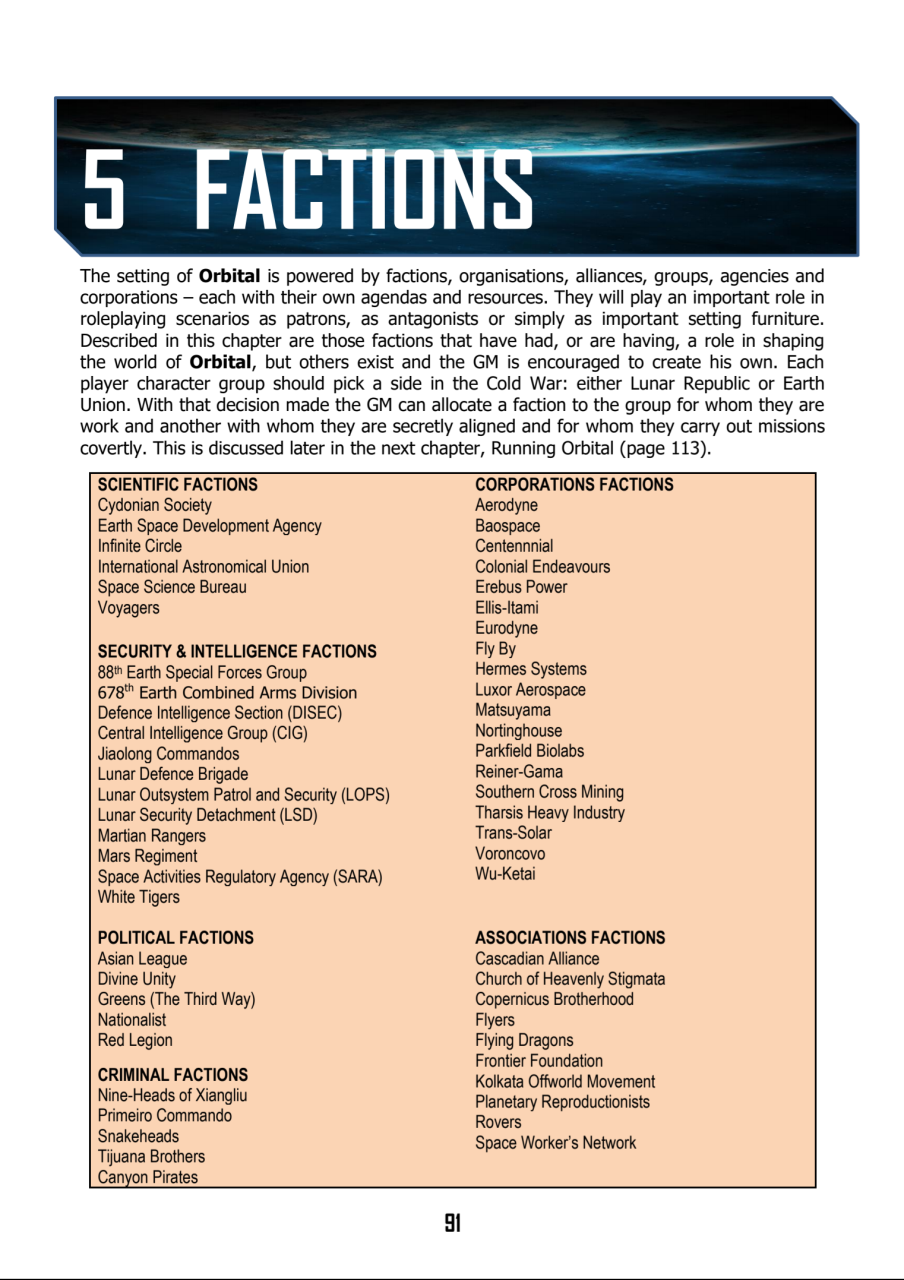
In Orbital 2100, every character is a part of a faction. Factions are an essential element of the game that is interchangeably used as patron, antogonists, or even boring background.
There are six broad categories of Factions in Orbital 2100; Scientific, Political, Security & Intelligence, Corporations, Associations, and Criminal. Each category has at least five groups already created.
[Interlude – Red Dust Rebellion Factions]
[Red Dust Rebellion (GMT Games, 2025) is Volume XII of the popular COIN-series and depicts Martian revolts of the 2250’s and the rise of Martian nationalism. Players take the role of one of four factions as described on the GMT Games Red Dust Rebellion page:
- “The Martian Provisional Government (MG) believes it has the best interests of Mars at heart. Made up of bureaucrats appointed from Earth and locally-elected officials, they are walking a political tightrope of representing Earth interests while keeping the local population happy. They need the support of Martian locals to effectively administer the planet. The MG has the backing of Earth and access to their resources, but Earth is far away, and shipping is a time-consuming process, so they will need to manage their flow of resources carefully. They will rely on their sometimes-allies the Corporations to help stabilize Mars and protect against raids from the Church of the Reclaimer.”
- “Mars is the future for humanity, and with rampant climate change events on Earth, the push to further colonize and terraform Mars is growing. The Corporations (CORP) are Earth-controlled companies with vested interests in Mars. And while they have a bottomless amount of resources to commit to the conflict, they ultimately have to answer to their shareholders. This means that profits are their primary motivation. Replacing units costs money, so they want the Mars Government to fight their battles for them. The Corporations also wish to extend their infrastructure to ready the planet for eventual terraforming.”
- “Native-born Martian workers form the backbone of the Red Dust (RD) movement. The so-called “Dusters” demand a government for Martians, by Martians, without Earth interference, and they are willing to take it by force. Nominally a worker’s movement, the Dusters are an organized and determined force within the labyrinths of Mars and must rally the unions, guilds, and various popular assemblies to their cause to force the Earthers out and secure a free Mars for Martians.”
- “And finally, many look at the mistakes of old Earth and do not wish to repeat them. We have poisoned our home world and are planning on poisoning another. Human history is a process of making the same mistakes over and over again. These ideas have created The Church of the Reclaimer (CR). A post-humanist faith, they seek to adapt humanity to Mars, not the other way around. And they are opposed to all terraforming and further colonization on Mars. While the moderates of the faith seek to block this progress using peaceful protest and political action, the more extreme elements are not above using violence to achieve their goals—a Mars returned to its natural state with human impact kept to an absolute minimum.”
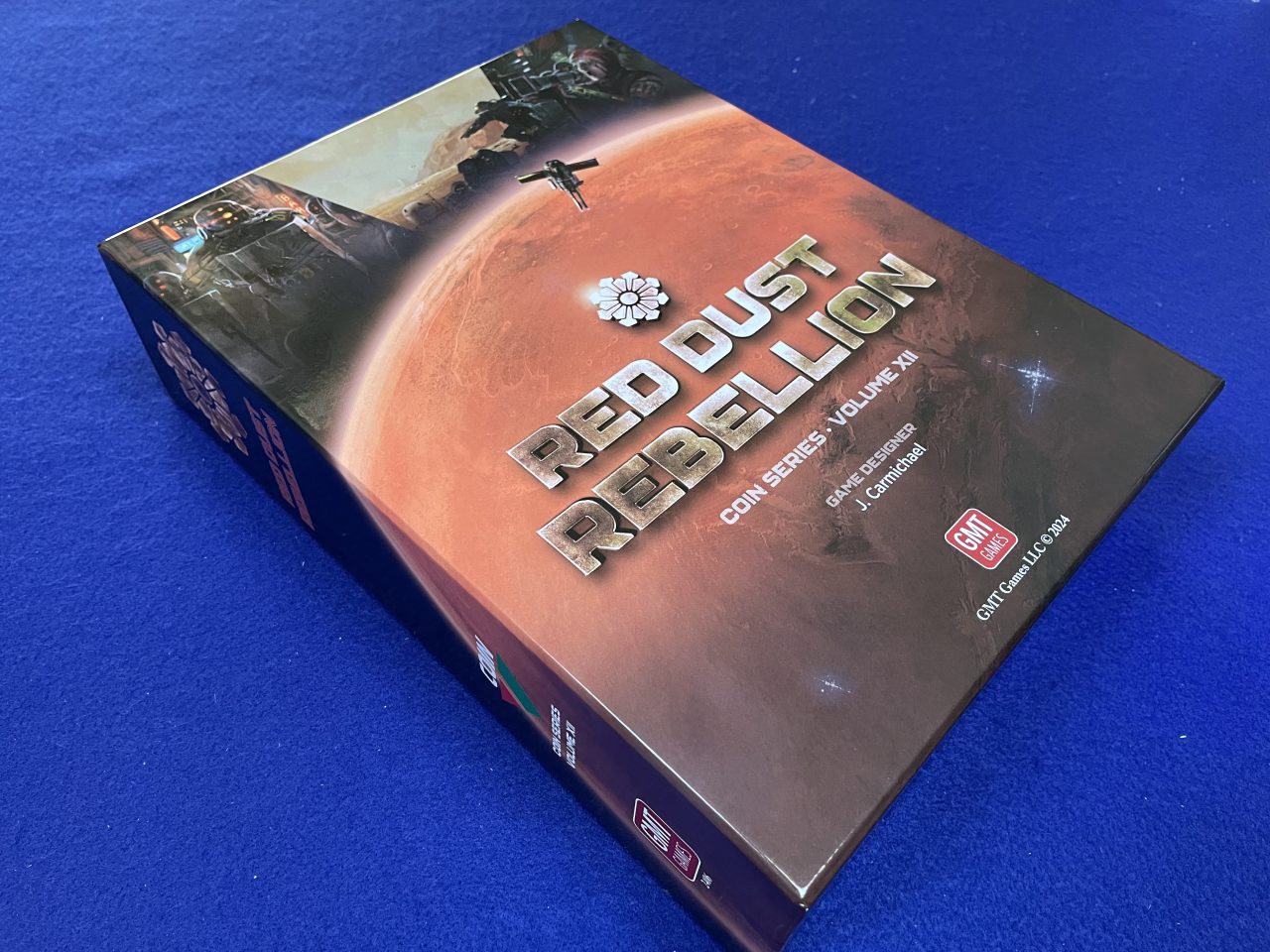
Each of these factions either has a counterpart in Orbital 2100 or one could be created for it. Makes me wonder if Red Dust Rebellion could serve as a campaign setting for Orbital 2100. Hmm…]
Oh, by the way. There is one corporation in particular that caught my eye: Wu-Ketai. I could almost shout out loud but then I remember, “In space no one can hear you scream.”
What do we do?
All too often, RPGs package a deeply immersive setting and an appropriately matched game engine under one cover yet lack a “what to do.” Even my beloved Traveller RPG never explicitly stated what a player party was supposed to do. Orbital 2100, on the other hand, offers tools for the Referee and players to consider with a Mission Generator. Orbital 2100 actually goes beyond a simple “next mission” view and offers possible futures to explore in World Events.
Perhaps the best advice in the rules are found in this section under Technical Roleplaying. This section was lifted almost word-for-word from Orbital War (Zozer Games, 2025) but bears repeating:
This roleplaying game is a techno-thriller, with the technology front and centre – everyone depends on it for their lives. For some players, familiar with the concepts of spaceflight and engineering, there won’t be any problems in adapting to this technologically-dominated style of gaming. But for other players, this setting might seem daunting, they may struggle to play scientifically, and to meaningfully interact a technical or science-driven adventure, particularly when it’s about sciences or technology they aren’t familiar with.
For these players, who just want to play a role, make some meaningful decisions and have fun, taking on the role of an astronaut or scientist is just an exercise in frustration. With their only viable option being to confront every problem with the phrase “I roll my skill to solve the problem…”. If the GM denies the roll, they are forced into solving a problem for which they have no answer, and if the GM allows the roll any inherent tension in the situation is dissolved. It is, however, possible to find a middle-ground, but this requires a little attention from both the player and the GM. The real issues is one around conflict. Conflict sits at the heart of most of fiction – including tabletop roleplaying games. For most roleplaying games, conflict takes a combative form: one faction wants one thing, another wants something else, and both sides will physically fight each other until the conflict is resolved. In less combat-oriented games, the conflict may be economic, social, or political. Luckily, most of these conflicts are easily-relatable – players understand resource issues, or navigating a tangles social situation. Unfortunately, that does not apply to the technical conflicts of hard science fiction. Unless your players are all space nuts, mechanics or engineers, your players likely will face trouble relating to technical conflicts.
Orbital 2100, Running Orbital, Technical Roleplaying, p. 128

Given my reference to Alien above, you might be asking if there are aliens (of the Xenomorph or other varieties) in Orbital 2100. The answer is up to you. A small section of optional plot hooks is provided. If one really wants to get into an Alien or Blade Runner-like setting I encourage you to explore another Zozer Games product line: HOSTILE.

Where and how
The chapters “Orbital Society,” Space Travel,” and “Spacecraft Design” deliver the “where” and “how to get there” elements of Orbital 2100. These chapters also continue the world building of the setting with discussions on topics such as law, money, art, and asteroid mining, to name a few.
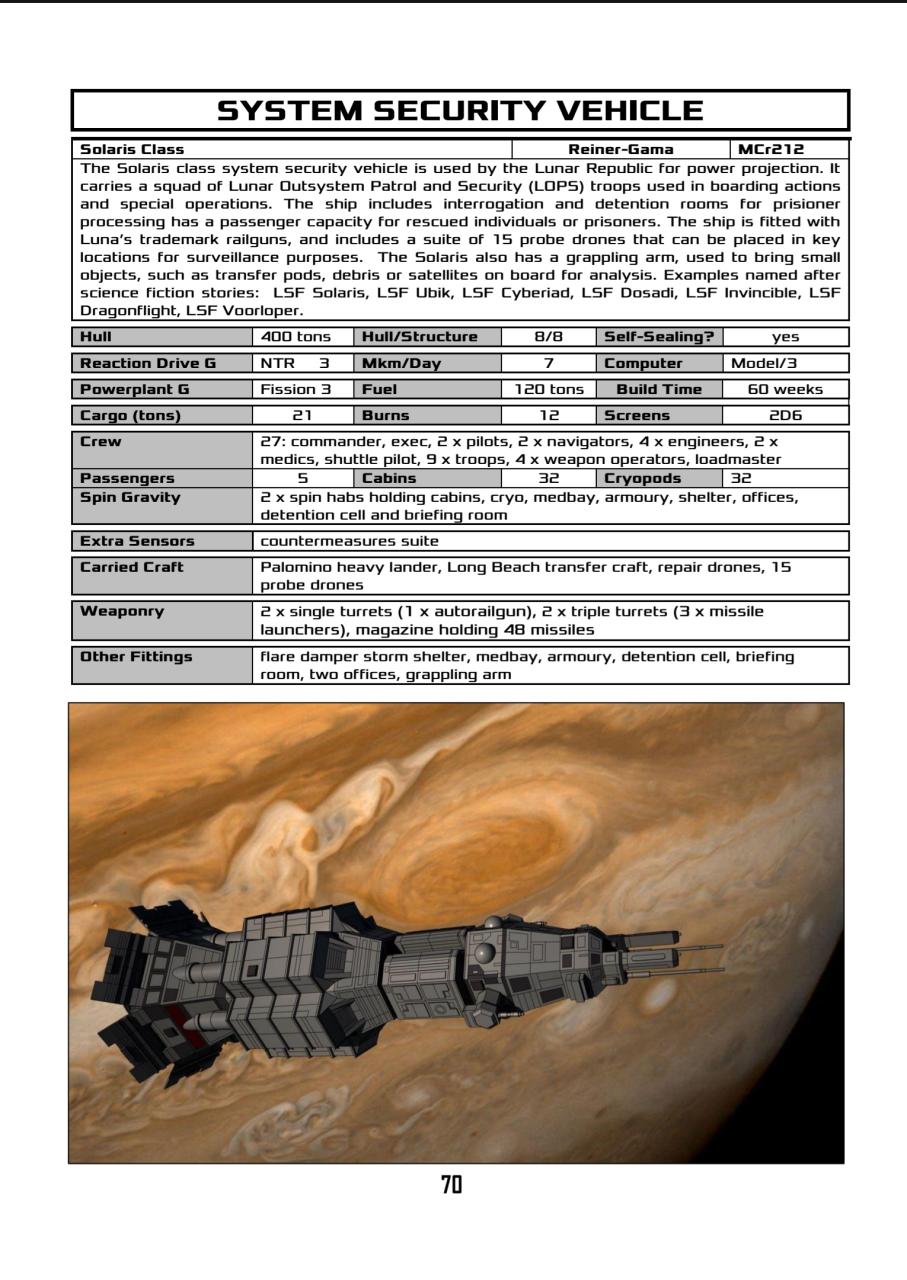
When it comes to spacecraft in Orbital 2100, like the tech the rules are simple. Orbital 2100 does not use a vector movement wargame-based design like Classic Traveller instead opting for very abstract rules using “Space Combat Points” (p.181). The spacecraft design sequences are pretty much bog-standard Traveller/Cepheus Engine just at lower Tech Levels. A noticeable exception is in the Tech Levels (TL) available; while components are capped at TL9 the use of sensors and computers up to TL11 is allowed.
Orbital 2100 does not (yet?) have a world creation system like that seen in Traveller/Cepheus Engine. The “Worlds” chapter describes the Solar System using the Universal World Profile (UWP) system common in those game engines. The descriptions actually go beyond the simple UWP and include plenty of background and data with innumerable adventure seeds thrown about.
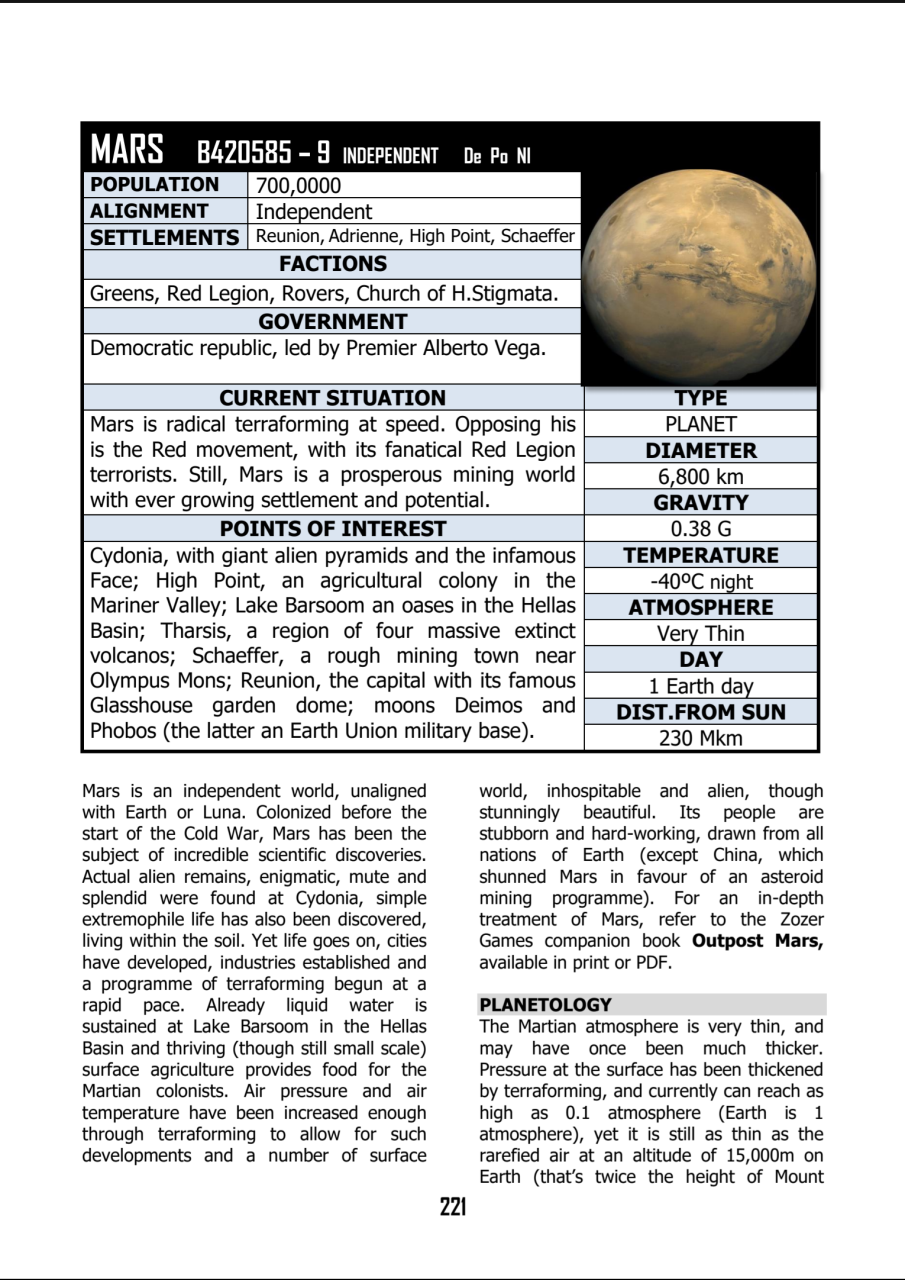
[When reading the Mars section, my thoughts once again come back to Red Dust Rebellion. In Orbital 2100 the current situation for Mars is described as, “Mars is radical terraforming at speed. Opposing this is the Red Movement, with its fanatical Red Legion terrorists. Still, Mars is a prosperous mining world with ever growing settlement and potential” (p. 221).]
Inspiration
Designer Paul Elliott provides a chapter in Orbital 2100 that details much, but not all, of the inspirations for the setting. This is a nice collection of movies and books (fiction and non-fiction) as well as other roleplaying games. Elliott also provides a link to online resources—mostly from NASA—that provides more understanding of key technologies.
As comprehensive as the list is, I cannot but help to add a few of my own:
- Space: 1999 – The Roleplaying Game (Mōdiphiüs Entertainment, 2025). Eagle transports for the win!
- Inherit the Stars (James P. Hogan, 1977). An intriguing mystery set in roughly the time period of Orbital 2100. I look forward to meeting Charlie some day and let us never forget Koreil…
- The Moon is a Harsh Mistress (Robert Heinlein, 1966). More properly a book that tracks with the “history” of Luna in Orbital 2100, it still is a useful example of what life on the Moon could look like.

Fast play of a slow craft to the Moon
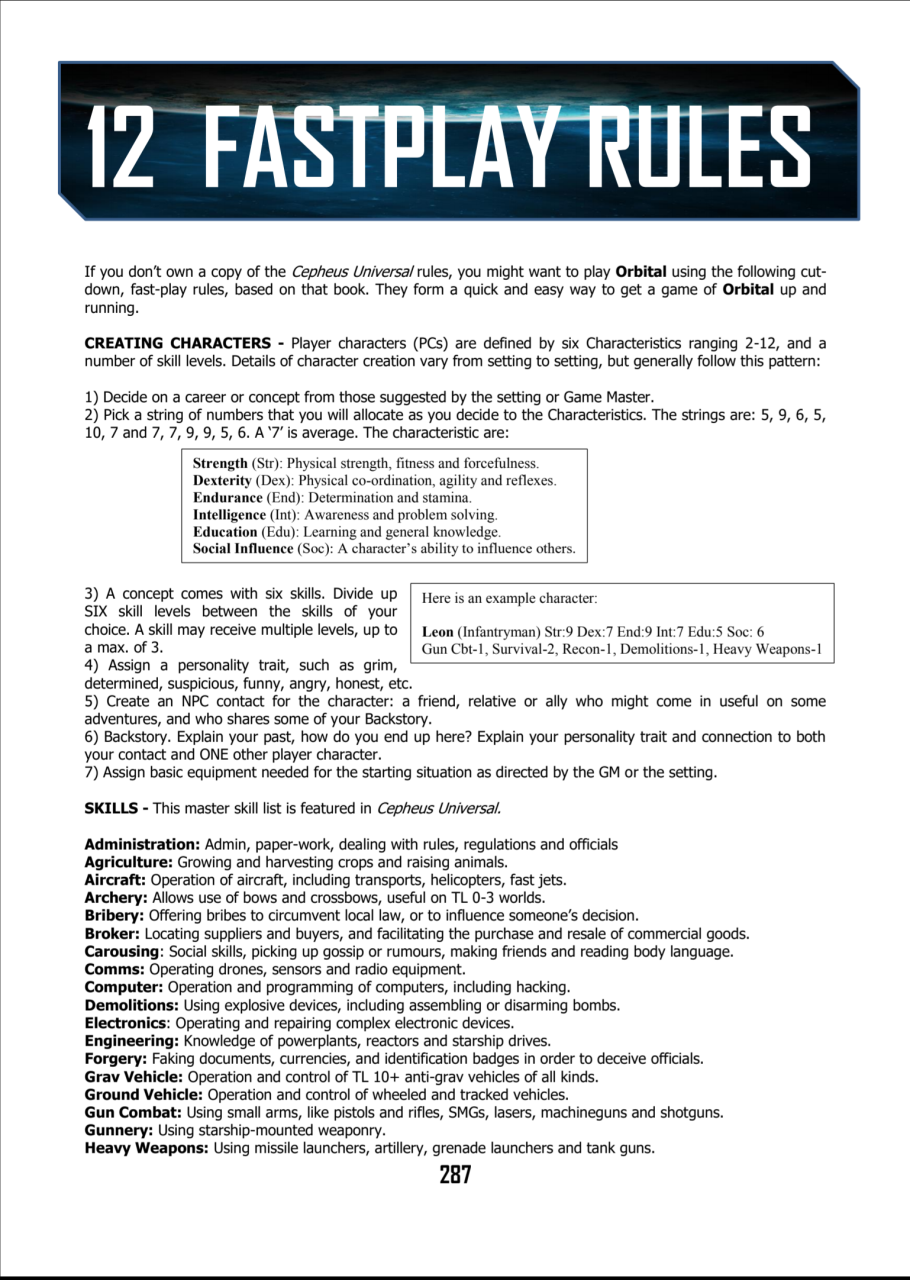
The last chapter of Orbital 2100 is a set of Fastplay Rules based on the the Cepheus Universal: Fast-Play Rules available for free. These are excellent to use if one is utilizing Orbital 2100 as a convention one-shot or pick-up game.
Game on
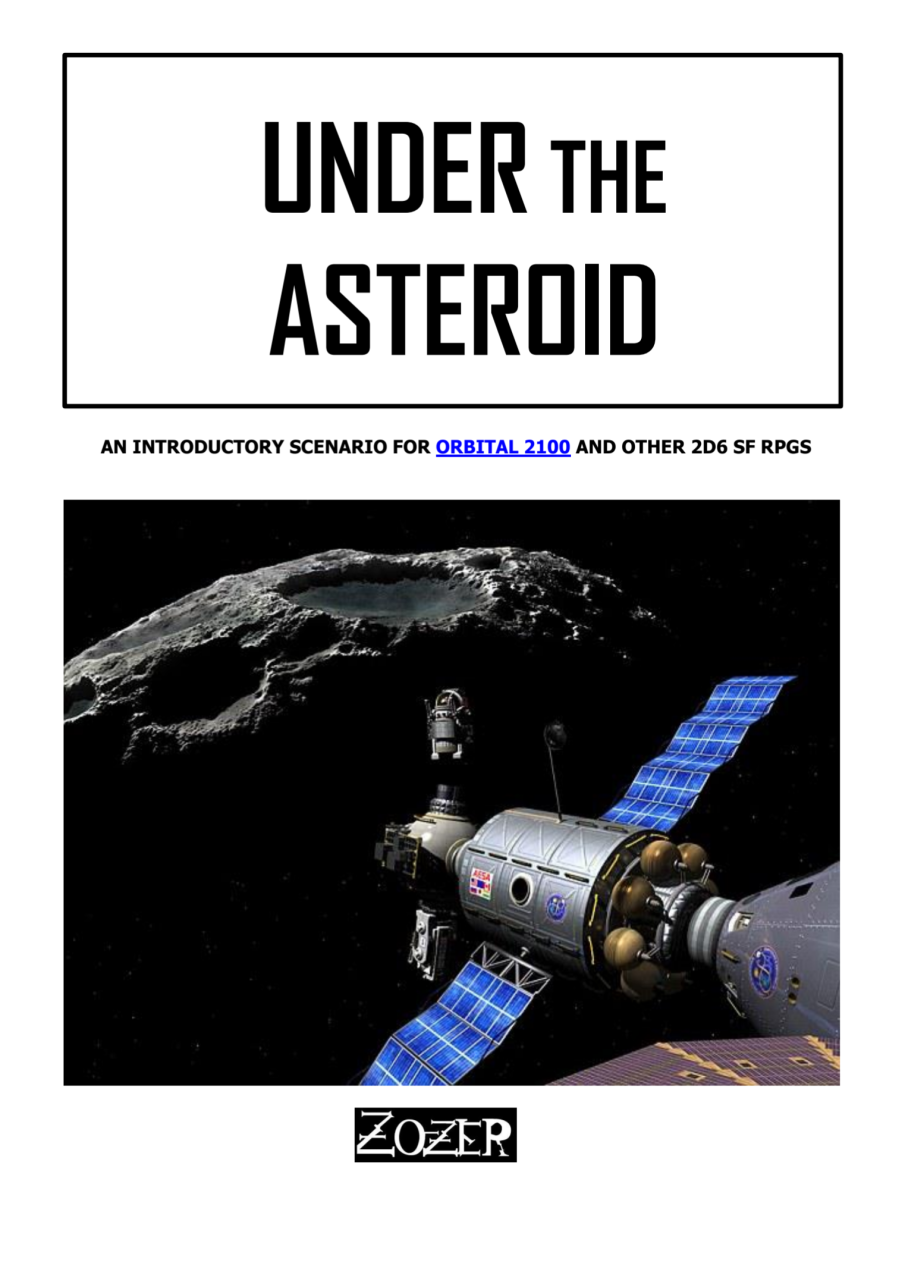
Orbital 2100 also come with an introductory scenario, Under the Asteroid. This adventure, using pre-generated characters, is an excellent introduction to the various “game levers” players can call on in the Orbital 2100 setting.
Escape velocity
I am excited about Orbital 2100. All too often, RPG settings deliver a rich details but in the end fail to connect with the game system which, in turn, means adventuring within falls flat. Orbital 2100 is such a complete setting that there are literally hundreds of adventure hooks to support whatever style or genre of (sorta) hard sci-fi adventuring your group wants to play. While the setting is “hard sci-fi” the presentation—and rules integration—is such that it becomes more hard-edge space opera than a NASA manual of procedures.
Recommended for Traveller/Cepheus Engine players who seek a Solar System setting for real adventure.
The quote “X-ray delta one, this is Mission Control” is from the movie 2001: A Space Odyssey.
Feature image courtesy Zozer Games.
The opinions and views expressed in this blog are those of the author alone and are presented in a personal capacity. They do not necessarily represent the views of U.S. Navy or any other U.S. government Department, Service, Agency, Office, or employer.
RockyMountainNavy.com © 2007-2026 by Ian B is licensed under CC BY-SA 4.0
 Rocky Mountain Navy Gamer