
Stille, Mark E. (2025) Pearl Harbor: Japan’s Greatest Disaster. Osprey Books.

Précis
If the title of Mark Stille’s latest Pacific War naval history book, Pearl Harbor: Japan’s Greatest Disaster, does not telegraph to you what his main point is then you very likely graduated from a Northern Virginia public school system in the last four years. Stille makes his point by focusing on the military aspects of the Pearl Harbor attack; in particular he pays attention to the, “planning, execution, and aftermath of the Pearl Harbor operation (p. 11).
In the introduction to Pearl Harbor, Stille lays out questions related to key myths of the Pearl Harbor attack he intends to answer:
- “In the months leading to the attack, was there a chance that war between the United States and Japan could be averted?” (p. 11)
- “How did Admiral Yamamoto Isoroku, the man who warned against attacking the United States, come to embrace the attack on Pearl Harbor and then risk everything to get it approved?” (p. 12)
- “Did the Japanese have military options other than to attack Pearl Harbor?” (p. 14)
- “The Japanese attack plan at Pearl Harbor has been almost universally viewed as brilliant. But was it?” (p. 15)
- “How ready was the United States Navy’s Pacific Fleet, and were defenses on Oahu adequate to defend the fleet?” (p. 16)
- “Did the Japanese first wave live up to expectations?” (p. 17)
- “Generally unnoticed in accounts of the attack was the underperformance of the Japanese second attack wave. What happened and why?” (p. 18)
- “Did the Japanese consider a second attack?” (p. 18)
- “A huge part of the Japanese plan was a submarine offensive by midget subs inside the harbor and by fleet submarine ringed around Oahu. This was an absolute failure. Why?” (p. 19)
- “Did the Japanese attack on Pearl Harbor cripple the Pacific Fleet?” (p. 20)
- “What was the true strategic impact of the attack?” (p. 21)
- “Were Kimmel and Short scapegoats?” (p. 21)
Ponderings
Historiography. Mark Stille recognizes that his book, Pearl Harbor, is far from the first and undoubtable will be the last book ever written on the subject. Stille dutifully, and respectfully, recognizes prior works by giants on the subject like Gordon Prange, “who remains the premier historian on Pearl Harbor” (p. 15), but at the same time is critical of how even those giants were taken in by others; most dramatically the recollections of Fuchida Mitsuo who Stille asserts, “routinely engaged in untruths and exaggerations” (p. 16). This critical assessment of not only the planning and execution of the Pearl Harbor attack but also of the historiography—even mythology—that grew around the attack in the past 80+ years is Stille’s forte.
Focus on Plans and Operations. It is obvious when reading Pearl Harbor that Stille is drawing upon the experience of his career in the Intelligence Community to assess the Japanese plans and operations for the attack on Pearl Harbor. That more military plans focus, in effect a fusing of today’s Joint Pub 2.0 Intelligence and Joint Pub 5.0 Planning may come across as too technical to some. Others may argue that Stille’s approach treats the strategic questions with too broad a brush. I will leave it up to you readers to decide for yourself which is true, or not. From my perspective, Stille’s Pearl Harbor is an excellent operational and tactical analysis of the attack with crucial strategic linkages and impacts properly addressed.
Gaming Connection
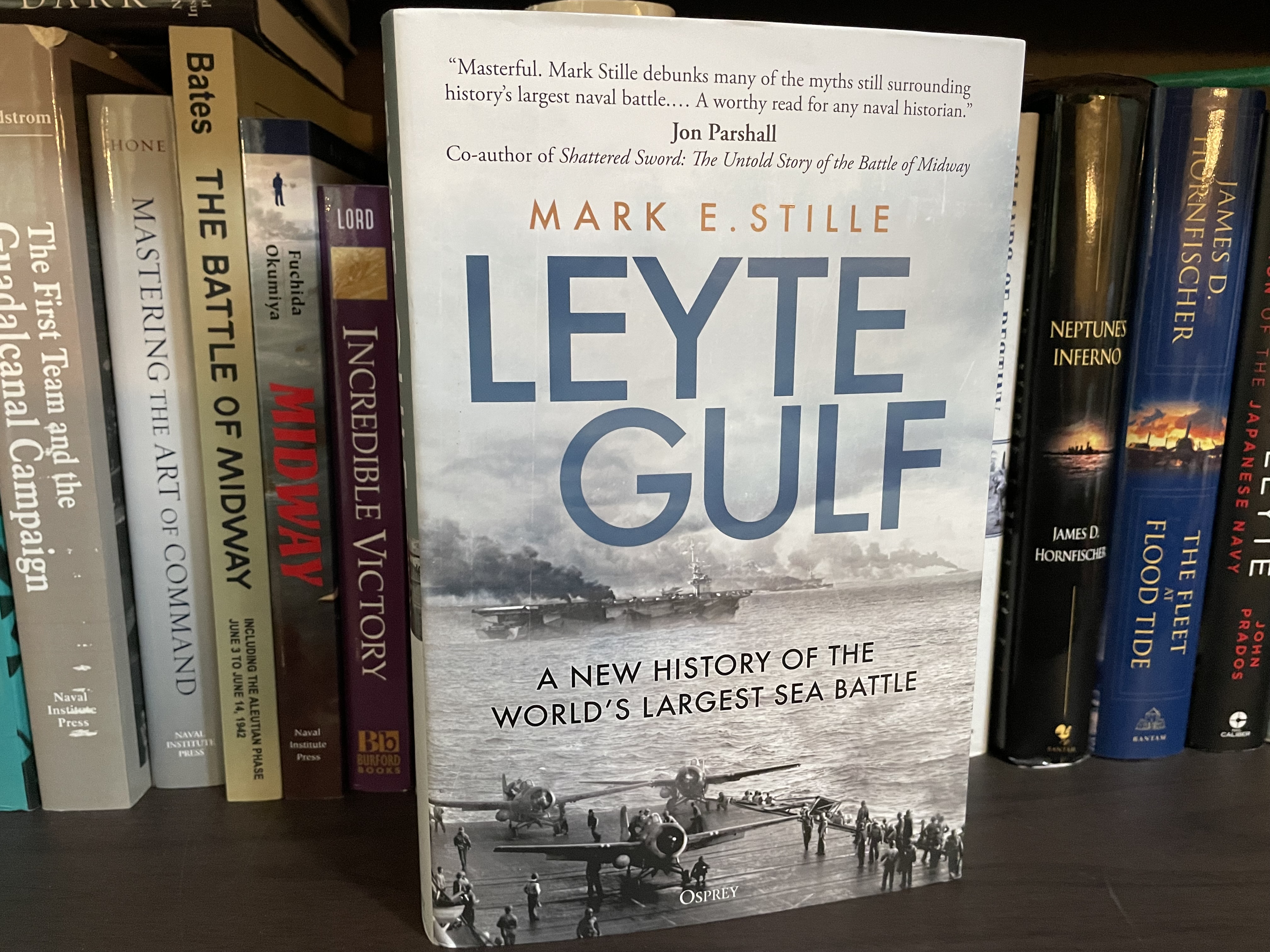
Beyond the several mentions of wargaming in the account, to include the famous September 1941 Japanese wargame of the attack, the most relevant section of Pearl Harbor for wargamers likely will be “Appendix 4: The Alternative Pearl Harbor Attack.” The appendix is a narrative account of another possible outcome of the attack if several conditions—the most important being surprise—were altered. Stille does not credit any wargame with assisting in creating the narrative account. Rest assured that Stille is very familiar with wargaming; in fact, he is a wargame designer himself. A quick look at his ludology on BoardGameGeek reveals nine wargame credits, but the only naval wargame in that small group is Imperial Sunset: The Battle of Leyte Gulf (Against the Odds, 2006) which goes with Stille’s earlier book Leyte Gulf: A New History of the World’s Largest Sea Battle (Osprey, 2023):
Imperial Sunset is a moderate level complexity simulation of the largest naval battle in history, the Battle of Leyte Gulf. The battle was fought from October 23-26 1944 as the US returned to the Philippines, landing on the island of Leyte. The US Navy and the Imperial Japanese Navy fought a series of actions that collectively have been recorded as the Battle of Leyte Gulf. The historical result was a decisive defeat of the Imperial Navy, virtually eliminating it as a viable force for the remainder of the war. For the US Navy, it was a victory that was almost squandered due to command problems.
Each game turn is six hours; there are three day turns and one night turn for each calendar day. Each sea hex is approximately 25 nautical miles across. The game map is used for all Task Force movement and movement by air units. Two tactical displays are included, one for naval surface engagements and one for air attacks.
Publisher’s blurb

It certainly would be very interesting to see if Stille worked with the the designers of Command at Sea 5th Edition at Admiralty Trilogy Group. Personally, I always enjoyed playing the different Pearl Harbor Raid scenarios that appeared in Rising Sun: Command at Sea Volume I dating all the way back to 1994. Pearl Harbor: Japan’s Greatest Disaster certainly demands a replay of the attack on the tabletop (or floor if you prefer minis).
Feature image courtesy RMN
The opinions and views expressed in this blog are those of the author alone and are presented in a personal capacity. They do not necessarily represent the views of U.S. Navy or any other U.S. government Department, Service, Agency, Office, or employer.
RockyMountainNavy.com © 2007-2025 by Ian B is licensed under CC BY-SA 4.0
 Rocky Mountain Navy Gamer