
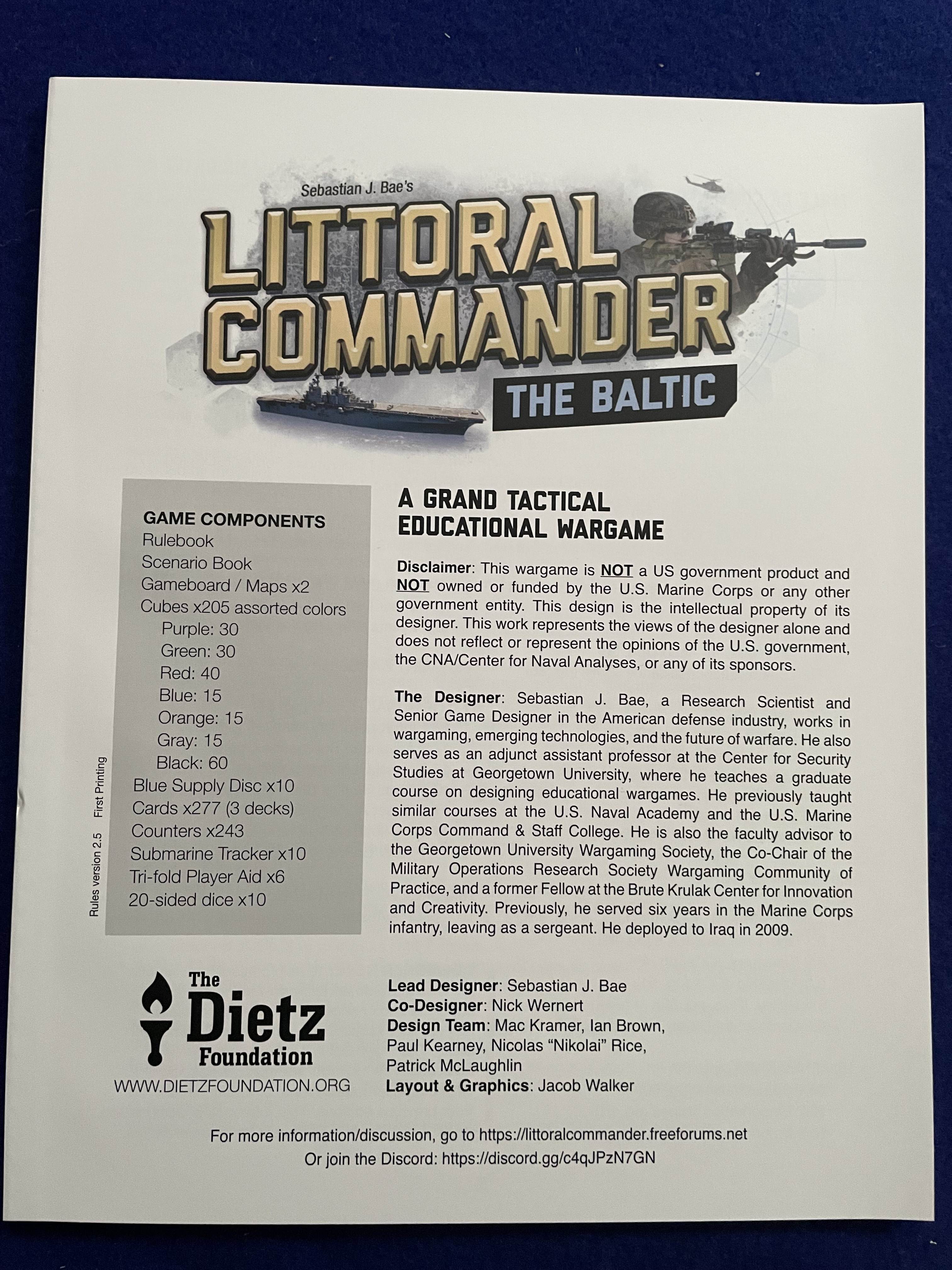
LC: Baltic is a sandbox game for two sides to explore future conflict in the Baltic Sea region between the US and Russia, emphasizing the importance of combined arms and logistics. The Littoral Commander system is easy to play, can be learned in under thirty minutes with scenarios playing in 60-240 minutes.
Publisher’s Blurb

For those that know the first series game, Littoral Commander: Indo-Pacific (LC:IP) this box is a bit taller than the original. I forgot to look at the shipping weight but maybe been around 8 lbs?
Back of the Box

Rulebook

The rulebook is formatted using a single wide column on each page printed in full color coming in at a respectable 104 pages. I wish it used comb binding but I understand The Dietz Foundation trying to control costs where able. This format still works as my experience when playing Littoral Commander is that during play the rulebook is usually used only for reference lookups and not regularly consulted at the table; play is usually driven by the Player Aids, text on cards, and often a facilitator leading the session.
Scenario Book

Much shorter than the rulebook, the Scenario Book comes in at 28 pages and is saddle-stapled. There are 11 scenarios provided as well as instructions on how to Create Your Own.
Gameboard / Maps x2

Printed on slightly glossy, medium-weight paper stock with a bit of a plastic feel to it, each map is two parts; when laid out a full map is 36″ x 48″. Each hex is ~20 km across.

I am still debating the new color scheme; some players of LC:IP complained about the “loud” color scheme. In LC:IP the terrain classification was indicated by the color of the complete hex that delivered an abstracted view of the terrain that was very accessible (i.e. highly suitable for colorblindness). In LC:B a photo-realistic-ish base map is overlaid with hexagons where the hex border is color-coded according to the terrain classification system.

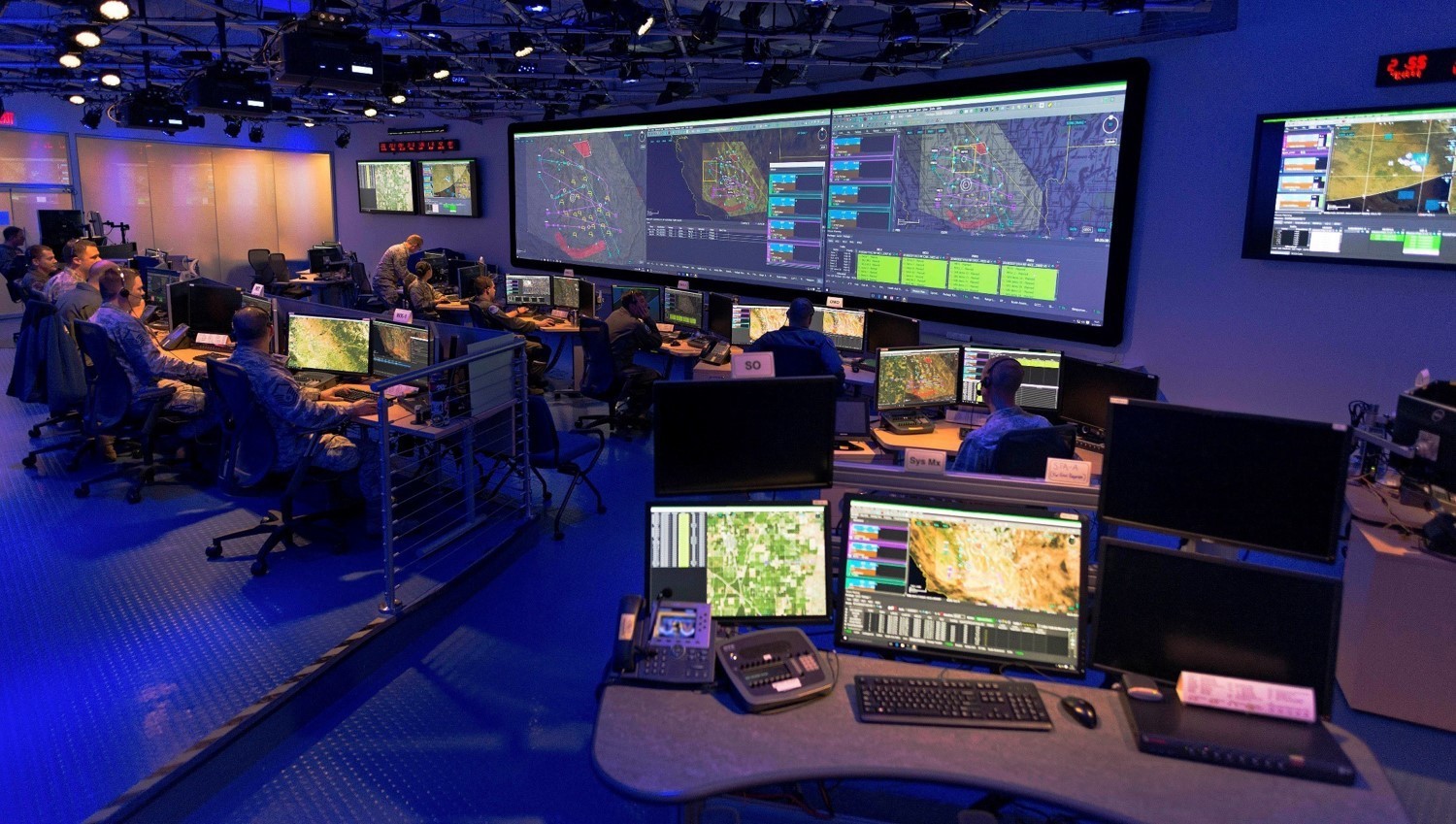
Though the LC:B map certainly is more “realistic” in appearance I wonder if the realism is worth the other costs in an educational game. I understand the desire to try to make the map for Littoral Commander something akin to a Joint Common Operating Picture (example below) but I am not so sure that an analog Joint All-Domain Command and Control (JADC2) view is useful (heck, a digital JADC2 is “challenging” to understand).
Cubes x205 Assorted / Blus Supply Disk x10

Wooden cubes! In a wargame! Eurogamers rejoice!
Cards x277 (3 Decks)
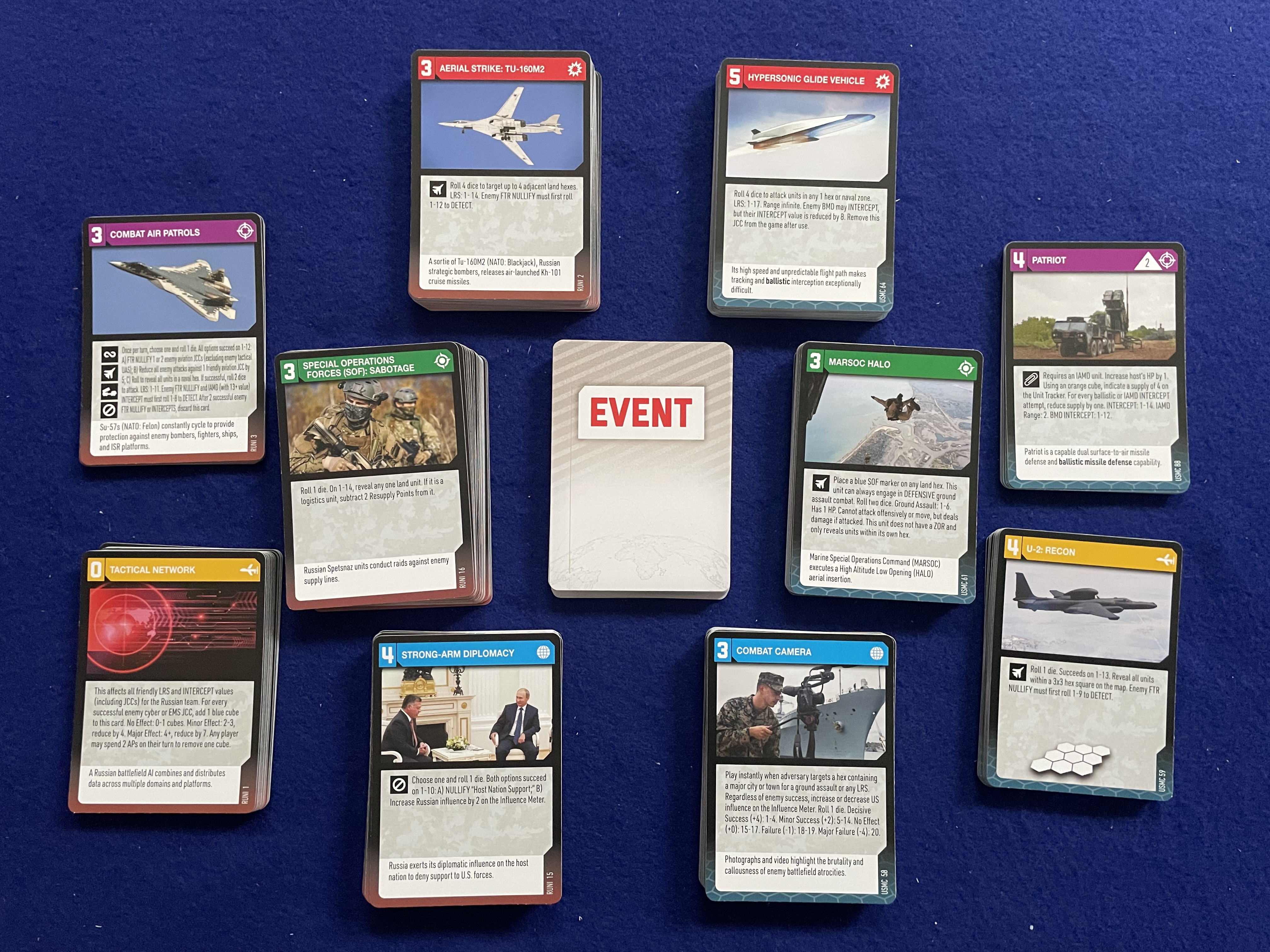
The three decks are one deck of 25 Event cards and two decks (Russian x126 and US x126) of Joint Capability Cards (JCC).
Unit Tracker Cards x110 (2 decks)
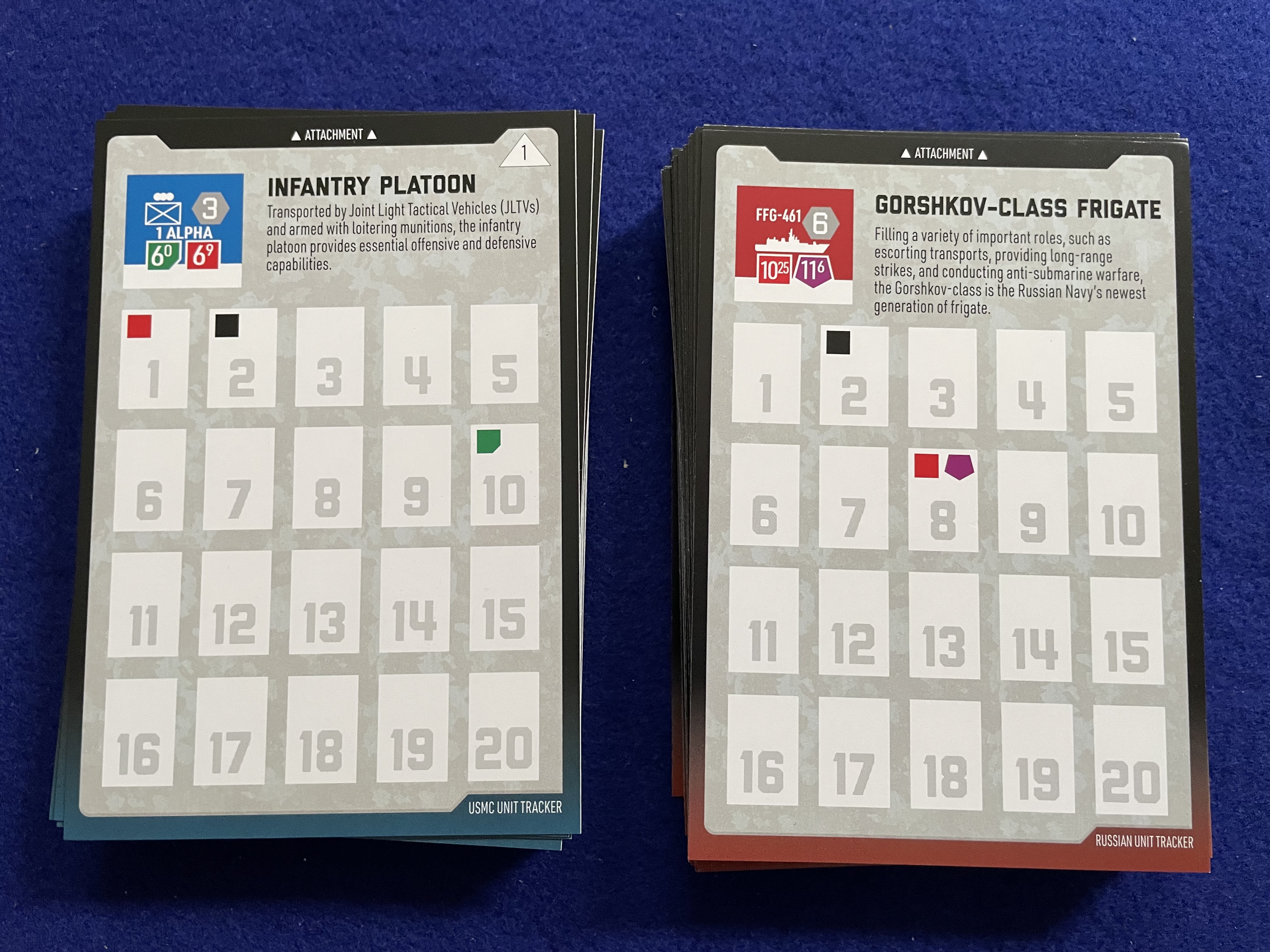
Note: Not included in the contents lists. When I first played LC:IP I wondered at the size of the Unit cards (roughly 3.75″ x 5.5″) and the fact many units do not use all the tracks (see the Gorshkov-class Frigate above that has a maximum of 8 of two different munitions). After play I have come to enjoy the larger size of the cards that are easier to see and arrange on the table; the uniform size not only makes organization easier but can be important when JCCs are attached and the need to track up to 20 munitions happens.
Counters x243
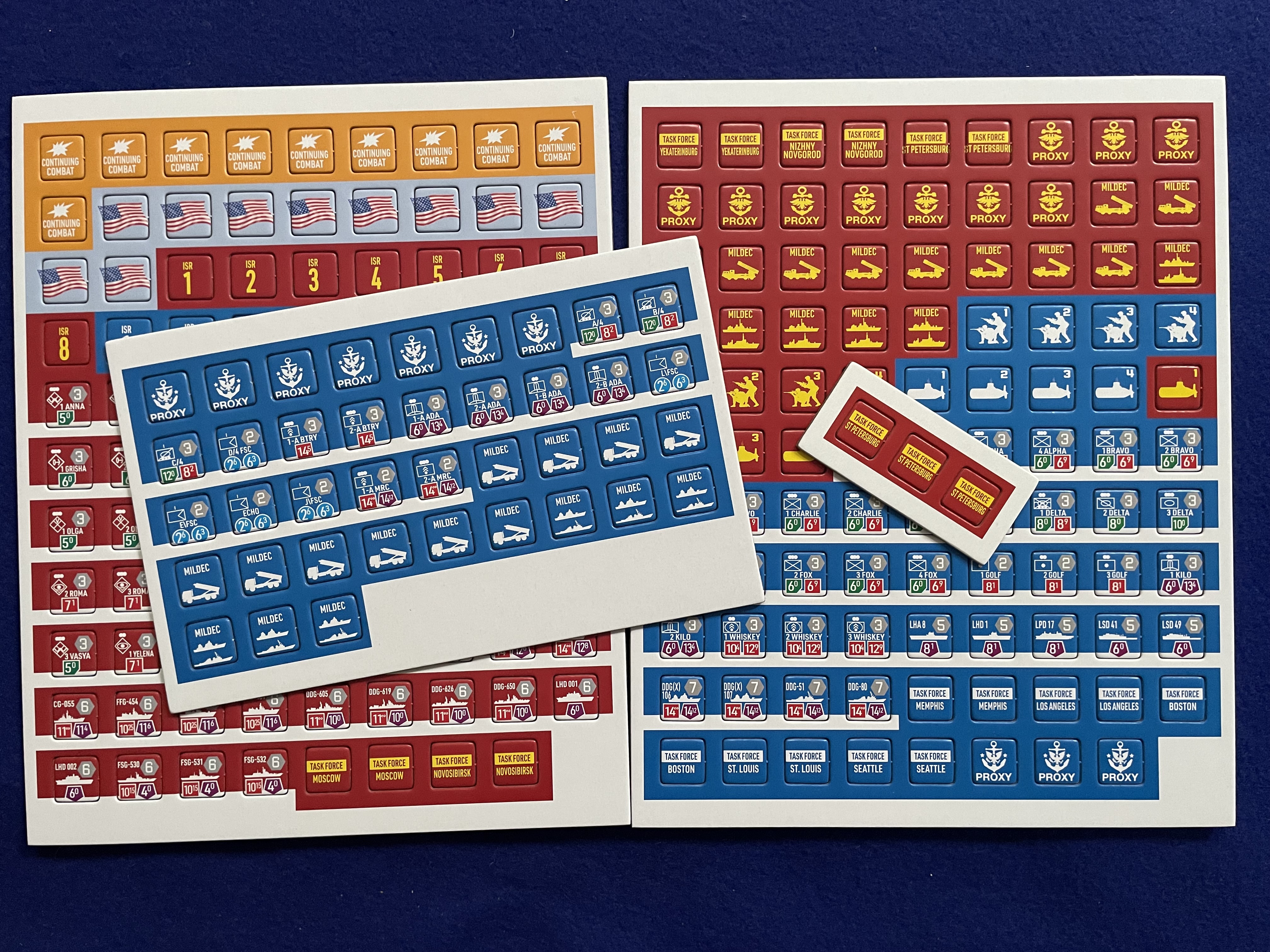
Complete with rounded corners. I look forward to a Wood Upgrade Kit like that sold for LC:IP though the cost likely will be steep given the current “economic situation.” For Littoral Commander I will pay!
Submarine Tracker x10
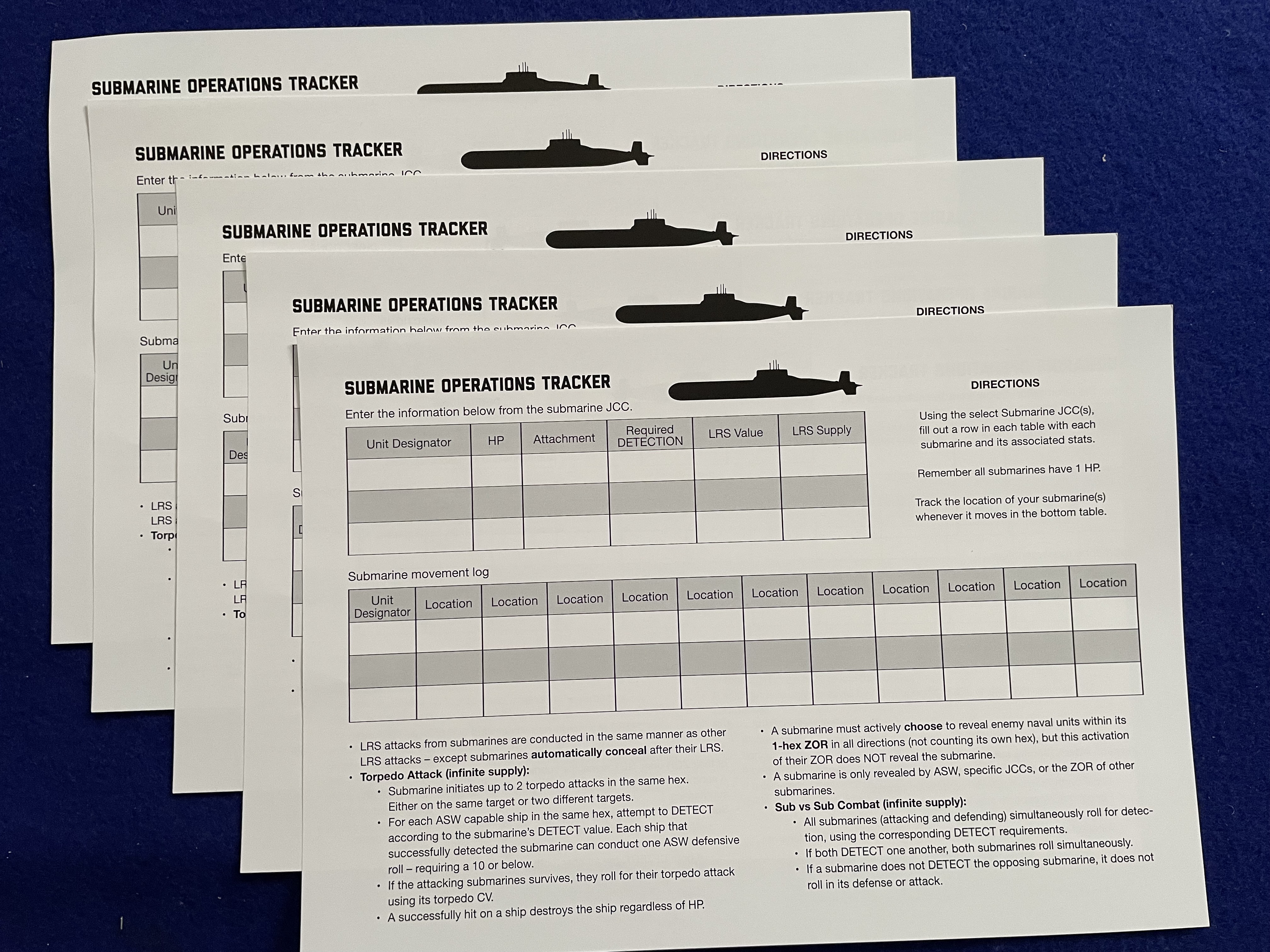
Each of the five Submarine Trackers is double-sided for a total of 10.
Tri-Fold Player Aid x6
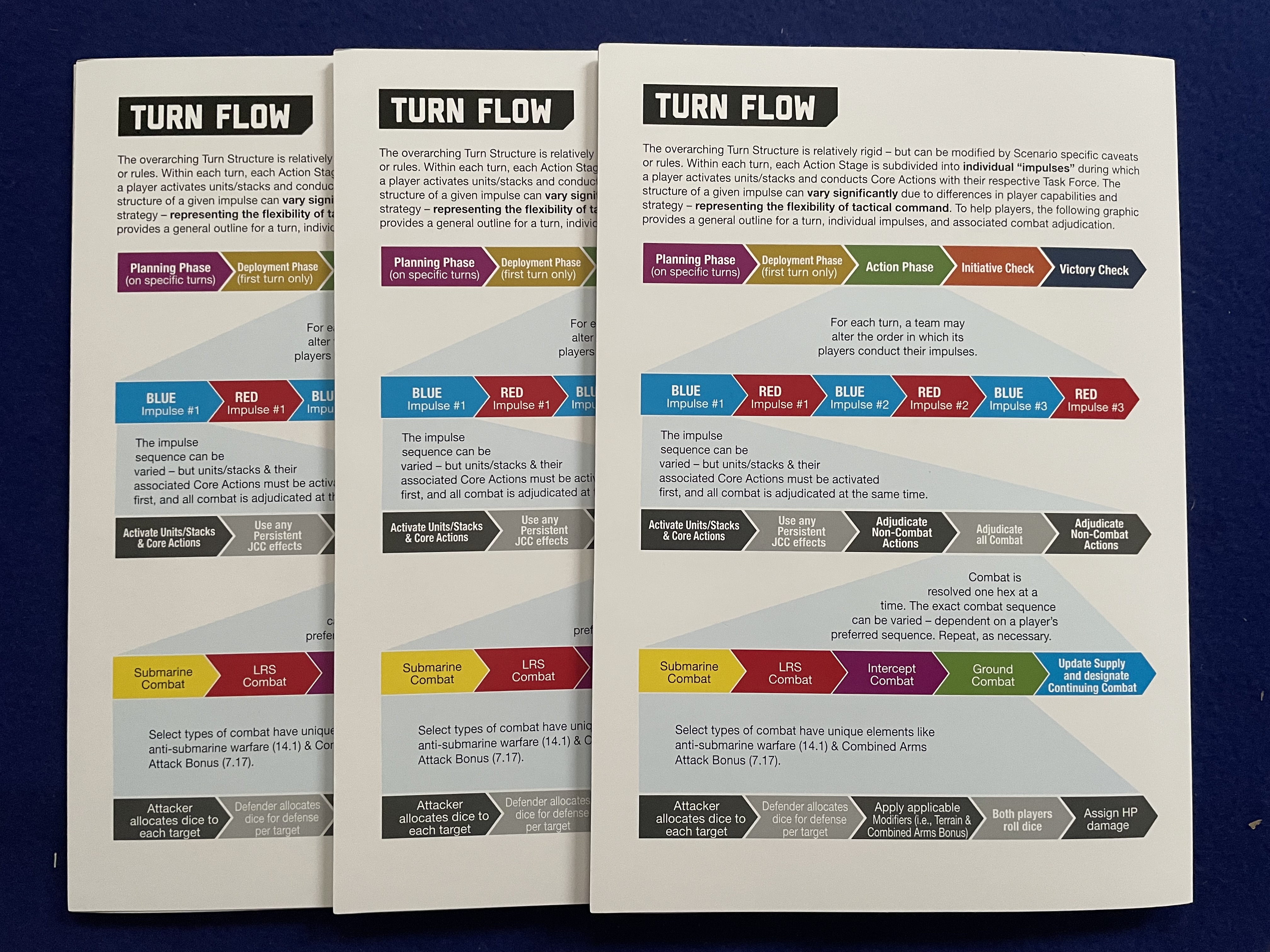
The Player Aids are double-sided tri-folds so I guess there are “6” sides though I think the more common way to count this would be as three.
20-sided dice x10

Ah, the classic d20. Makes figuring odds so easy even a Marine can figure it out. I highly recommend using some sort of dice tray when playing Littoral Commander because, as you might be able to see in the picture, the edges of the d20 are not very sharp; occasionally I see “runaway” dice if they are not properly contained.
Feature image courtesy RMN
The opinions and views expressed in this blog are those of the author alone and are presented in a personal capacity. They do not necessarily represent the views of U.S. Navy or any other U.S. government Department, Agency, Office, or employer.
RockyMountainNavy.com © 2007-2025 by Ian B is licensed under CC BY-SA 4.0
 Rocky Mountain Navy Gamer