
Keith Tracton is a wargame designer that hopefully you recognize. A review of his BoardGameGeek profile shows 16 linked games. Of those 16 games, 14 titles are associated with the World at War 85 series set in an alternate World War III and published by Lock n’ Load Publishing.
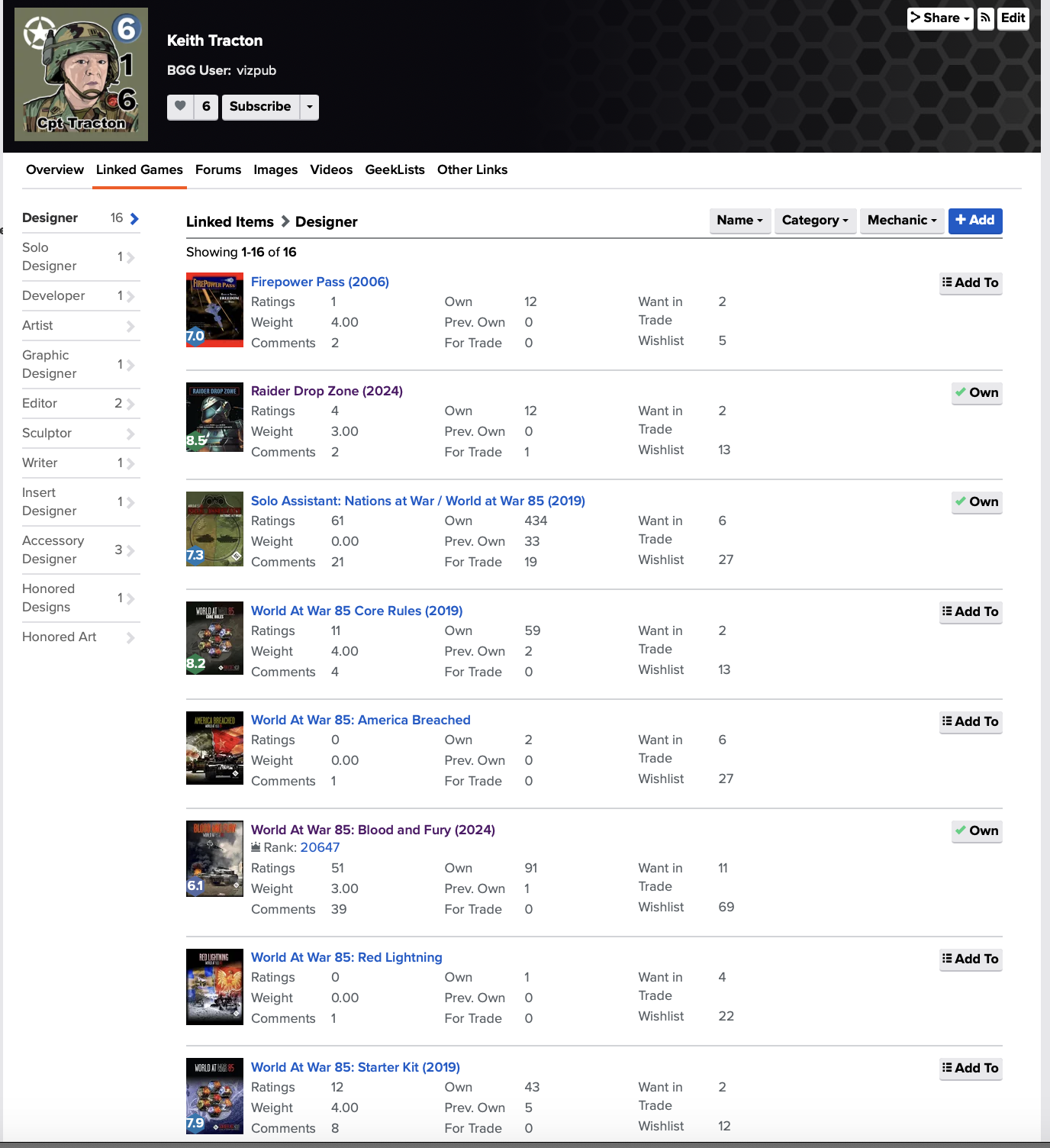
While the World at War 85 series is certainly Tracton’s most famous designs, the other two at the top of the list are a bit more personal.1 The latest, Raider Drop Zone: A Game of Man versus Alien and the Invasion of Planet Kraken, is a self-published title from Tracton using the printing services of Blue Panther.
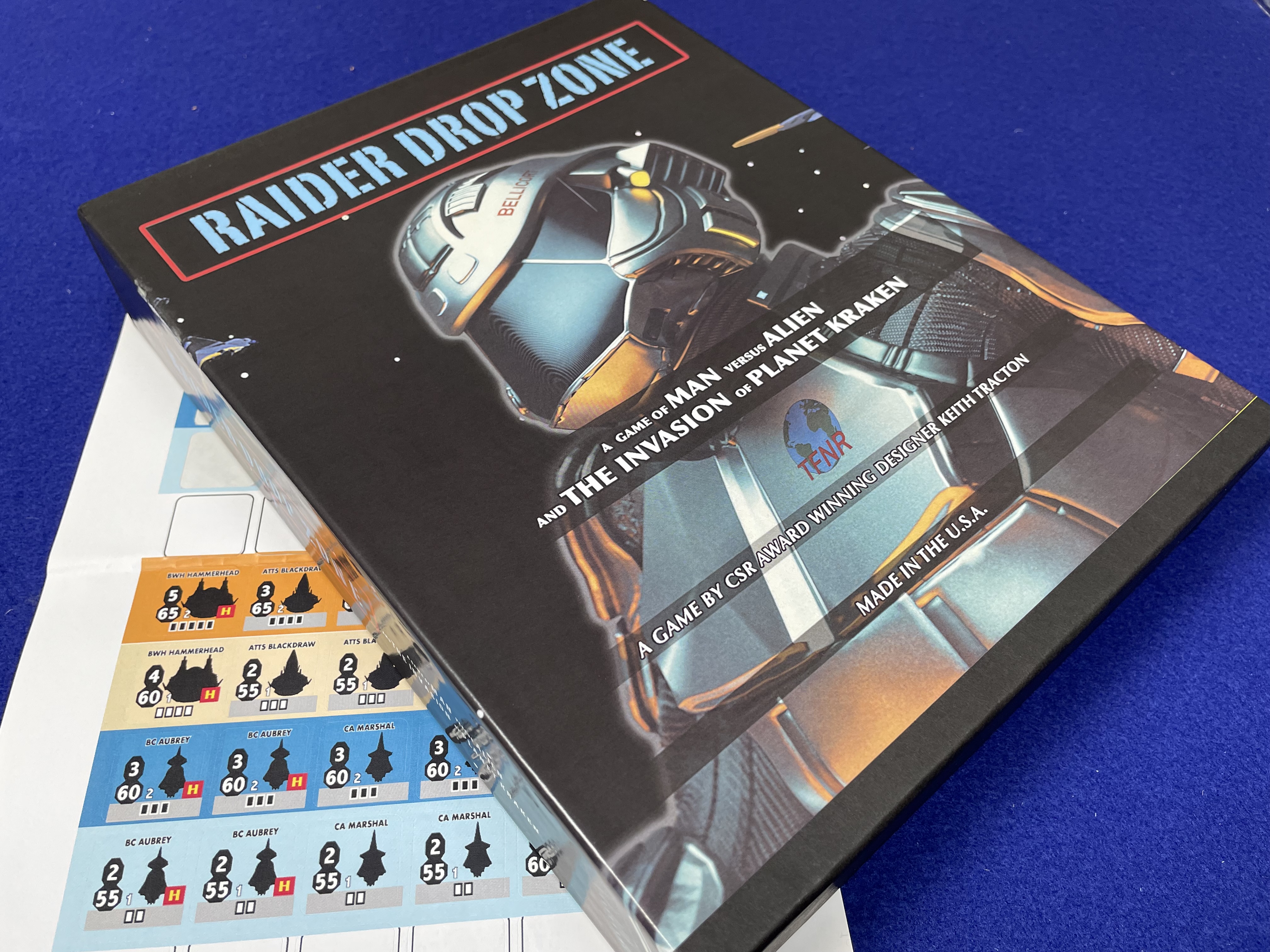
Raider Drop Zone is not a “World at War 85 in the future” design. The game does, however, draw from similar design themes such as most information is on the counters and CRT2-less combat.
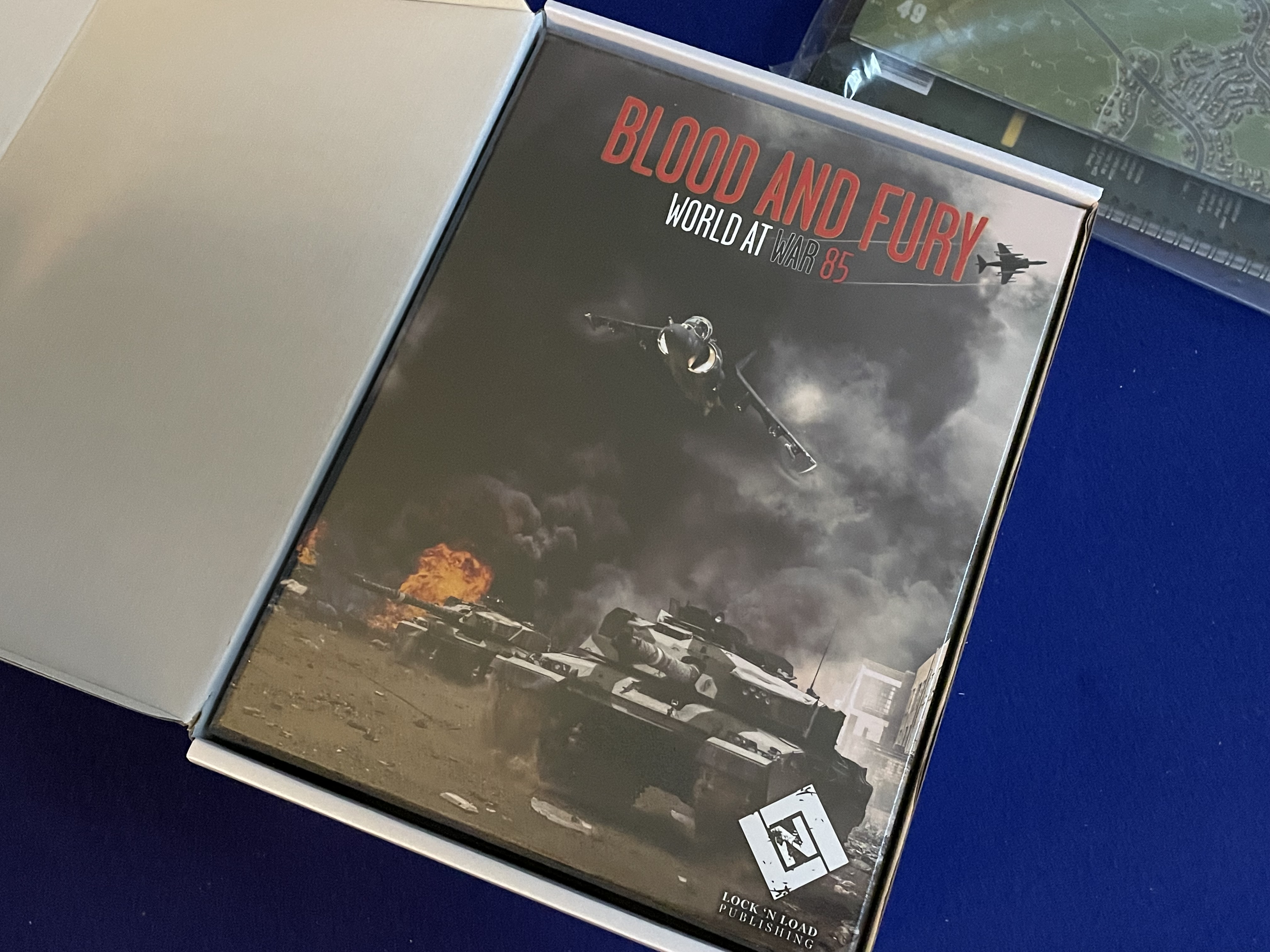
Raider Drop Zone is, fortunately, also more than just another pastiche to classic science-fiction wargames like Avalon Hill’s Starship Troopers (1977) or SPI’s Star Soldier (1979). While Tracton admits drawing inspiration from those games (and others) in Raider Drop Zone the classic scifi tropes of dropships and burrowing aliens (“Bugs, Mr. Rico!”) are reimagined using modern game design approaches. Raider Drop Zone is the Starship Troopers or HALO board game for today’s wargamer.
RDZ – Raider Drop Zone – The Assault on Planet Kraken is a two-player game of company, regimental and divisional combat action between the elite human Terran Fleet Raider Forces and the dreaded alien Kraken, set in the science-fiction universe of Firepower PassTM.
RDZ, Rules, p. 5
Suit up!
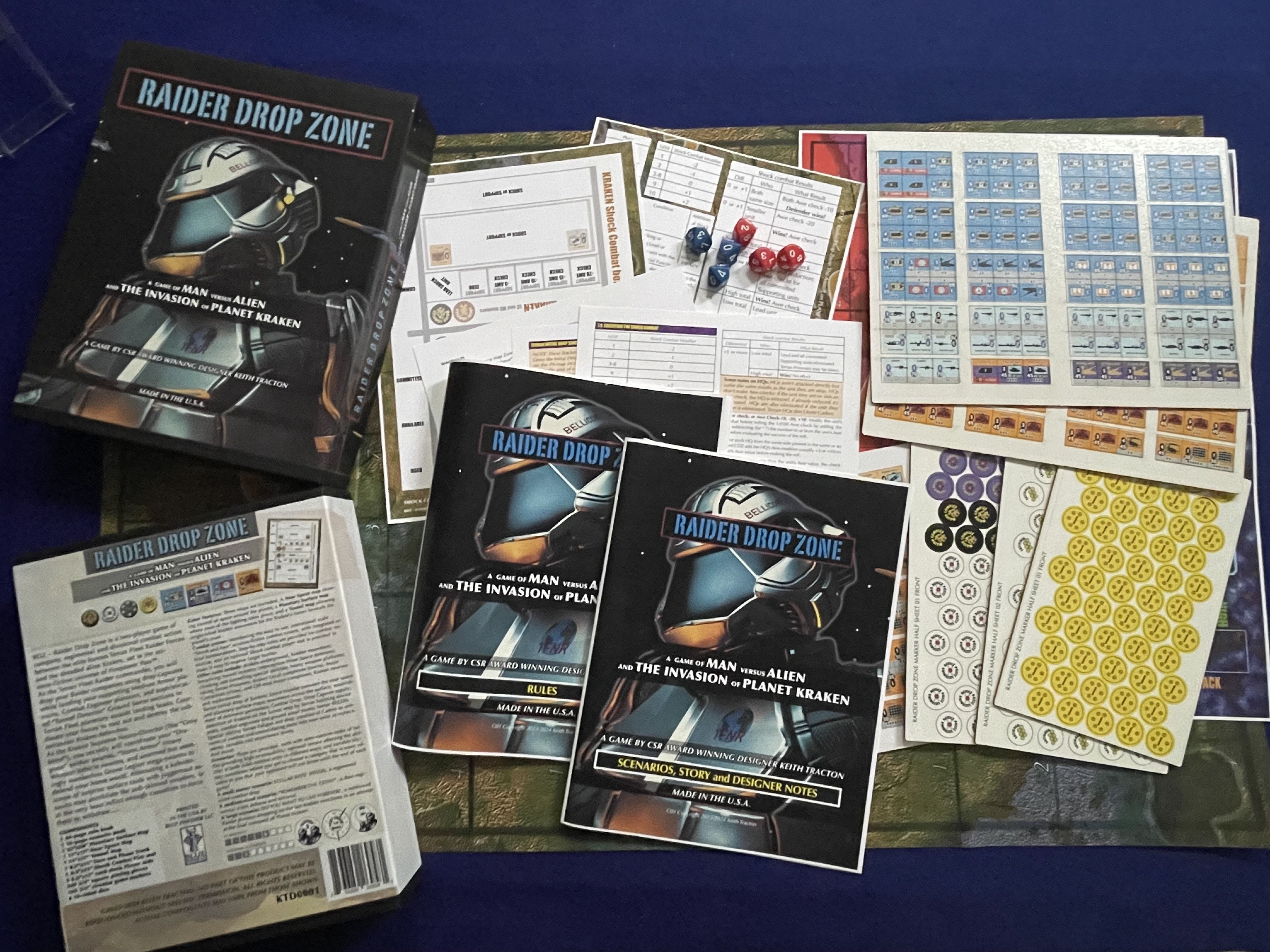
Raider Drop Zone is one of the larger productions I recall coming from Blue Panther. The box is deeper than most (2″) and packed with plenty of Raider Drop Zone materials including:
- Rules – 44-pages of two-column text with nice color using slightly glossy paper; saddle stapled.
- Scenarios, Story, and Designer Notes – 16-page booklet; same dimensions and printing as Rules.
- Planetary Surface Map – Paper folded 22″x34″ with full color.
- Tunnel Map – Cardstock single fold 11″x17″ in full color.
- Near Space Map – Cardstock single fold 11″x17″ in full color.
- Three (3) double-sided and two (2) single-sided cardstock 8.5″x11″ Player Aids/Gaem Tracks with color.
- 435 square or circular counters for units and markers.
- Six (6) ten-sided dice (d10).
Future war
Thematically, Raider Drop Zone is a wargame that leans heavily into classic planetary invasion tropes. For the Terran player this game is full of powered armor and dropships fighting into swarming alien strongholds.
As the Terran Fleet Raider commander, you will drop your Raider companies using drop capsules while landing your Supporting Medium Armor companies, Combat Engineer platoons, and sophisticated “Tunnel Detector” Ground Sonar sections in Terran Fleet planetary assault landing boats. Coordinate your forces to root out and destroy the subterranean defenders.
RDZ, Rules, p. 5
For the Kraken player in Raider Drop Zone you must fight in a very alien way with burrowing swarms that the Terran player must discover.
As the Kraken Supreme Neuro-Director (The “Only Mind”), you will coordinate your Dragoon soldier swarms, Storm Armor Heavy Weapon Vehicle swarms, and unarmed but seemingly numberless Drone Legion mega-swarms to defend your home world. Alternating a kaleidoscope of surprise surface raids with juggernaut assaults may annihilate the soft-skinned invaders, or at the very least inflict enough casualties to force them to withdraw….
RDZ, Rules, p. 5
As already hinted at, while Raider Drop Zone uses many classic thematic tropes the game mechanisms for the design are anything but traditional. Three game mechanisms that Raider Drop Zone leans most heavily into are multiple maps, info on counters, and CRT-less combat.
Three dimensions
Raider Drop Zone is played over three maps. Most of the action takes place on the Planetary Surface map which is divided into Raider company and regimental drop zones. The Kraken Supreme Neuro-Director—the Kraken player—uses a Tunnel map that is divided the same as the surface map but is kept secret from the Terran player as it shows the tunnel complexes beneath the surface. The third map, Near Space, is used for action in orbit and divided in a similar manner to the Planetary Surface map.

While many players of Raider Drop Zone likely focus on the use of areas instead of hexes, it is important to realize that the three maps are linked vertically; that is, Near Space Zone 7 (blue map above) is the orbit area over Planetary Surface Zone 7 (green map above) which itself is atop Tunnel map Zone 7 (red map above). While it is likely easy for many to envision the linkage between the Planetary Surface and Tunnel maps the linkage to the Near Space map is no-less important. Players need to clearly understand—and leverage that understanding of—the ways each map interacts with the others if they want to reach victory.
Counter info
One common design mechanism from the beginning of wargaming is the counter/miniature on the floor or table is the visual representation of a unit with the associated “values” held separately in a table or book or the like. In early commercial wargames many values moved to the counter; see the common Attack-Defense-Movement values in many wargames. As the hobby progresses, an enduring challenge is finding a balance between too little or too much information on a counter. A recent example in my collection featuring counters for a wargame that are very “data dense” is Joint All Domain Operation (JADO) from War Drum Games (2024). In JADO the 1/2″ counters are often crowded, on both sides, with lots of information (and even then an off-board log is needed for weapons).

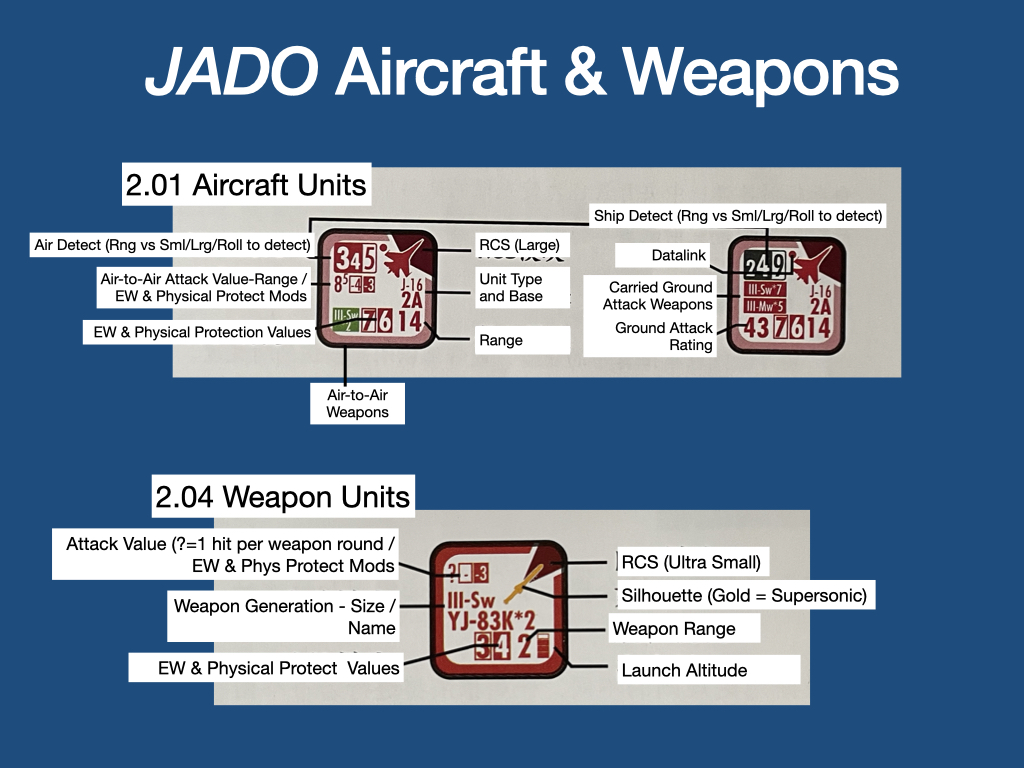
Raider Drop Zone likewise opts to put as much information as possible on the counter. Tracton’s execution in Raider Drop Zone, however, is much cleaner than JADO. Part of the reason Tracton gets away with this design choice is by electing to use larger 3/4″ counters. Tracton also uses simple iconography that is in many ways intuitive. Most importantly, the combat system, by design, has few factors needing placement on a counter that makes each counter less crowded by nature. The end result is that combat is easy to run with almost all the data needed at the player’s fingertips—literally—and immediately understandable with a quick glance.

“Never tell me the odds.” (Han Solo, Star Wars: The Empire Strikes Back)
The combat system used in Raider Drop Zone is named by Tracton as “Shock and Awe.” Shock combat occurs between units in the same Company Drop Zone and involves a single Shock unit and up to five Support units on each side. The Shock Combat Sequence is a quick-playing seven-step process that uses two numbers and several icons from a counter and no more than three tables…and a handful of d10s.
Here is how Tracton describes “Shock and Awe”:
“Shock and Awe” prioritizes raw firepower in conjunction with morale and unit cohesion. I have been refining it for decades, based on the premise that, typically, more experienced and better-trained troops accomplish superior results more efficiently and quickly than their less-experienced or well-trained counterparts. But in a science fiction environment there is so much firepower available to even smaller units that casualties on both sides typically occur.
Shock represents the strength of a formation on a scale from 1 (lowest) to 5 (highest). A unit with a Shock level of 5 has a 60% chance of achieving the best possible result (5) in combat per each of its 5 die rolls. This is reflected in the Shock Modifier table, where a d10 roll of 3-8 (60% chance) does not modify the result. A roll of 1 or 2 reduces the result by one or two, while a roll of 9 or 10 increases it by one or two.
The design allows even a small and weak unit to defeat a larger and more powerful opponent, creating opportunities for unexpected victories. Many players enjoy seeing these types of upsets in a game.
RDZ, Scenarios, Story and Designer Notes, p. 13
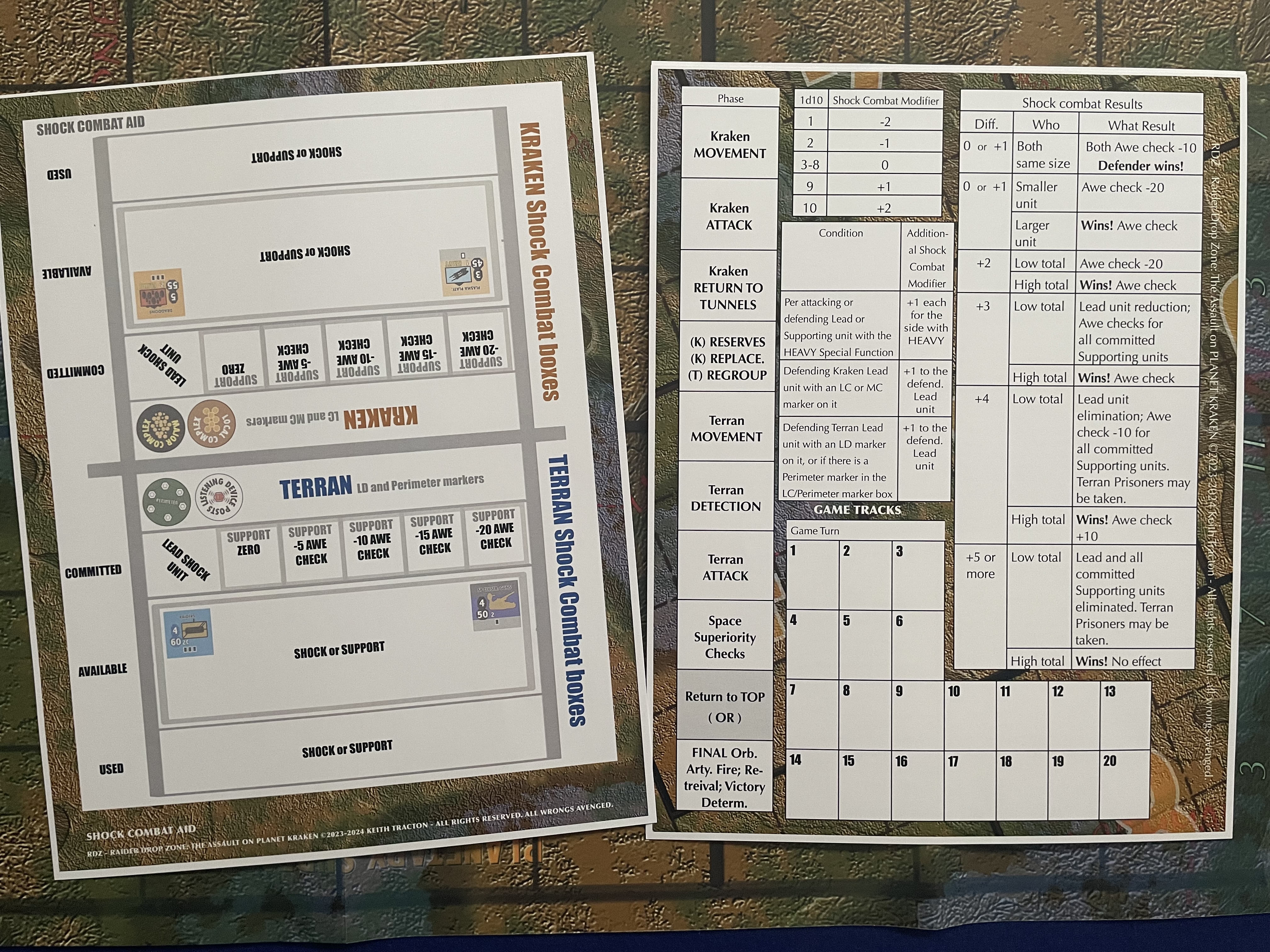
Savvy readers likely noticed the reference to three tables used in the various combat steps of Raider Drop Zone. Some might question if the need to reference tables works against the combat info on counters and violates the spirit of the CRT-less combat. Tracton thoughtfully provides two Player Aids that address these concerns. The first is the Shock Combat Aid. As explained in the rules:
Use of the Shock Aid is OPTIONAL but strongly recommended. It can help clarify each unit’s status in the procedure for Shock combat, especially with larger attacks where likely there will be many Shock combats initiated. It can also be especially convenient for tracking Awe check modifiers during Shock combat. See 7.4 Pre-Shock Combat Awe Checks Step.
RDZ, Rules, p. 31
The second Player Aid for Raider Drop Zone has the Game Turn track, the turn Phase track, and the three Shock combat tables (Shock Combat Modifier, Shock Value Modifier, and Shock Combat Results). After playing just a few combat rounds (maybe even only one) the first two tables will likley be ignored as they are very simple to understand and apply. The Shock Combat Results Table is the one that will likely be referenced every combat, but as the game progresses players will very likely apply the results faster as they understand the game mechanisms. On balance, however, the (very) few tables do not slow game play at all; indeed, the Player Aid greatly assists in speeding up play.
Tunnels to orbit
While futuristic “Shock and Awe” combat is depicted in Raider Drop Zone other alien planetary invasion tropes get their due. Some examples are:
- Terran forces are dropped from orbit in capsules or assault boats (see rule 4. Terran Initial Drop, 5.5.7 Combat Drop, and 5.5.8 Capsule Supply) which is subject to defensive fire from the Kraken (see rule 4.3 Kraken Space Defensive Fire or “Special Interception for Combat Drop” in rule 5.5.6 Interception).
- The Kraken move underground (on the Tunnel map) and Breach to reach the surface (see rule 5.1.1 Kraken Movement & Breach Markers).
- Kraken reinforcements come from hatching replacements (see rule 5.4.1 Kraken Reserves).
- When some Terran units are eliminated they form Cadres that can regroup into new units; that is, if the Terrans control the space above the Drop Zone to return the Cadres to (see rule 5.4.3 Terran Cadres Regrouping).
- Terran movement is “On the Bounce” or via space transfer; another reason to control the Near Space zones above (see rule 5.5.1 Terran Movement Types and 5.5.5 Terran Space Transfer).
- While space combat on the Near Space map is abstracted, naval forces still have a role in intercepting Space Transfer or Combat Drop (see rule 5.5.6 Interception).
- A second space combat abstraction is the concept of Space Superiority or Supremacy which is not necessarily assured for the Terrans; loss of Space Superiority can greatly hinder Terran plans (see rule 5.8 Space Superiority Checks Phase).
“Another Bug hunt, boys. This one is a little different.”3
I was fortunate enough to sit with Keith for a learn and play of Raider Drop Zone at the Armchairs Dragoon Fall Assembly in October 2024. Keith stated he was at work on more rules for solo play and to expand the space combat game.
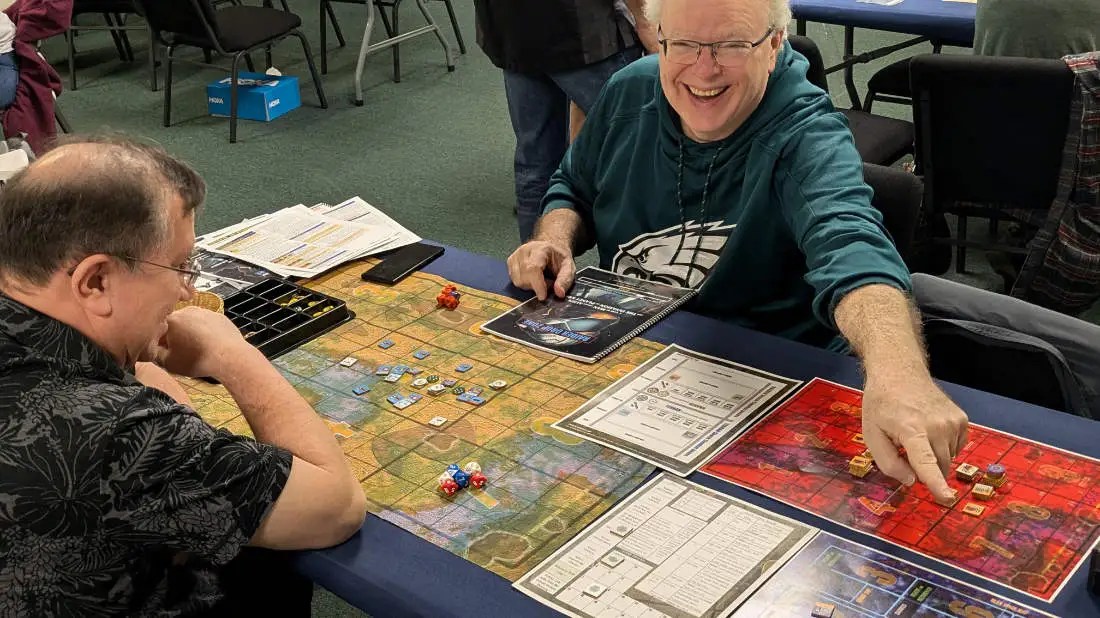
While I certainly welcome Keith’s efforts to expand Raider Drop Zone there is no urgent reason to do so as the game plays very well as is. Raider Drop Zone hits all the thematic high notes; you get the better-trained and better-equipped Terrans dropping from the sky to dig out the swarming Kraken who secretly move underground and pretty much just pop-up where they are the least welcome. Combat is quick; the game moves along briskly even in larger battles. Raider Drop Zone also has a good balance of other rules to help immerse players into the setting without distracting them from the main effort (i.e. the space battle is abstracted so the focus remains on ground combat).
Given the need for hidden movement by the “One Mind” Kraken, Raider Drop Zone is not solo-friendly out of the box. As noted above, Keith mentioned some work on solitaire rules but at the time he was not thrilled with how they were working out. While there are likely some wargamers who might see the lack of solo rules as a showstopper I invite them to try Raider Drop Zone with a friend. Both of you are very likely to enjoy what you find.
- Keith Tracton also designs roleplaying games (RPGs); see my review of the Vizor Roleplaying System here. ↩︎
- Combat Results Table. ↩︎
- Heinlein, Robert A. (1959, 1987) Starship Troopers: The Controversial Classic of Military Adventure. New York: Berkley Publishing Group, p. 278. ↩︎
Feature image courtesy RMN
The opinions and views expressed in this blog are those of the author alone and are presented in a personal capacity. They do not necessarily represent the views of U.S. Navy or any other U.S. government Department, Agency, Office, or employer.
RockyMountainNavy.com © 2007-2025 by Ian B is licensed under CC BY-SA 4.0
 Rocky Mountain Navy Gamer