
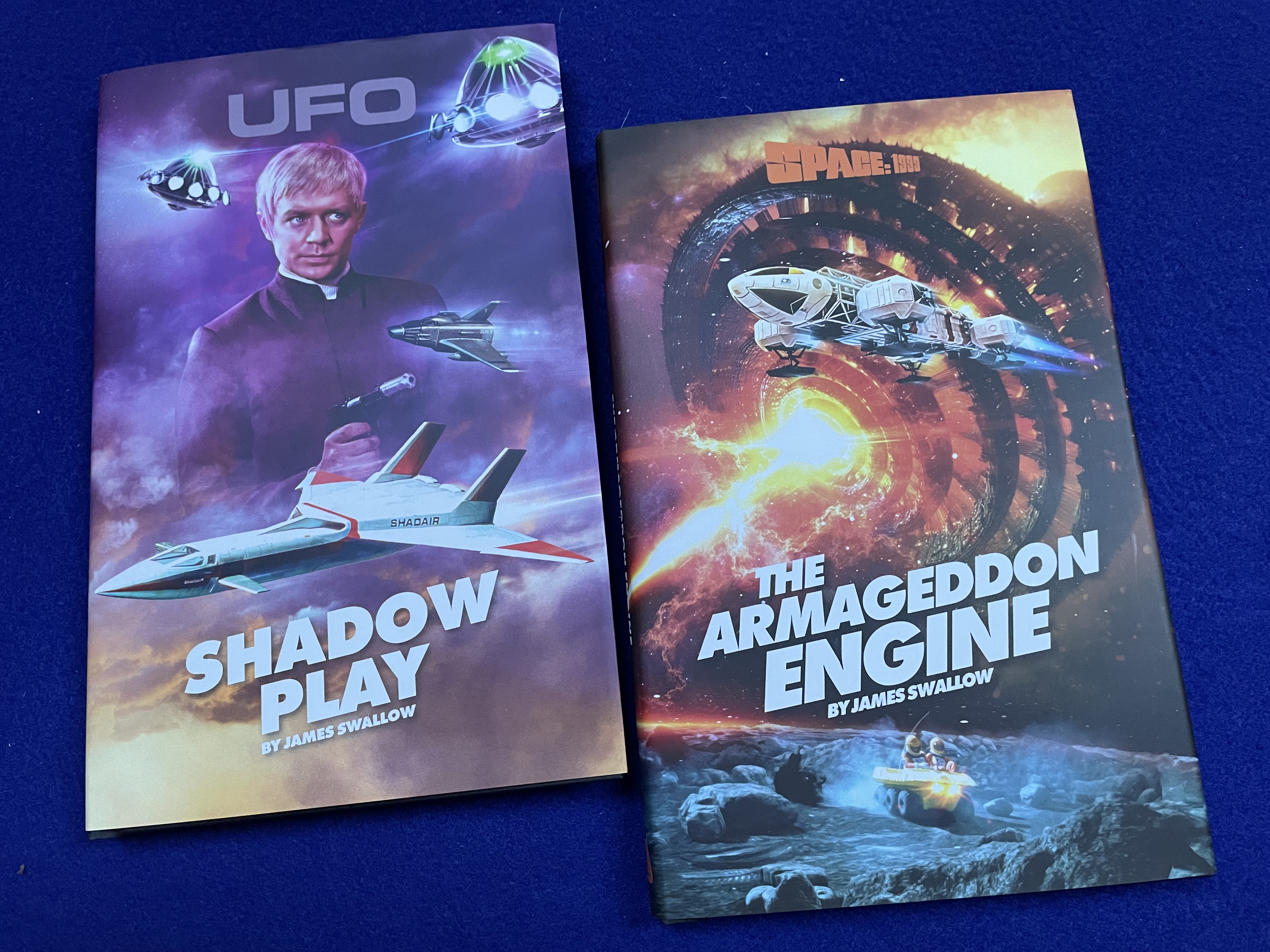
In preparation for the upcoming release of Space: 1999 – The Roleplaying Game from Modiphius Entertainment, I took advantage of a sale from Anderson Entertainment, the IP holder, to buy two books to help immerse myself back into the setting. The Armageddon Engine by James Swallow (Anderson Entertainment, 2024) is a Space: 1999 story but the other, Shadow Play (James Swallow, Anderson Entertainment, 2024) is part of a different TV series, UFO. Since my head canon links UFO to Space: 1999 I read Shadow Play as a bit of a prequel to the former. Reading Shadow Play also reconnected me to the zeitgeist of the UFO [unidentified flying object] subculture of the 1970’s and helped me realize how much the TV series UFO tapped into darker elements of that movement. It also emphasized to me the real need to bring UFO to a roleplaying game.

[Spoilers ahead…I guess? I will try to not spoil Shadow Play but given the TV series UFO itself has been around for over 50 years that will be a bit harder so..beware!]
In 1980, the Earth is threatened by an alien race who kidnap and kill humans and use them for body parts. A highly secret military organization is set up in the hope of defending the Earth from this alien threat. This organization is named SHADO (Supreme Headquarters Alien Defence Organization) and operates from a secret location beneath a film studio. They also operate a fleet of submarines and have a base on the moon as well as an early warning satellite that detects inbound UFOs. UFOs can be destroyed in space by Interceptors which are launched from Moonbase. If one gets through it can be attacked in the Earth’s atmosphere by a high altitude aircraft launched from one of the submarines. If a UFO also avoids this and manages to land it can be tracked and destroyed by a number of Mobiles (armored vehicles) which are deployed throughout the world.
UFO, imdb.com, Storyline
While the UFO craze usually starts with the 1947 Roswell Incident, the alien abduction craze in America burst onto the scene in 1961 with Betty and Barney Hill who claimed they were abducted by aliens in New Hampshire. So popular was the story it actually is recognized by TV Tropes as the Trope Codifier event for “alien abductions”. The TV series UFO leans heavily into that alien abduction trope. The official UFO sourcebook, the S.H.A.D.O.: Technical Operations Manual (Craig Thompson & Andrew Clements, Anderson Entertainment, 2022), mentions alien abductions this way:
. . . abductions were relatively common around UFO incident sites, especially those located in remote areas or at sea. These disappearances were officially covered up – a standard procedure designed to avoid mass panic.
SHADO: TOM, p. 187
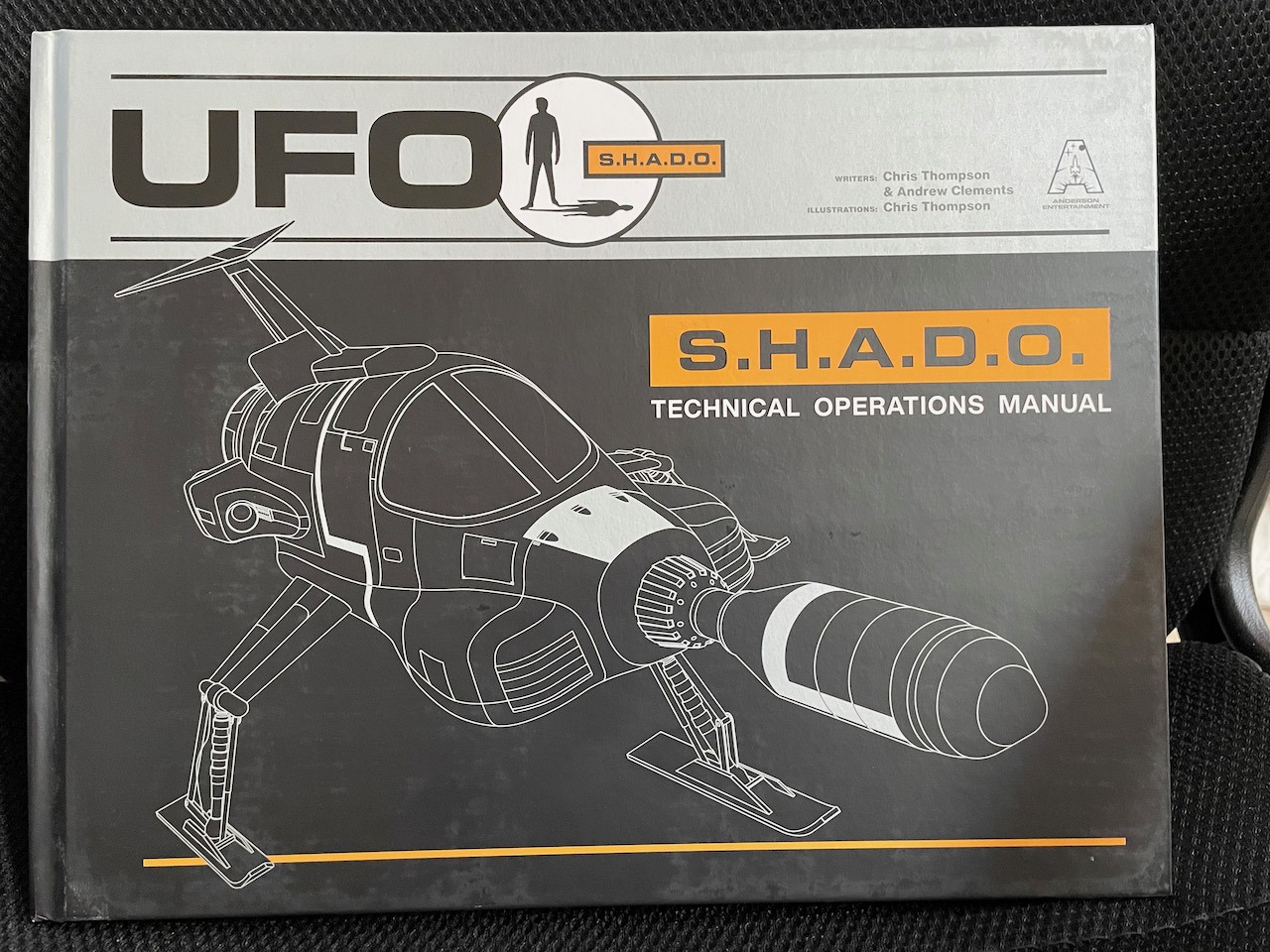
The TOM goes on to explain a dark alien motive:
More aliens have been recovered since this incident, revealing the root cause of their interest in Earth; they are [a] genetically-devestated species facing extinction and harvesting human organs to sustain their dying race.
SHADO: TOM, p. 187
The UFO TV series dove deep into the alien abduction trope with stories that many seemingly missed fully understanding in the day. As one imdb.com reviewer wrote:
As a child, we loved the models, the action and the gimmicks. Sometimes we’d go to anywhere where there was a tube (like a waterslide or even a building site) and imagine us going down the chutes to enter our interceptors like the SHADO pilots did. As an adult, I never realized that under the mod fashions and shiny sets, there were some grim and downbeat stories in that show. Ed Straker was probably the first truly mean bastard to be a TV series main character. There was nothing he wouldn’t do to stop the aliens, sacrificing his troops and even his family for the cause.
I did not truly discover the UFO TV series until I was a teenager. My “introduction” to the UFO phenomenon was first through Stephen Spielberg’s movie Close Encounters of the Third Kind (1977)1 and the TV series Project: Bluebook (now mysteriously renamed Project: UFO) that ran from 1978-1979. Close Encounters incorporates the alien abduction trope but portrays the aliens as friendly; a far cry from the threatening version found in UFO.
The UFO TV series was far from perfect but does possess many elements that could make for an interesting roleplaying game (RPG). First, and perhaps the best recognized, there is the technology.
Second, and more importantly for an RPG, there are the human elements of the stories.
As the same imdb reviewer cited above notes:
The show has it’s faults, what show doesn’t? But UFO was a darker series than it’s contemporary, Star Trek, because it had major characters arguing with each other, episodes where the aliens beat SHADO, personal tragedy and downbeat endings; all of which caused problems. . . . The end credits of UFO were genuinely chilling which left the viewer feeling even more down! In the end, shows like “Blake’s 7”, “Babylon 5” and the new version of “Battlestar Galactica” owe a lot to Ed Straker and SHADO, with its charismatic yet ruthless characters, its interpersonal conflicts and humanity. My favourite episode? “Court Martial”. Favourite line? Straker: “I’ll listen to any reasonable suggestion, then I’m going to tell you how it’s going to be.”
A roleplaying game based on the TV series UFO has much to offer. There are many tropes that can be leveraged, to include (but certainly not limited to) alien abduction, Men in Black, government conspiracy, advanced technology, and so forth. Combined in a setting that features darker storylines yet human characters it could be very interesting to play.
- The night after I first saw Close Encounters I was awakened to many colors of flashing lights outside my window and loud, heavy thumps in the air. Racing upstairs from my basement bedroom I expected to see a UFO hovering right over my house. Instead I got many emergency vehicles and a medevac helicopter landing in the empty lot next door for a neighbor. Speak about disappointment… ↩︎
Feature image created using WordPress “Generate AI.”
The opinions and views expressed in this blog are those of the author alone and are presented in a personal capacity. They do not necessarily represent the views of U.S. Navy or any other U.S. government Department, Agency, Office, or employer.
RockyMountainNavy.com © 2007-2024 by Ian B is licensed under CC BY-SA 4.0
 Rocky Mountain Navy Gamer