
As incredible as it sounds, the book Wargaming Waterloo (Esdaile, C.J. (2023) Wargaming Waterloo. Quantico: Marine Corps University Press) and the Russian invasion of Ukraine in 2022 are related:
In a fashion that is particularly timely, then, the MCU wargame of the invasion of Ukraine has shown the relevance of wargaming to present-day political and military discourse. However, if said practice is useful as a means of predicting the future, it is also a good way of understanding the past, recreating this or that historical battle or campaign being likely to be far more effective as a means of grasping the march of events than merely exploring the latter via the printed page, however well-written. From this point, meanwhile, we can move a step further in that wargaming is also a means by which the past is represented to the present, whether this is through the production of the model soldiers relied on by one version of the genre, or the development of packages—in essence, board games—designed to allow gamers to explore the military aspects of particular historical periods. It is the object of this work to explore all three of these aspects of the practice, but, to achieve this, the decision has been taken to discuss one battle alone, namely that which brought about the final downfall of Napoléon Bonaparte 3.2 kilometers south of the little Belgian town of Waterloo on 18 June 1815.
Esdaile, p. xxii

Wargaming Waterloo is in many ways a history, a staff ride, and a ludography of Waterloo wargames mixed into one product. As a wargame practitioner, reading Wargaming Waterloo is a master-class presentation of how research, analysis, and wargaming come together. For commercial hobby wargamers, Wargaming Waterloo shows how wargames can be used for more than entertainment.
Wargaming Waterloo is a history of wargames…

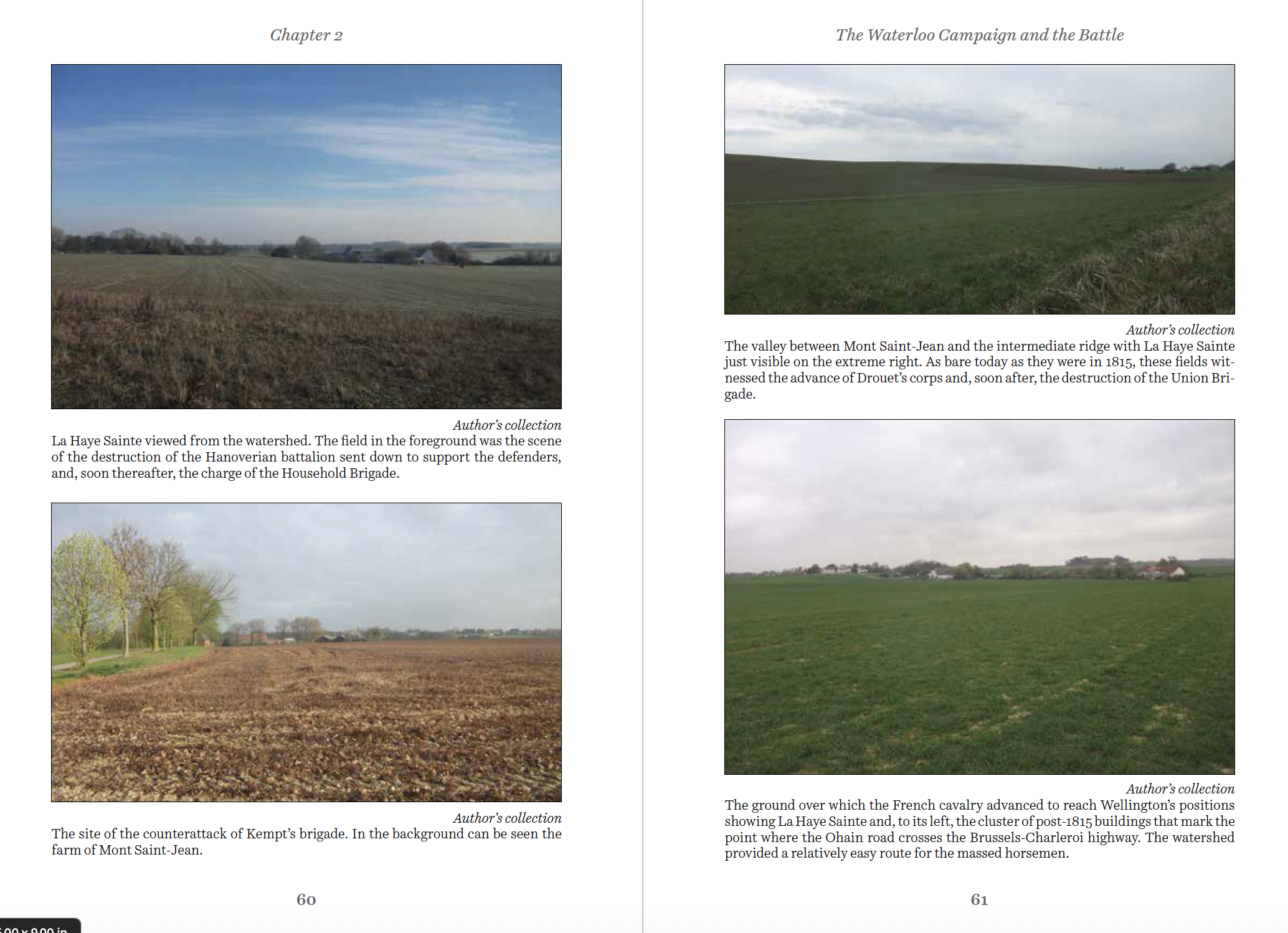
Wargaming Waterloo is a staff ride of the battle terrain…
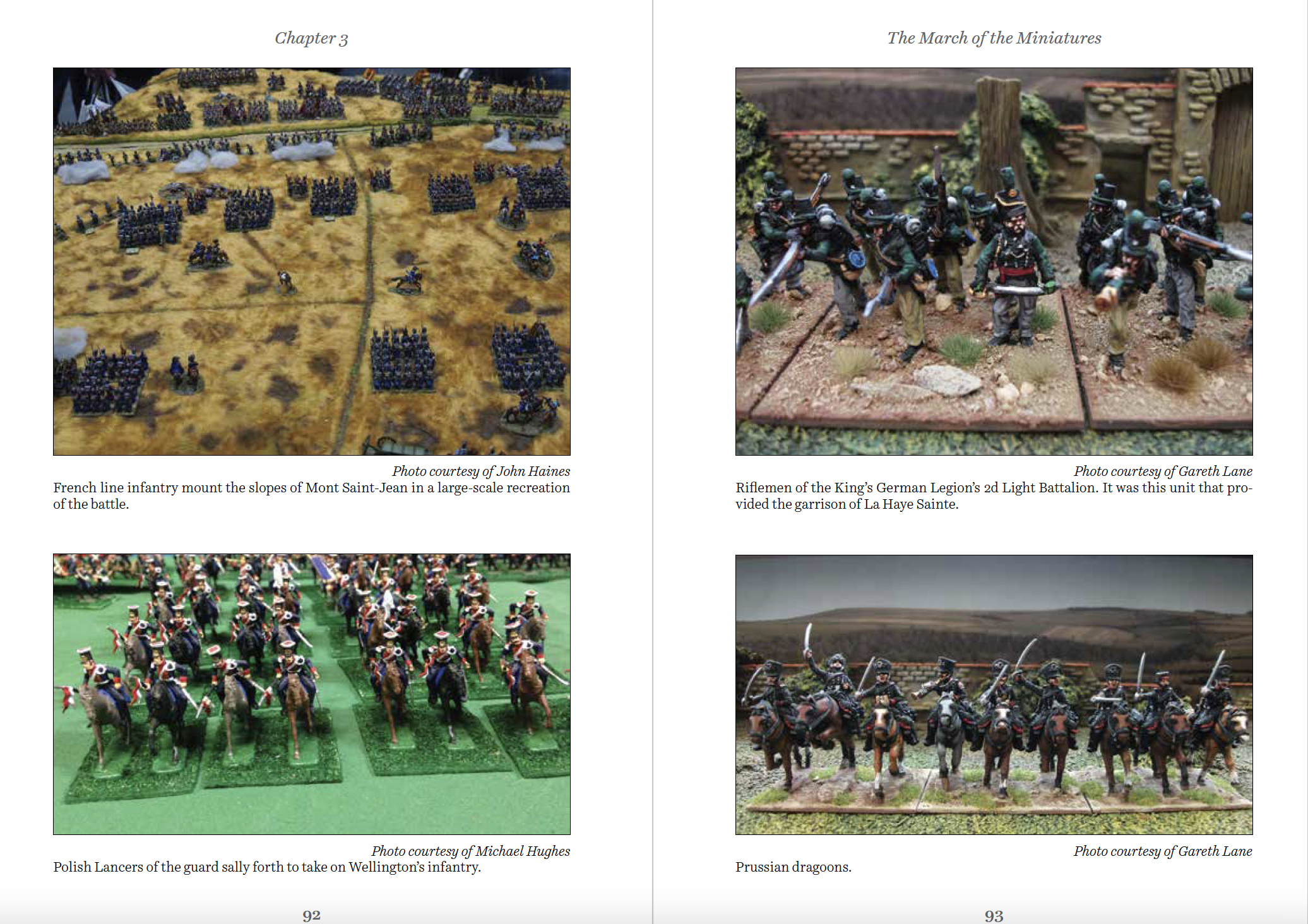
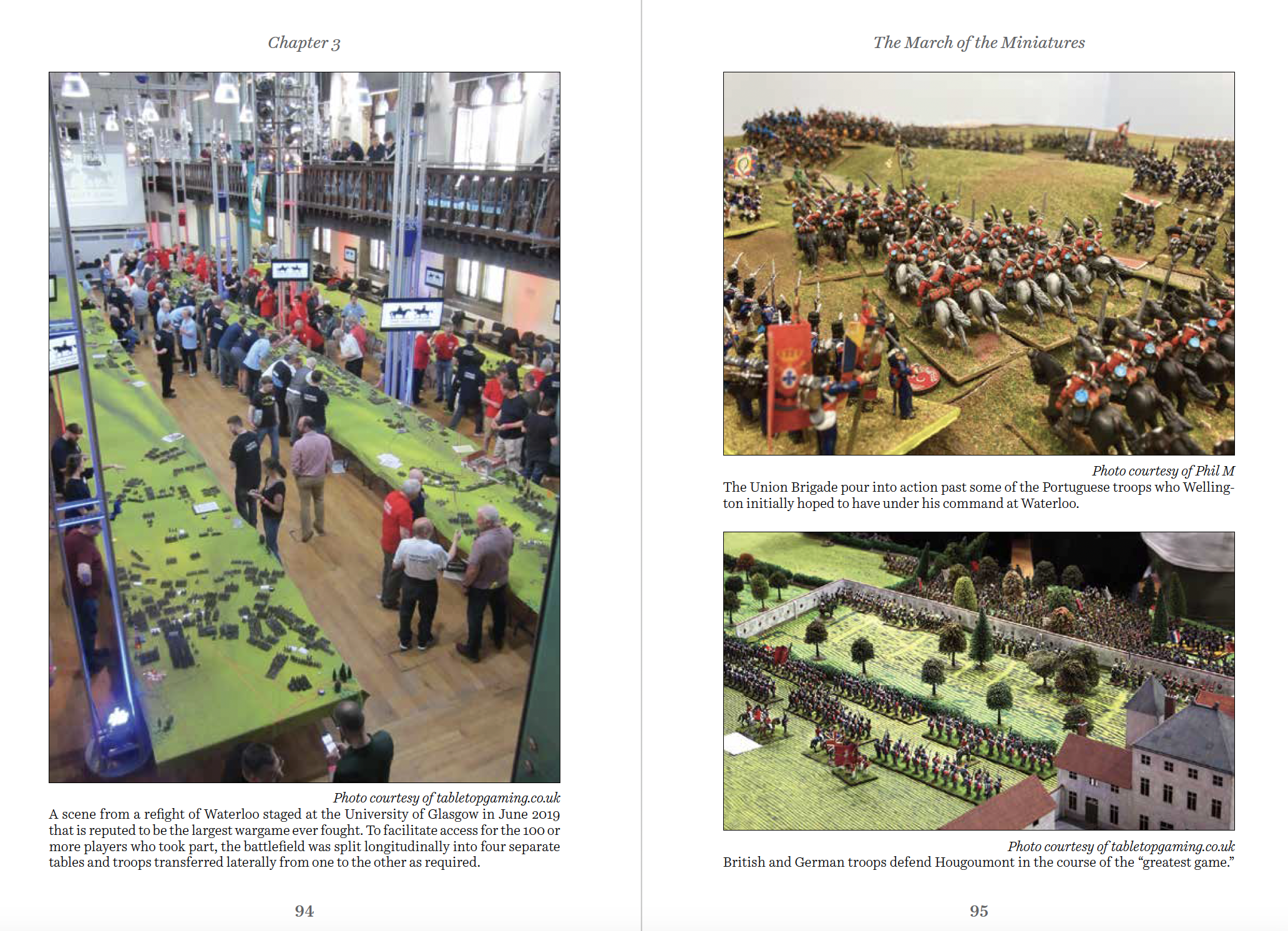
Wargaming Waterloo is a history of related miniatures wargames…
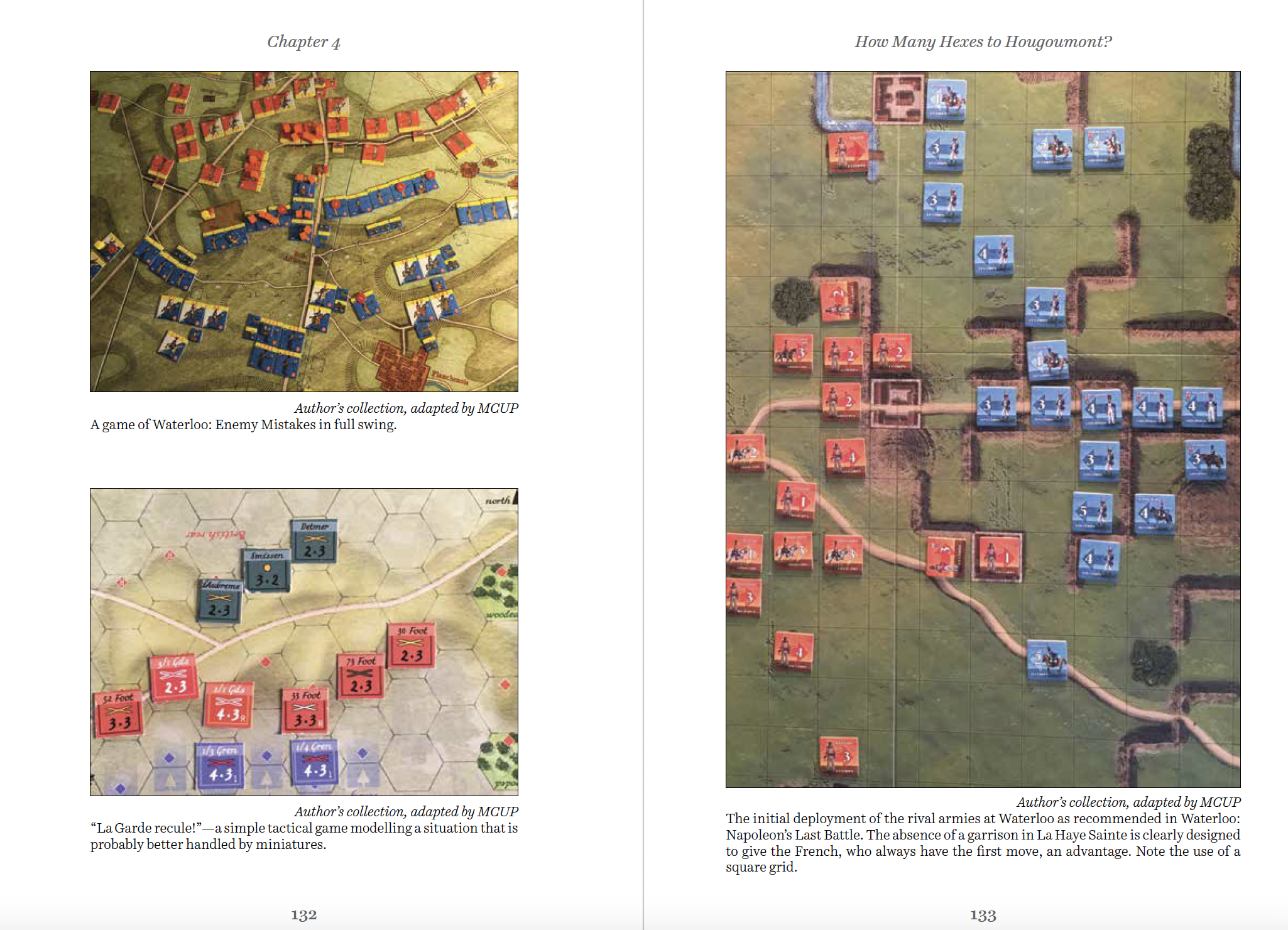
Wargaming Waterloo is a study of different Waterloo wargames…
Wargaming Waterloo is a study of Grand Tactics…
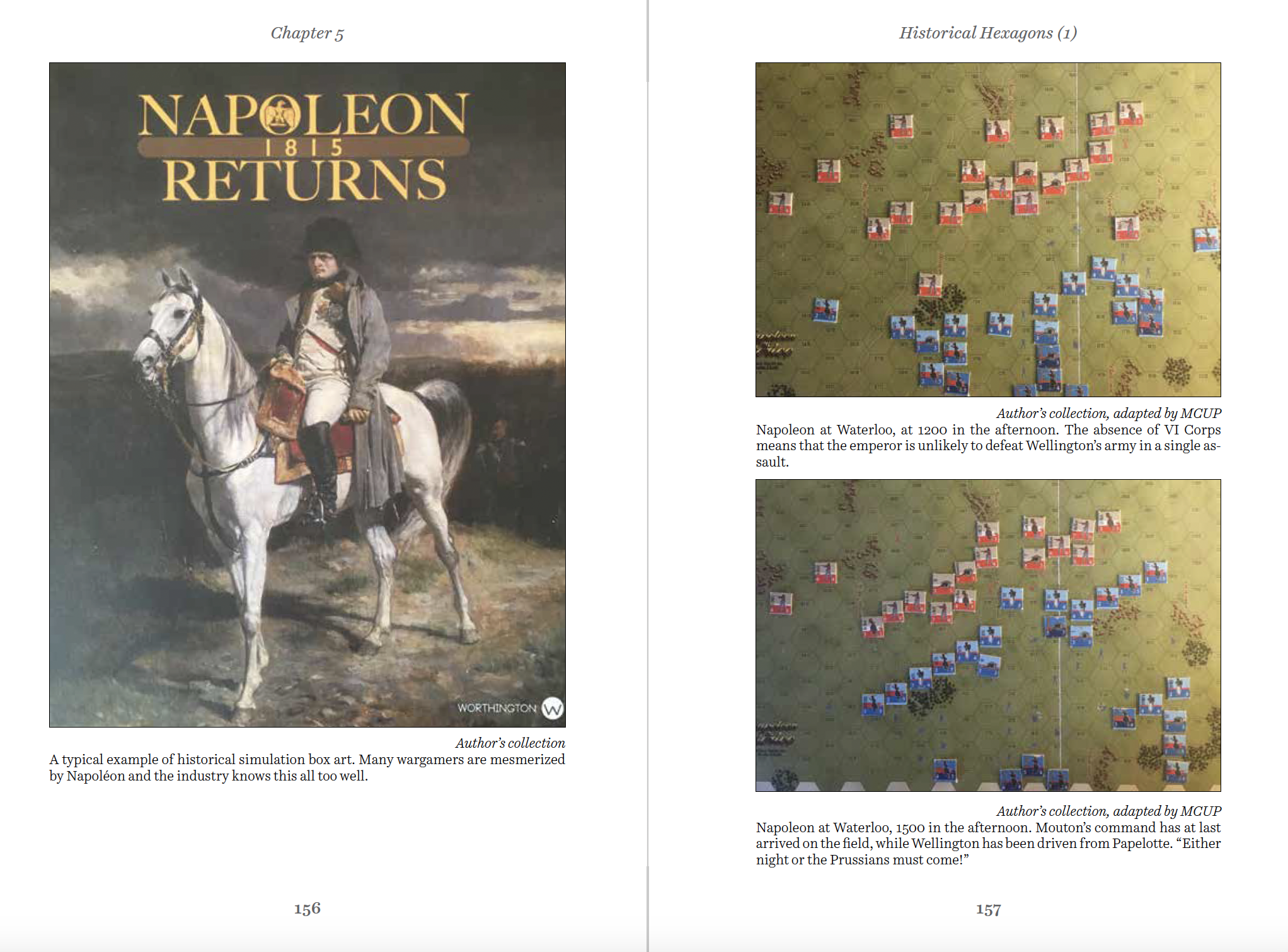
Wargaming Waterloo is a study of the operational art of war…
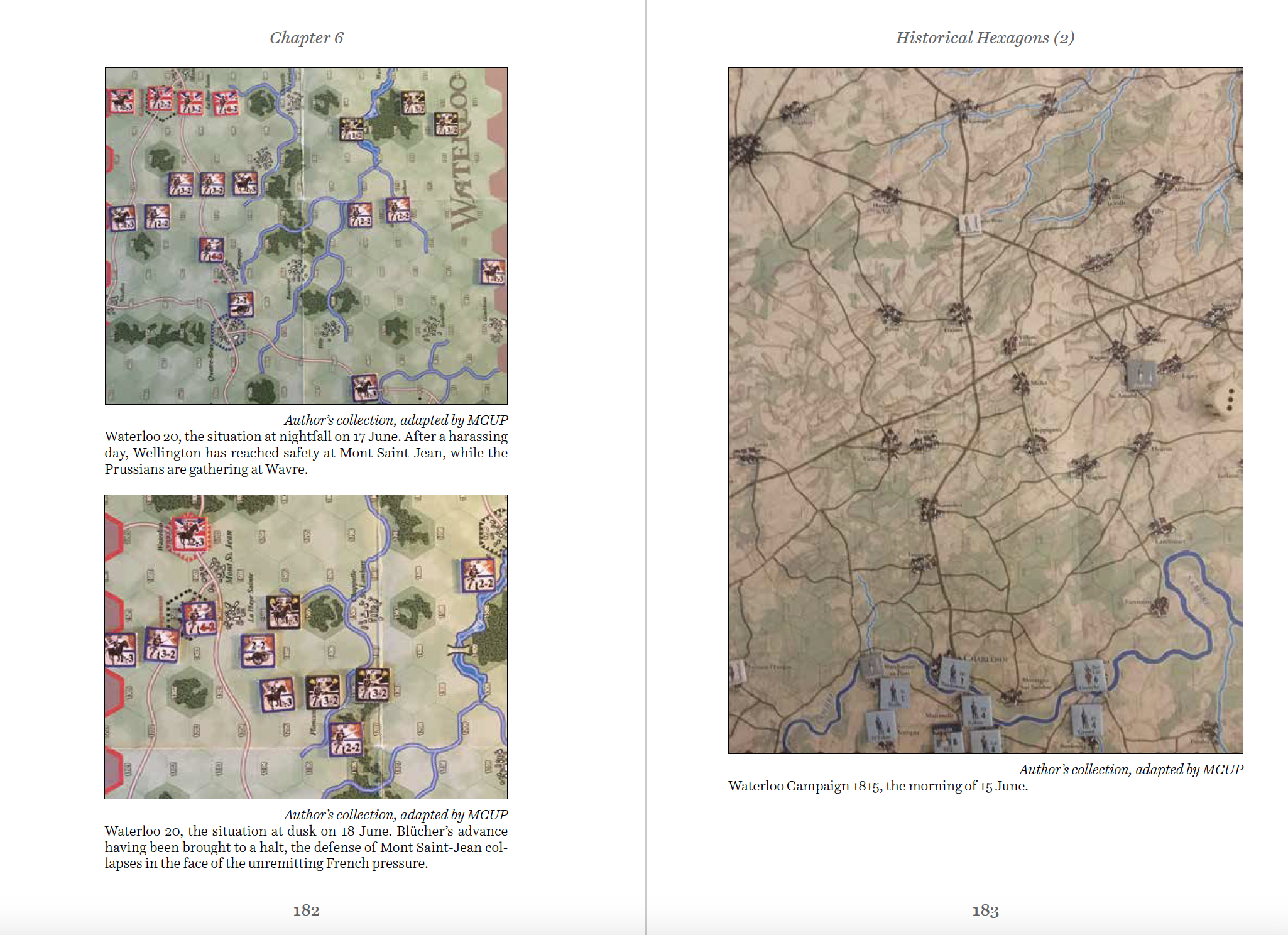
Wargaming Waterloo is a study of the strategy…

Wargaming Waterloo is a study in counterfactuals…

Wargaming Waterloo teaches…
This brings us, of course, to the lessons that we have learned from this long examination of the ludography. Insofar as these are concerned, the verdict seems pretty clear. In the first place, even with the situation as it actually was on the morning of 18 June 1815, Napoléon could have secured a victory, albeit one that was at best marginal and wide open to being overturned the following day, or, failing that, to have escaped complete defeat by retreating from the field before the Prussian presence became completely overwhelming. In the second, with better staff work and more judicious decision-making on his own part, the emperor could probably have reached his initial goal of Brussels, albeit without inflicting sufficient damage on his opponents to knock either of them out of the campaign. In the third, assuming that the war carried on—something with which it is very difficult to argue—the “flight of the eagle” was most unlikely to have had a happy ending for the French ruler. And, finally, Marshal Grouchy, the man who after 1815 more than anyone else was pilloried for his imperial master’s defeat, was wholly innocent, Napoléon’s initial orders in respect of the pursuit of the Prussians having taken him so far to the east that, even had he hastened to the help of the forces assaulting Mont Saint-Jean the moment he first heard the sounds of battle, he could at best have hoped to divert some of the Prussians marching on Plancenoit from their objective, this being something that would in reality have been of limited relevance given that the troops most likely to be affected, namely Pirch’s II Corps, played no more than a supporting role in the battle.
Esdaile, p. 295
Wargaming Waterloo is an extended argument to play games…
However, to write thus is to risk ignoring the big picture, which is, as Robert Citino has pointed out, “the utility of the wargame as a visual and tactile representation of the real life event,” the fact being that “simply setting the game up . . . and deploying the at-start orders of battle for both sides can be enough to tell a researcher a great deal about the battle, campaign or war under investigation.” To continue with Citino, meanwhile, historical simulation has two further advantages in respect of the study of war in that it is a natural introduction, first, to the trilogy of tactical, operational, and strategic, and, second, to the dichotomy between the theory that generalship is a science and the reality that it is in large part a game of chance. As he concludes, then, “May I offer the following advice to any military historian seeking to learn more about a battle, campaign or war of the past? Get serious: play a game!”
Esdaile, p. 296
HIGHLY Recommended.
Wargaming Waterloo is available as a FREE download from Marine Corps University Press.
Feature image automatically generated using WordPress AI based on text of posting.
The opinions and views expressed in this blog are those of the author alone and are presented in a personal capacity. They do not necessarily represent the views of U.S. Navy or any other U.S. government Department, Agency, Office, or employer.
RockyMountainNavy.com © 2007-2024 by Ian B is licensed under CC BY-SA 4.0 
 Rocky Mountain Navy Gamer